Introduction
Alström syndrome, ALMS (OMIM 203800), is a multisystemic disorder found with a rare prevalence of < 1 per 1,000,000 individuals in the general population [1–3]. Approximately 1200 Alström syndrome cases have been diagnosed worldwide [1, 4, 5]. The main clinical characteristics of this syndrome are sensorineural hearing loss (SNHL), blindness due to progressive cone-rod dystrophy, short stature, type 2 diabetes mellitus (T2DM), and childhood obesity associated with hyperinsulinemia [6, 7]. Although dilated cardiomyopathy (DCM) is the predominant observation in most Alström syndrome patients, additional clinical manifestations such as renal failure, hepatic, pulmonary and urologic dysfunctions are also known to be evident in them [8]. Most clinical manifestations start in early infancy, but the age of onset and severity of symptoms greatly vary in patient groups [5]. The clinical diagnosis of Alström syndrome is usually established based on the clinical features, medical history and positive family history of the affected patient, but overlapping clinical features makes it more challenging. On the other hand, molecular genetic diagnosis of Alström syndrome not only helps to ascertain the clinical diagnosis but also could assist clinicians in choosing an appropriate therapeutic management strategy.
Alström syndrome is regarded as a classical monogenic disease as it is well established to be caused by pathogenic mutations in the ALMS1 gene, which spans over 23 exons and encodes a 4168 amino acid long protein [2, 5, 9]. ALMS1 protein is expressed in renal tubules, heart, liver, the organ of Corti, retinal photoreceptors, pancreatic islets, and the hypothalamus region of the brain [10]. It plays a critical role in ciliary function and regulates the cell cycle as well as intracellular transport. To date, more than 250 disease-causing mutations in ALMS1 have been reported in Alström syndrome patients [5, 9, 11]. Most of them are nonsense or frame shift mutations resulting in premature mRNAs, which are eventually eliminated by a nonsense mediated decay pathway.
Approximately, 94% of the ALMS1 mutations have been found in exons 8, 10 and 16 [12, 13]. So far, the majority of these studies have been published on sporadic Alström syndrome cases [14, 15]. However, studying familial cases has the potential not only to inform about the most affected organ system and clinical spectrum but could also shed light on the molecular basis of the disease. In Saudi Arabia, the average rate of consanguinity is 50%, but in certain provinces it even reaches 80%. Consanguinity enriches the presence of defective alleles in any population and acts as a major underlying factor for several genetic disorders, especially population-specific autosomal recessive disorders [16]. Hence, studying the familial form of Alström syndrome in Saudi patients provides an advantage both to examine the founder effect of ALMS1 mutations and also assess its impact on clinical variability among the family members. Therefore, in this prospective study, we performed whole exome sequencing of Saudi Alström syndrome patients and identified the disease causative mutation, determined its segregation pattern and analyzed the phenotypic expression of the disease in the family members carrying the same mutation.
Material and methods
Ethical approval
All adult participants of this study have provided written informed consent, but for underage participants (children below 18 years ages) consent was obtained from their parents. The ethical approval for the present study was obtained by the Unit of Biomedical Ethics Research Committee, Faculty of Medicine, King Abdulaziz University, Jeddah.
Study subjects
A Saudi family with two affected patients presenting frequent heart palpitations was recruited from the cardiogenetics clinic of Princess Al-Jawhara Al-Brahim Center of Excellence in Research of Hereditary Disorders (PACER-HD). These two affected siblings underwent detailed clinical examinations including biochemical investigations, electrocardiogram, echocardiography, abdominal ultrasonography, chest radiograph, audiometry and visual evoked potentials. The full clinical history of the family members was collected during their regular visits. We also recruited 100 healthy Saudi controls, who have no history of genetic diseases in their respective families.
Sampling
Peripheral blood samples (2–5 ml) from all the participants were collected in K3 EDTA tubes (BD Vacutainer, USA) and stored at 4°C until they were analyzed. Genomic DNA was extracted using the Qiagen DNA Extraction Mini Kit (QIAamp mini kit, USA). The DNA purity and concentration were determined using the NanoDrop 2000/2000c Spectrophotometer (Thermo-Scientific, USA).
Exome sequencing
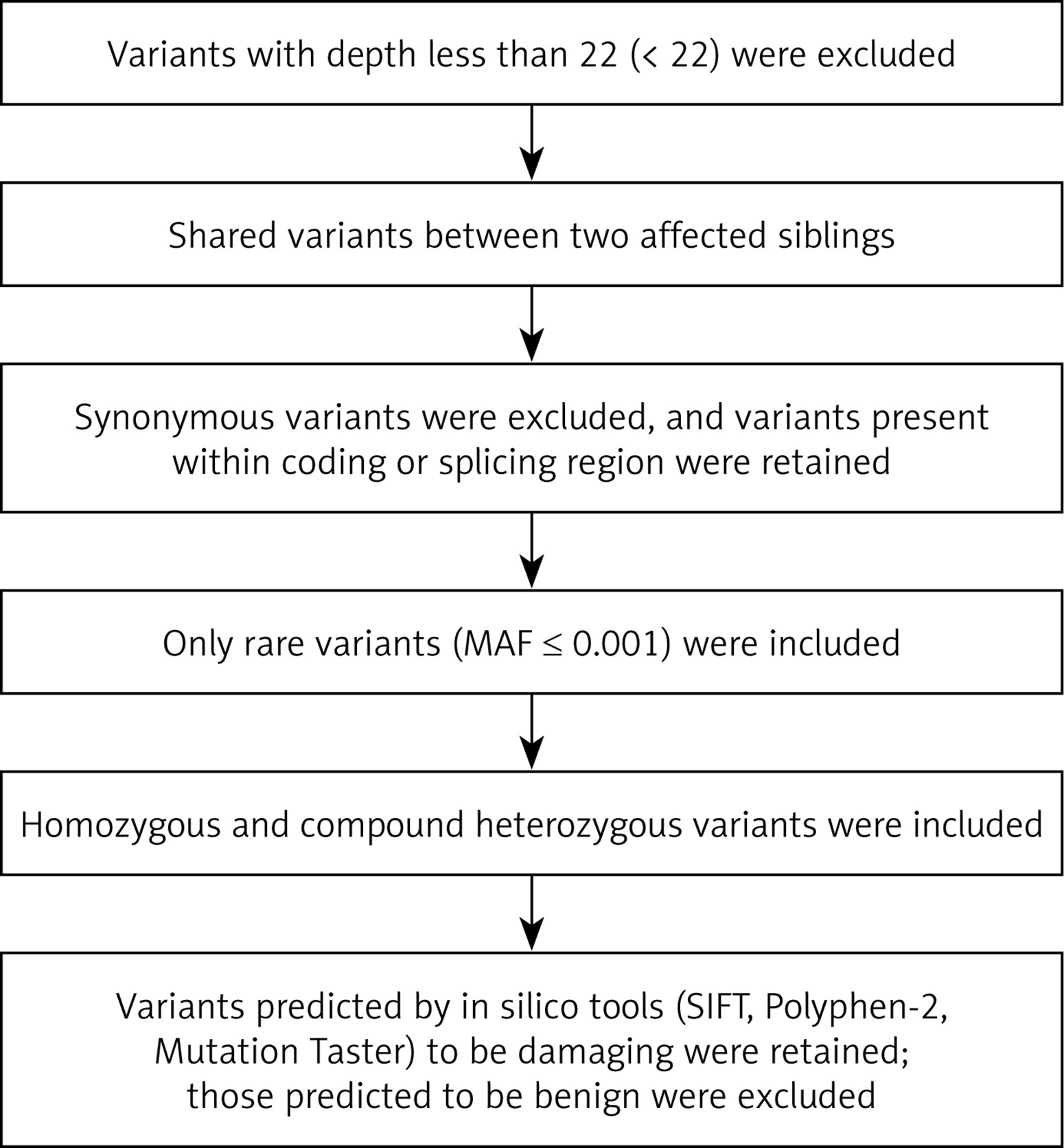
Whole exome sequencing (WES) was performed for the proband (II.2) and his brother (II.5) at a local commercial facility. The genomic DNA was subjected to bidirectional exome sequencing at 100× resolution. DNA libraries were prepared using the Sureselect target enrichment system (Agilent Technologies, USA) from 2 μg of genomic DNA of the patients. The enriched libraries with 90 base-pair long reads were then sequenced on the Illumina HiSeq2500 platform (Illumina, USA). The raw sequencing data were obtained in the form of FASTQ files. Low quality read sequences were discarded. The short sequences generated in the WES were lined up to a reference genome (UCSC hg19) (http://genome.ucsc.edu/) with the Burrows-Wheeler Alignment (BWA) tool. High-quality single nucleotide variants (SNVs) and Indels detection was performed using GATKv3.0 Haplotype Caller and cross checked against sequences in the 1000 Genomes Project databases (http://www.1000genomes.org/data) and the dbSNP (http://www.ncbi.nlm.nih.gov/snp/). Variants were prioritized in a stepwise manner following the data analysis pipeline (Figure 1). Since mutations in the ALMS1 gene are known to be causative for Alström syndrome, we initially checked the deleterious variants in this gene. We searched for those ALMS1 variants which are extremely rare (minor allele frequency MAF < 0.001) and occur in the coding (missense, frameshift) and regulatory (splice site and promoter) regions.
Figure 1
The whole exome sequencing data analysis pipeline used for identification of the ALMS1 variant
We determined the rare frequency or novelty of ALMS1 variants by comparing them in different databases such as 1000 Genomes Project (http://browser.1000genomes.org/index.html), the Exome Aggregation Consortium (ExAC) database that includes exome sequencing information for 60,706 persons as part of a disease-specific and population genetic study (http://exac.broadinstitute.org), the Greater Middle East (GME) variome project which is considered as a coding base reference for the countries in the Greater Middle East and includes exome sequencing data for 2,497 individuals (http://igm.ucsd.edu/gme/), the EURO-WABB Leiden Open Variation Database (LOVD), which is a locus-specific database for Alström syndrome and other rare diabetes syndromes (https://databases.lovd.nl/shared/variants/ALMS1/unique) 10, and finally in the Saudi Human Genome Project (SHGP) database, which hosts whole exome sequencing data of 6033 Saudi individuals. The potential ALMS1 variant selected from exome sequencing was screened by the Sanger sequencing method in the family members and in 100 healthy control subjects. The rationale to screen the first-degree relatives (parents and siblings) is to determine the mode of its inheritance in the family, and healthy controls is to ensure its rarity in the population.
Sanger sequencing
The shortlisted ALMS1 mutation was validated through Sanger sequencing. In the initial steps, primer sets flanking the target gene region were in-house designed and their chemical synthesis was done at a commercial facility. Subsequently, polymerase chain reaction (PCR), gel electrophoresis, PCR purification and cycle sequencing steps were conducted as per standard protocols. PCR amplicons were bidirectionally sequenced using the ABI-Prism 3730xl Genetic Analyzer (Applied Biosystems, USA). The Sanger sequencing files were aligned and compared to the reference sequence via BioEdit sequence alignment editor (version 6.0.7) (www.mbio.ncsu.edu/BioEdit/bioedit.html). Mutation numbering was done by considering A of codon ATG as the first nucleotide of the ALMS1 gene.
Results
Clinical evaluation
The proband (II.2) (Figure 2, Table I) in this family is a 22-year-old man born to consanguineous parents. Initially, at the age of 21, he was suspected to have cardiac arrhythmia, because he showed abnormal electrocardiogram (ECG) findings, palpitations, seizures and repeated vertigo. ECG showed rapid atrial fibrillation (AF). Then, he developed heart failure and was diagnosed with dilated cardiomyopathy. The patient could not tolerate a small dose of β-blocker and due to the frequent bradycardia and the nonspecific conduction delay of the QRS (around 120 ms), the treating physician preferred to implant a cardiac resynchronization therapy (CRT) device and started on anti-heart failure medications (dabigatran (110 mg BID), amiodarone (200 mg OD), spironolactone (25 mg)). From birth, the proband (II:2) had progressive hearing, vision loss (severe progressive retinal dystrophy and cataract) and obesity. Consequently, he was initially suspected to have a mitochondrial disorder. (Note: recently he is on sacubitril/valsartan 49/51 mg BID, bisoprolol 5 mg, furosemide 40 mg, spironolactone 25 mg, acetylsalicylic acid 81 mg). The treating physician stopped the oral anticoagulant after 6 months, believing that the atrial fibrillation was only one episode and there was no recurrence during device interrogation follow-up. Acetylsalicylic acid 81 mg was taken as an over-the-counter medication by the family without physician recommendation.
Figure 2
Pedigree analysis of the family, segregating Alström syndrome in autosomal recessive fashion. Circles and squares indicates females and males, respectively. Darkened symbols stand for affected participants, symbols having a dot inside stand for heterozygous carriers. Arrow indicates the proband
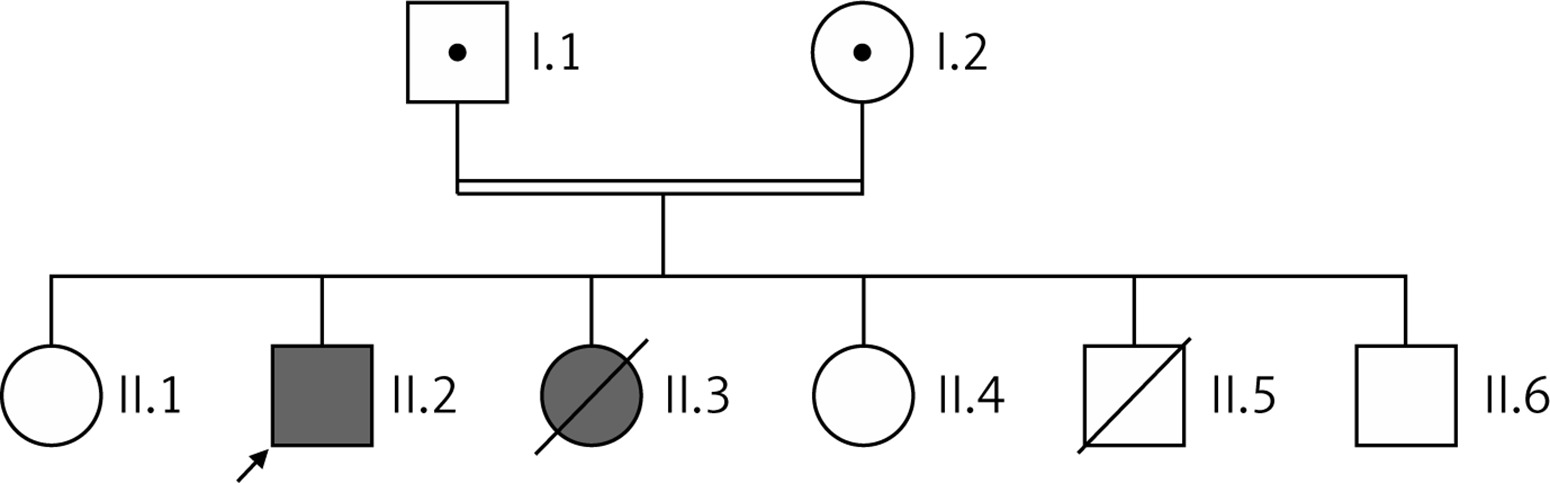
Table I
Clinical features for all members of the family
The proband (II.2) (Figure 2, Table I) has two brothers; one (II.5) unfortunately died at the age of 16, 6 months after we performed the genetic testing. His ECG showed abnormal positive R wave in V1, ST depression and non-specific diffuse T wave abnormality. He had progressive vison loss from birth like the proband (II.2). However, he had DCM from birth and a few other symptoms such as acanthosis nigricans and endocrine disturbances (adrenal and thyroid glands). The reason for his sudden cardiac death at home most likely was secondary to ventricular arrhythmia. The second 13-year-old brother (II.6) was healthy. He also had 3 sisters; one (II.3) presented with vomiting and lethargy then was diagnosed with Wilms’ tumor. She died at the age of 7 years because of complications of tumors. We are not aware of clinical symptoms other than skin allergy. The remaining two sisters (II.1 and II.4) were healthy and did not present any symptoms of the disease. The parents were both apparently healthy (I.1 and I.2).
Mutation analysis
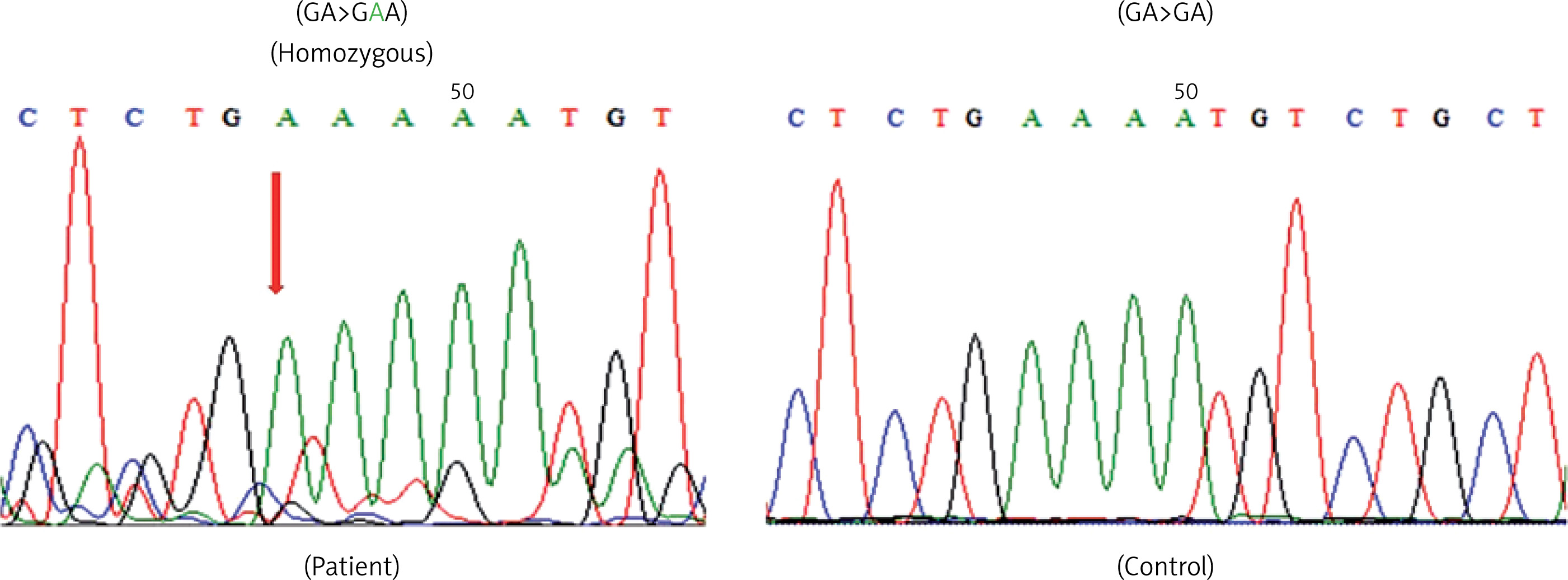
WES was performed for the proband (II.2) and his brother (II.5). After a series of variant filtration steps, both the proband (II.2) and his brother (II.5) were found to have co-inherited c.2938dupA, a novel frameshifting insertion mutation located in the exon 8 region of the ALMS1 gene in the homozygous form (Figure 3). The novelty of this variant was ascertained through its absence in 1000G, Exome Aggregation Consortium (ExAC), Greater Middle East (GME) Variome project, EURO-WABB (LOVD) and Saudi Human Genome Project (SHGP). The Mutation Taster webtool predicted this mutation as disease causing. The Sanger sequencing results also confirmed that both symptomatic brothers (II.2 & II.5) were homozygous to the mutant allele, whereas their parents (I.1 & I.2) were heterozygous and the asymptomatic members (II.1, II.4 & II.6) were homozygous to the reference allele. These findings confirm that the ALMS1: c.2938 dupA mutation is inherited in the family members in the autosomal recessive mode (Figure 2). Sanger sequencing results for the candidate variant are shown in Table II and in Figure 4.
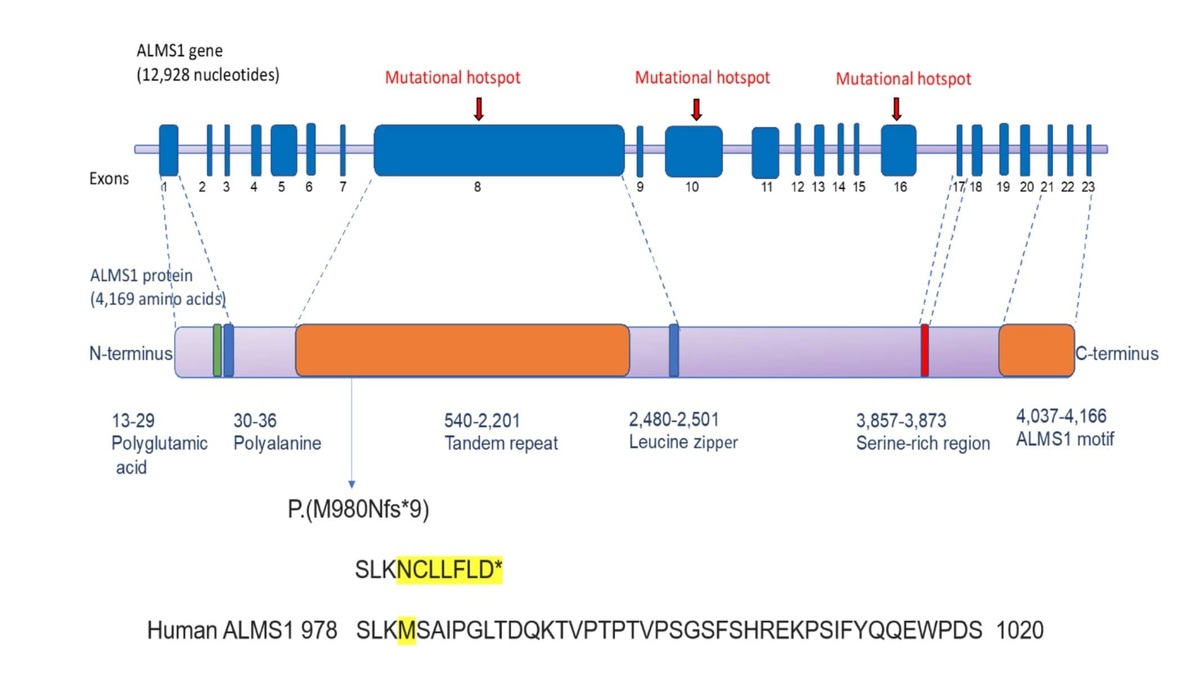
Figure 3
The graphic illustrates the distribution of 23 exons among 231,167 nucleotide sequence of the ALMS1 gene and the location of exon8: c.2938 dupA mutation that was present in the Saudi family
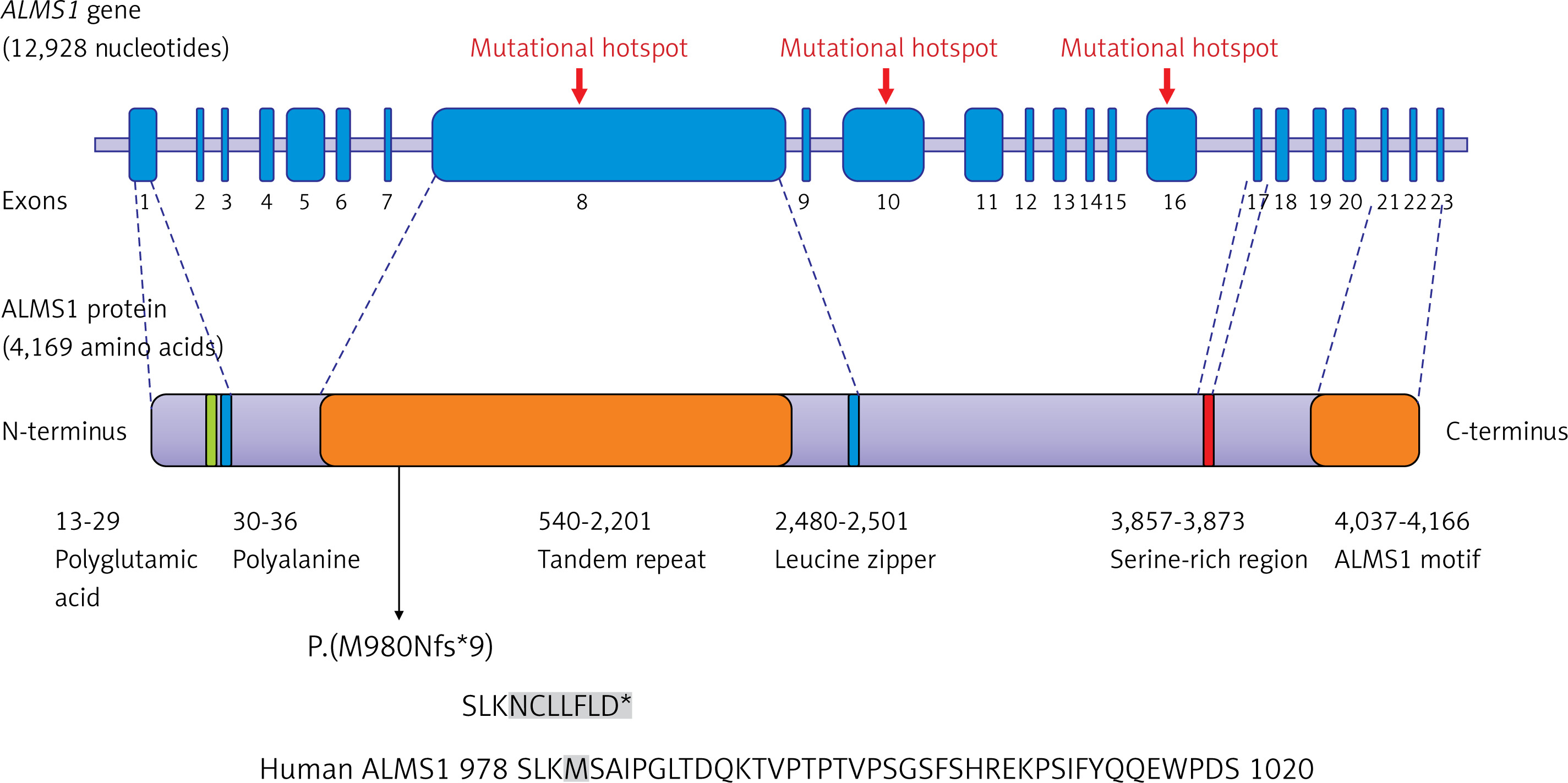
Table II
Genotypes of variants in the ALMS1 gene as determined by Sanger sequencing
Discussion
In the present study, we described a novel mutation in the ALMS1 gene causative for Alström syndrome in one consanguineous family from Saudi Arabia. In this family, the proband (II.2) was admitted to the hospital for cardiac arrhythmias and seizures. Thus, he was initially suspected to have a cardiac arrythmia, but echocardiographic studies revealed a dilated cardiomyopathy with severe mitral valve regurgitation. He was born with bilateral astigmatism and retinal dystrophy and developed severe bilateral sensorineural hearing loss at puberty. He was found to have allergic rhinitis and hypertriglyceridemia at the age of 21 years. There was a history of obesity starting in childhood but no blood sugar abnormality. All these findings suggested a mitochondrial disorder. But Sanger sequencing is not an ideal strategy to screen all the mitochondrial genes as it requires lot of time and a series of laboratory experiments. Hence, we chose to perform WES, which is able to perform mutation scanning for both nuclear and mitochondrial genes in a single experiment. WES was performed for the proband (II:2) and his affected brother (II.5). After multiple filtration steps, we were left with a potentially disease-causing variant, c.2938 dupA (p.Met980Asnfs*9) in the ALMS1 gene in exon 8 in both the proband and his brother. Both inherited the variant in an autosomal recessive manner.
The c.2938 dupA mutation is located on exon 8, which is an almost 6 kb long nucleotide sequence and encodes a huge tandem repeat sequence (TRS) domain, which makes up 40% of the coding region [17]. Accordingly, we postulate that this truncating ALMS1 protein at codon 980, which is located in the TRS domain lying between 540 and 2201 amino acids, might generate unstable protein that undergoes nonsense mediated decay, leading to the loss of approximately 77% of the total 4169 amino acids of ALMS1 protein. Molecular defects of ALMS1 might lead to the failure of different molecular processes that are involved in the primary cilium function, cell cycle regulation, apoptosis, extracellular matrix production, adipogenesis, cell migration, cytoplasmic microtubular organization and endosomal transport [13, 18].
Alström syndrome patients are known to demonstrate variable clinical expressivity. This significant degree of variability, even within members of the same family or between families, generates complications for a universal definition [1, 19]. Table III shows the detailed phenotype-genotype characteristics for all Alström syndrome patients from Saudi Arabian families. It displays the clinical manifestations associated with each mutation. Eye abnormality is the predominant clinical phenotype, which is observed in 100% of Alström syndrome patients, followed by obesity and DCM, which occur in 68% and 48% of cases, respectively. Thirty-seven percent of the cases presented with SNHL, while 26% had blood sugar abnormality [2, 4, 7, 20–22].
Table III
Phenotype-genotype status of all the Alström syndrome patients reported from Saudi Arabia
| Reference | c. DNA position | Amino acid change | Type of study | Exon | Consequence | Clinical phenotype |
|---|---|---|---|---|---|---|
| [7] | c.1159 A/T | T376S | Familial study | 5 | Missense | Progressive diminution of visual acuity, bilateral horizontal nystagmus, bilateral sensorineural hearing loss, photophobia, obesity, acanthosis nigricans, dilated cardiomyopathy, no hepatic or endocrinological dysfunction |
| c.2759 C/G | S909* | 8 | Nonsense | Same as his brother | ||
| c.8194 C/T | R2721* | 10 | Nonsense | Progressive visual and sensorineural hearing loss, horizontal nystagmus, obesity, acanthosis nigricans, dilated cardiomyopathy, mild to moderate mental disability and no renal or endocrinological dysfunctions | ||
| [20] | c.8441C>A | P.S2814* | Familial study | – | Nonsense | Poor visual acuity in each eye, nystagmus and visual impairment, had a hearing aid in the left ear and diabetes |
| [2] | c.12154_12166del | Arg4052Glyfs*2 | Familial study | Nonsense | Persistent vomiting, with hyperglycemia, horizontal nystagmus, bilateral hearing loss, insulin resistance in the form of acanthosis nigricans, elevated triglyceride level, no renal, liver or endocrinological dysfunctions | |
| [21] | c.5534C > G | S908X | Familial study | 8 | Nonsense | Obesity, congenital nystagmus and low vision since birth, photophobia. Cone-rod dysfunction, no dilated cardiomyopathy |
| c.5981delCAGA | – | 8 | Nonsense | Obesity, congenital nystagmus and low vision since birth, congenital dilated cardiomyopathy, photophobia. Cone-rod dysfunction | ||
| c.8275C > T | R2720X | 10 | Nonsense | Dilated cardiomyopathy, low vision due to retinal dystrophy with nystagmus | ||
| IVS18-2A > T | – | 19 | Nonsense | Obesity, short stature, acanthosis nigricans, retinal dystrophy, cardiomyopathy and insulin resistance | ||
| [22] | c.10945G>T | P.E3649* | Familial study | 16 | Nonsense | Horizontal nystagmus and cataracts. No other syndromic phenotypes such as hearing loss or obesity were observed |
| [4] | c.7942C>T | P.Gln2648* | Retrospective study (2010–2014) showing the ophthalmic phenotype of 19 children from 13 families | – | Nonsense | Vision/poor fixation, cone-rod dysfunction and obesity |
| c.2737_2740delGAGA | P.Glu913Serfs*20 | – | Nonsense | Vision abnormality, obesity | ||
| c.6305C>A | P.Ser2102* | – | Nonsense | Cone-rod dysfunction and macular atrophy | ||
| c.11876-2A>T | – | – | Nonsense | Vision/poor fixation, liver disease, mental delay and deafness | ||
| c.8782C>T | P.Arg2928* | – | Nonsense | Macular atrophy, obesity, DM, congenital cardiomyopathy, mentally delayed and posterior subcapsular cataract | ||
| c.6305C>A | P.Ser2102* | – | Nonsense | Vision/poor fixation, obesity and mental delay | ||
| c.8164C>T | P.Arg2722* | – | Nonsense | Cone-rod dysfunction and cardiomyopathy | ||
| c.11732delC | P.Pro3911GlnfsX16 | – | Nonsense | Cone-rod dysfunction, macular atrophy, obesity | ||
| c.5534C>G | P.Ser908* | – | Nonsense | Cone-rod dysfunction, transient myocarditis, obesity and DM | ||
| c.11876-2A>T | – | – | Nonsense | Vision abnormality, obesity, mental delay and acanthosis nigricans |
In our patients, the proband (II.2) and his affected brother (II.5) did not show typical symptoms, although they carry the same mutation. For example, both of them had vision abnormality and DCM, but the affected brother (II.5) did not present with obesity or hearing loss, in contrast to the proband, who had both. In addition, the intra-familial variability of cardiac presentation between the two affected brothers is a noticeable finding as the proband was diagnosed with the DCM at the age of 22 years with subsequent recovery in the follow-up, in contrast to his brother, who developed DCM from birth and experienced a severe course of cardiac disease culminating in end stage heart failure and death. This may be explained by the earlier hypothesis that the genotype-phenotype relationship of ALMS1 gene mutations might be altered by other modifier genes or by environmental influences [9]. We also assume that the proband’s sister, who died of complications of Wilms’ tumor, also had the bi-allelic ALMS1 mutation. Since she died prior to the commencement of our study, we could not look for other overt symptoms in her. Still, this study highlights that renal diseases could be another feature of ciliopathies, and in vitro knockdown of the ALMS1 gene in mice was reported to cause stunted cilia on kidney epithelial cells [23]. However, the effect of ALMS1 bi-allelic truncating mutation on the onset and progression of renal dysfunction in Alström syndrome is unknown. So, we speculate that the renal phenotype in the sister of the proband is due to ALMS1 mutation.
In conclusion, this study reports a novel and pathogenic ALMS1 mutation (c.2938 dupA) as causative of Alström syndrome. Future in vitro functional studies could ascertain its pathogenic impact on the protein structure and function. Our genotype-clinical phenotype findings indicate that the atypical presentation of Alström syndrome, even within siblings, could sometimes lead to clinical misdiagnosis. Hence, the present study emphasizes the utility of exome sequencing to support the clinical diagnosis of Alström syndrome patients.