Introduction
Non-specific low back pain (NSLBP) is not attributable to a known cause and is among the leading contributors to the global disease burden, affecting patients of all ages [1]. NSLBP affects 12% to 30% of the population every day [2] and represents 90–95% of low back pain (LBP) cases [1, 3]. It is the leading chronic health problem leading to older workers retiring prematurely. It forces more people out of the workplace than heart disease, diabetes, hypertension, neoplasm, respiratory disease, and asthma combined [4]. The economic burden on healthcare systems resulting from NSLBP is enormous [5].
Recent epidemiological analyses confirm that LBP remains one of the leading causes of years lived with disability worldwide and that its burden is expected to increase further in aging populations. Updated burden estimates indicate that LBP continues to represent a major challenge for healthcare systems due to its high prevalence, recurrence, and long-term impact on function and work ability [6, 7].
Contemporary evidence-based recommendations emphasize non-pharmacological management as the cornerstone of care in patients with NSLBP, including education, exercise-based approaches, and selected manual therapy techniques [8, 9]. Among manual interventions, spinal manipulative therapy (SMT) remains one of the commonly recommended options, although the magnitude of effect varies depending on patient characteristics, comparator treatment, and the specific technique applied [9].
A recent systematic review with meta-analysis highlighted that SMT may reduce pain and improve function in patients with NSLBP, but also stressed that the effectiveness of specific vertebral targeting remains uncertain [7]. This is clinically relevant because it underlines the need to investigate technique-specific manipulative approaches rather than treating SMT as a homogeneous intervention.
At the same time, recent rehabilitation-oriented evidence syntheses indicate that the best-supported interventions for NSLBP are multimodal and individualised, and that further research is needed to determine which specific manual techniques may provide additional value in carefully defined subgroups of patients [8]. In this context, the vertical adjustment position standing (VAPS) technique described by Hartman and the Gravity Table represent potentially relevant innovations, as they combine vertical loading, traction, and manipulation in a standardised manner that may influence both pain and lumbar mobility.
LBP is a heterogeneous condition [10], which might explain why many treatments have little effect [11]. Spinal manipulative therapy (SMT) is characterised by high velocity and low amplitude techniques to treat pain and mobility restrictions [12]. Most international guidelines recommend SMT for managing acute LBP [13]. Systematic reviews conclude that SMT improves patients with NSLBP [7, 9, 14].
The clinical guidelines for LBP management recommend spinal manipulation (SM) [15–17]. These recommendations indicate that SM demonstrates mild-to-moderate effectiveness, comparable to other non-invasive LBP treatment methods [18]. SM seems to be more effective than mobilisation or exercise [19, 20].
While many aspects of underlying therapeutic mechanisms are unknown, evidence suggests that SM benefits via multiple mechanisms, including biomechanical, neurophysiological, cellular, and psychosocial components [21]. A 2021 exploratory study showed the potential of SM to modulate the production of inflammatory mediators in acute and chronic NSLBP patients [22].
This study evaluated the effects of one specific spinal manipulation in patients with NSLBP using the vertical adjustment position standing (VAPS) technique, as described by Laurie Hartman in Handbook of Osteopathic Technique [23]. Vertical manipulation is proposed to be indicated when there is a vertical compression component associated with dysfunctions such as disc herniation or facet joint overloading. VAPS may address fixations that remain unresolved after rotational techniques. VAPS may be useful in larger patients when traction is required [23]. Osteopathic manipulative therapy (OMT) may improve pain, reduce the need for pain medication, and support recovery in patients with NSLBP [24].
The use of VAPS is physically demanding for the therapist, so research and development efforts have been initiated to create an innovative table for use in physiotherapy and osteopathic practice that would reduce the physical workload of the physiotherapist or osteopath. The significant proportion of women in the profession may also present challenges for the application of VAPS due to differences in physical characteristics between therapists.
The aim of this study was to demonstrate the short- and medium-term effects of VAPS and the VAPS table-assisted technique in patients with NSLBP on pain, lumbar spine mobility, and quality of life.
Material and methods
Public involvement
Invitations to potential participants were made publicly available at the clinic, sent by email to patients already using private medical services, and common communication channels such as Facebook were also used to invite volunteers to take part in the study.
Study design
A randomised placebo-controlled clinical trial was conducted to evaluate the short-term (immediately after the intervention) and medium-term (3 weeks after the intervention) effects of the Gravity Table technique and VAPS on pain, mobility of the lumbar spine, and pain-related disability in patients with NSLBP. The medium-term effect was assessed over a 3-week follow-up period. Studies assessing the effect of a specific treatment on patients with NSLBP also use these parameters [25, 26]. No intervention was given between M1 and M2 to assess the stability of the measurements.
The study was carried out in accordance with the Declaration of Helsinki (WMA Declaration of Helsinki Ethical Principles for Medical Research Involving Human Subjects) [27]. The ethics committee of the General Hospital Turnhout, Belgium approved this study: accreditation number: OG 192.
Study setting
The study was conducted in a private outpatient clinical practice in Belgium specialising in osteopathic and physiotherapy care. The facility provides non-hospital-based services, including consultations and manual therapy interventions, without inpatient hospitalisation.
Participants were recruited between January 2023 and December 2024 through on-site invitations, email contact with patients using private medical services, and public announcements via social media channels.
The clinical setting routinely manages patients with musculoskeletal disorders, including NSLBP, ensuring access to an appropriate target population.
Eligibility criteria
This study included only patients diagnosed with NSLBP and excluded other conditions with similar clinical presentations. Patients completed the Oswestry Disability Index (ODI) at intake and were selected based on exclusion and inclusion criteria.
Inclusion criteria: either sex, age ≥ 18 years, diagnosed with NSLBP, defined as pain in the area between the last rib and the gluteal folds that persists for at least 12 weeks without obvious radiological signs of abnormality or another known possible cause.
Exclusion criteria: spine surgery, use of specific medications (e.g. cortisone, anticoagulants), pregnancy, previous abdominal surgery within the last 3 months, acute illness during the study, contraindications (e.g. vertebral fractures, tumours, acute illnesses in the lumbar region and sacrum, osteoporosis, pathologic lordosis or kyphosis) and diseases of the central nervous system (e.g. multiple sclerosis, pyramidal, extrapyramidal, or cerebellar disease). All subjects who met the inclusion criteria received participant information about the study and provided written informed consent. Each patient was informed about the possibility of withdrawing from the study at any stage during the study period.
Patient sample
The sample size was estimated a priori for a one-way ANOVA comparing three independent groups (placebo and two intervention groups), assuming a significance level of α = 0.05, statistical power of 0.80, and a medium-to-large effect size (f = 0.33). Under these assumptions, the minimum required total sample size was approximately 87 participants, corresponding to about 29 participants per group. A three-group design was specified a priori because the trial was planned with two active interventions (VAPS and Gravity) and a placebo arm, all to be compared simultaneously within a single one-way ANOVA framework. The effect-size estimate (Cohen’s f ≈ 0.33) was derived from previously published randomised trials evaluating spinal manipulative and traction-based techniques in patients with NSLBP, in which between-group differences on the VAS pain scale of approximately 1.5–2.5 points (corresponding to f ≈ 0.30–0.40) have been reported [7, 25]. No formal pilot study was conducted in the Belgian population, and the calculation does not therefore rely on local pilot data. Therefore, 30 participants were recruited per group (n = 90) to ensure sufficient power and to account for potential attrition.
Outcome measures
The study aimed to demonstrate the short- and medium-term effects of VAPS and the table-based VAPS technique in patients with NSLBP on pain, lumbar spine mobility, and quality of life.
In the study, the short-term effect was analysed immediately following the completion of the therapeutic intervention, whilst the medium-term effect was assessed 3 weeks after the intervention.
Standardised questionnaires and scales: VAS, ODI, Schöber test
In the research, the Visual Analogue Scale (VAS) was used to verify the level of pain perception, the modified Schöber test (MSt) was used to assess spine mobility, and the Oswestry Disability Index (ODI) standardised questionnaire was used to assess the degree of disability in patients with NSLBP.
The pain was measured using the Visual Analogue Scale (VAS) with a 100 mm line and the terms “no pain” (0 mm) and “worst pain” (100 mm) [28, 29]. The VAS pain scale is a reliable research tool because of its practicality, reproducibility, and sensitivity, and is commonly used [29].
Lumbar mobility was determined using the modified Schöber test (MSt), a valid and reliable method. The MSt for lumbar mobility is a valid and reliable method commonly used to assess lumbar spine mobility [30].
The Oswestry Disability Index (ODI) evaluates the pain-related disability in people with acute, subacute, or chronic LBP. Its validity, reliability, and sensitivity have been confirmed [31–33]. Version 2.0 of the ODI is recommended for general use [34].
The ODI assesses the quality of life and has been recommended as a back pain-specific measure of disability in the general population with low physical and functional activity output [25, 35, 36]. The ODI examines the patient’s functioning in 10 different domains: pain intensity, independence, lifting objects, walking, sitting, standing, sleeping, social life, sexual activity, and traveling. The answers to the questions allow one to assess how limited the patient’s functioning is when performing individual activities. The answers in the ODI questionnaire are rated from 0 to 5 points. The total result is presented on a point scale of 0–50 or on a percentage scale of 0–100% defining the degree of disability in the examined person. The interpretation of the results is as follows: 0–4 points – without disability; 5–14 points – mild disability; 15–24 points – moderate disability; 25–34 points – severe disability; over 35 points – extreme suffering and disability [37].
Table for performing active vertical manipulations of the spine using the VAPS technique called “Gravity”
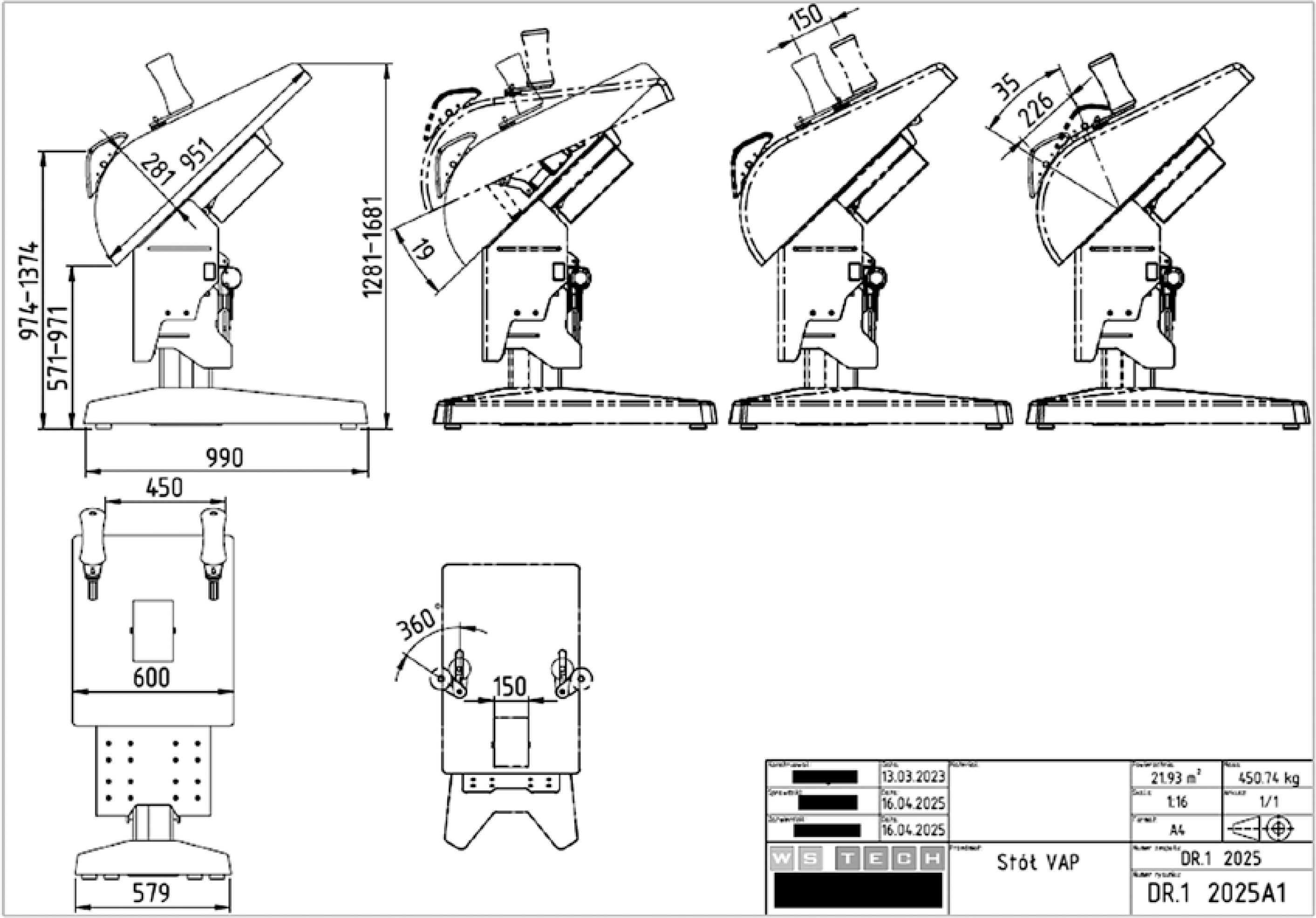
The table is height adjustable by means of an electric actuator; the fulcrum and armrests can also be moved up and down by means of an electric actuator. This allows for all positions to be achieved for both smaller and larger patients and a large area of the back to be treated.
The armrests are also manually adjustable in width for larger subjects, and the table can be tilted backwards to better position the patient before performing VAPS. This allows each patient to be positioned safely so that the drop can be performed as comfortably as possible. The drop height is 8 cm (Figure 1).
Randomisation and interventions
After enrolment in the study, each participant received a sequential identification number, starting with 1. The numbers 1, 2, 3 were assigned to the intervention groups: VAPS, Gravity and Placebo group, respectively.
Each patient had a baseline measurement (M1 for VAS and MSt). Three weeks later, both groups were measured again (M2 for VAS, MSt, and ODI). No intervention was given between M2 and M1 to assess the repeatability of the measurements.
After M2, each patient received three sessions of VAPS, Gravity, or placebo intervention. Immediately after the intervention (M3), VAS and MSt measurements were taken. ODI was not measured at M3, because this questionnaire is not subject to immediate changes or short-term effects.
Three weeks later (M4), the comparison of M3 and M4 measurements was used to assess the mid-term effect of both interventions. The detailed methodology of the study, showing the individual measurements and types of scales used in each measurement, is presented in Table I.
Table I
Methodology of the conducted study. The type of standard questionnaires used in each measure
| Measurement | ODI | VAS | MSt |
|---|---|---|---|
| M1 | X | X | |
| M2 | X | X | X |
| M3 | X | X | |
| M4 | X | X | X |
The intervention group received 10 min of lumbar soft tissue techniques, first lying on their right side with their knees and hips flexed at 90°, and then on their left side with the hips and knees precisely positioned. Following the application of the soft tissue technique, the participants received three sessions of VAPS.
During VAPS, the participant stands with their back to the practitioner’s back. The operator clasps their hands to encircle the participant’s folded arms with their elbows. One foot of the operator is in front of the other. The operator’s hips are flexed during the procedure, although the spine remains relatively straight. Figure 2 illustrates the performance of the VAPS technique.
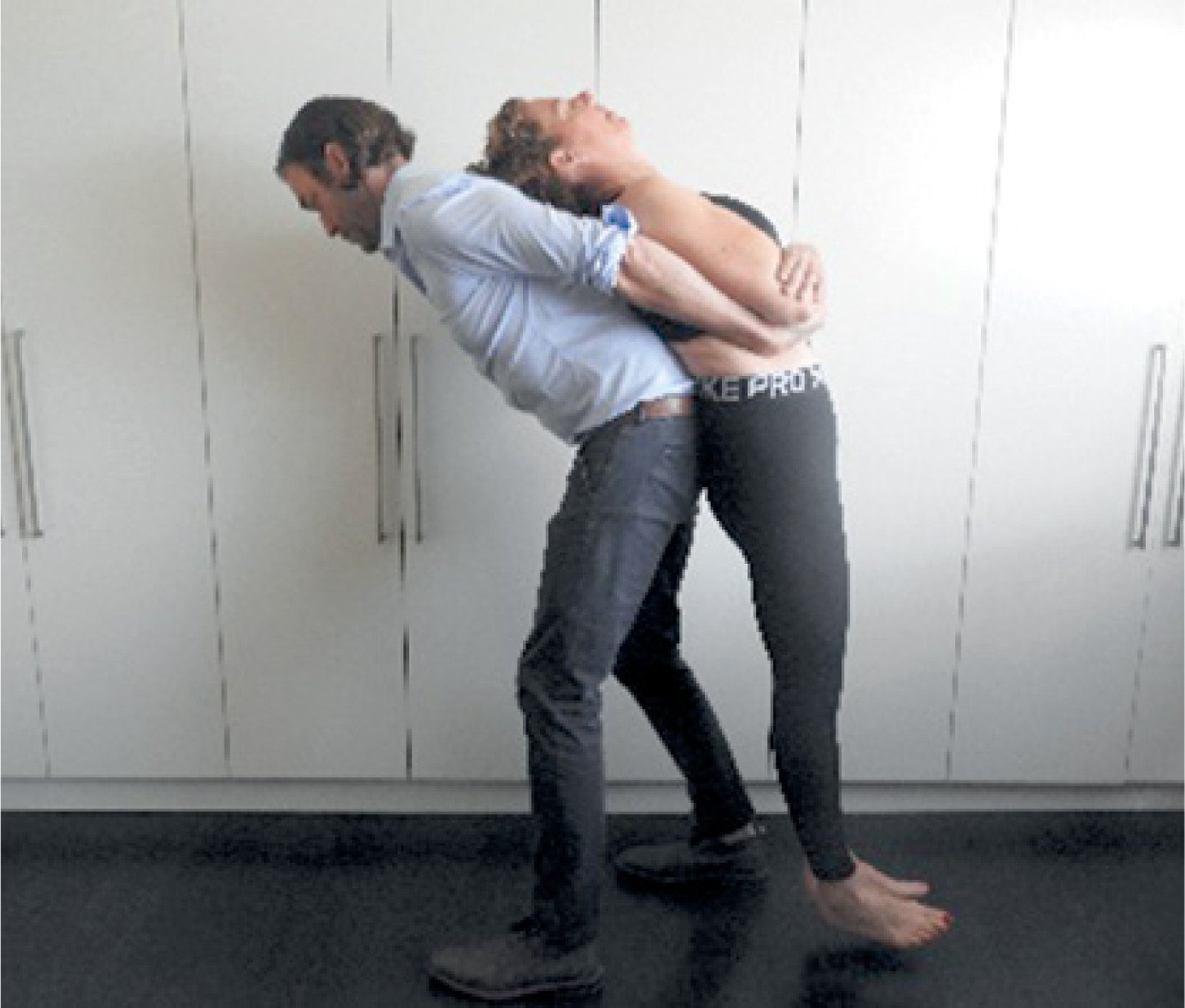
A hold is made, and the operator lifts the participant so that the operator’s sacrum contacts the participant’s lumbar spine. Firm compression of the participant’s back is maintained against the operator’s back. The operator stands on tiptoes and the adjustment is made by lowering the heels while maintaining the grip (Figure 2). The operator’s knees are never fully straight, and the drop movement is performed three times.
It is important that the participant is able to extend the lumbar spine before performing this technique. VAPS may address residual restrictions that rotational techniques leave partially unresolved [23]. Lateral flexion and rotation can be used to focus forces on specific sites in the lumbar spine. This technique is not applicable when the participant is taller than the operator unless the therapist is standing on an appropriate platform.
The Gravity group consisted of the same components as in the previous study group (intervention group). Following the application of the soft tissue technique, the participants received the Gravity Table intervention.
The participant stood with their back against the Gravity Table, supported by brackets under their armpits. The fulcrum was placed on the area to be treated (lumbar), and maximum comfort was provided to the participant (using additional pillows as needed).
The participant was lifted off the ground by the Gravity Table, creating traction on the vertebral column. The participant was lifted approximately 8 cm off the ground, allowing a controlled 6 cm downward movement to be performed. This procedure was intended to improve spinal mobility. The VAPS technique was then applied, and the participant was then lowered back to the ground.
The placebo group underwent a sham treatment consisting of the same 10-minute application of manual techniques to the soft tissues as in the previous intervention groups. After this soft tissue treatment, the participants were placed in a lumbar roll position but did not receive any thrust manipulation [38].
The selection criteria were similar to those used in other studies evaluating the treatment of NSLBP. We suggest a cut-off point of 3.0 for VAS for inclusion in future in-depth studies in patients with NSLBP. Participants did not receive other treatments or changes in medications during the study.
The placebo intervention was based on soft tissue techniques, which are often part of osteopathic treatment. Soft tissue techniques are not considered sufficient for the treatment of NSLBP, but they are similar to the osteopathic approach [39].
Blinding
This study was a single-blind (with assessor blinding), randomised, placebo-controlled trial. Participants were blinded to group allocation: because all three groups received an identical 10-minute soft-tissue procedure prior to the active or sham manipulation, participants were unable to determine whether the subsequent intervention represented an active treatment (VAPS or Gravity) or the placebo procedure. Outcome assessment was carried out by Practitioner A, who was blinded to group allocation and performed all VAS, MSt, and ODI measurements. The interventions were delivered by Practitioner B, who was blinded to the outcome data but, owing to the inherent nature of manual therapy, could not be blinded to the type of intervention performed. Therefore, both practitioners were blinded. The experimental technique was performed by Practitioner B, an osteopath with several years of experience. The total duration of the intervention technique was 15 min, and the participants were asked to remove clothing from the upper and lower bodies, except for underwear. All patients underwent the VAPS intervention technique on the same treatment table as the placebo group.
Statistical analysis
Qualitative variables were presented using the number of observations (n) and percentage (%), quantitative data using: the number of observations (n), percentage (%), standard deviation (SD), range (minimum–maximum value), and lower (Q1) and upper (Q3) quartiles. The VAS variable was analysed as a quasi-continuous variable. Incomplete patient data have been removed from the analysis.
Normal distribution was verified using the Shapiro-Wilk W test, and equality of variances using Levene’s test. Failure to meet the assumption of normality led to the use of non-parametric tests.
The analysis of differences between the three analysed groups was performed using the Kruskal–Wallis test. The Bonferroni post-hoc test was applied for pairwise comparisons.
All data analysis was performed using Statistica 13.0. The relationships were considered statistically significant at a significance level of p ≤ 0.05.
Results
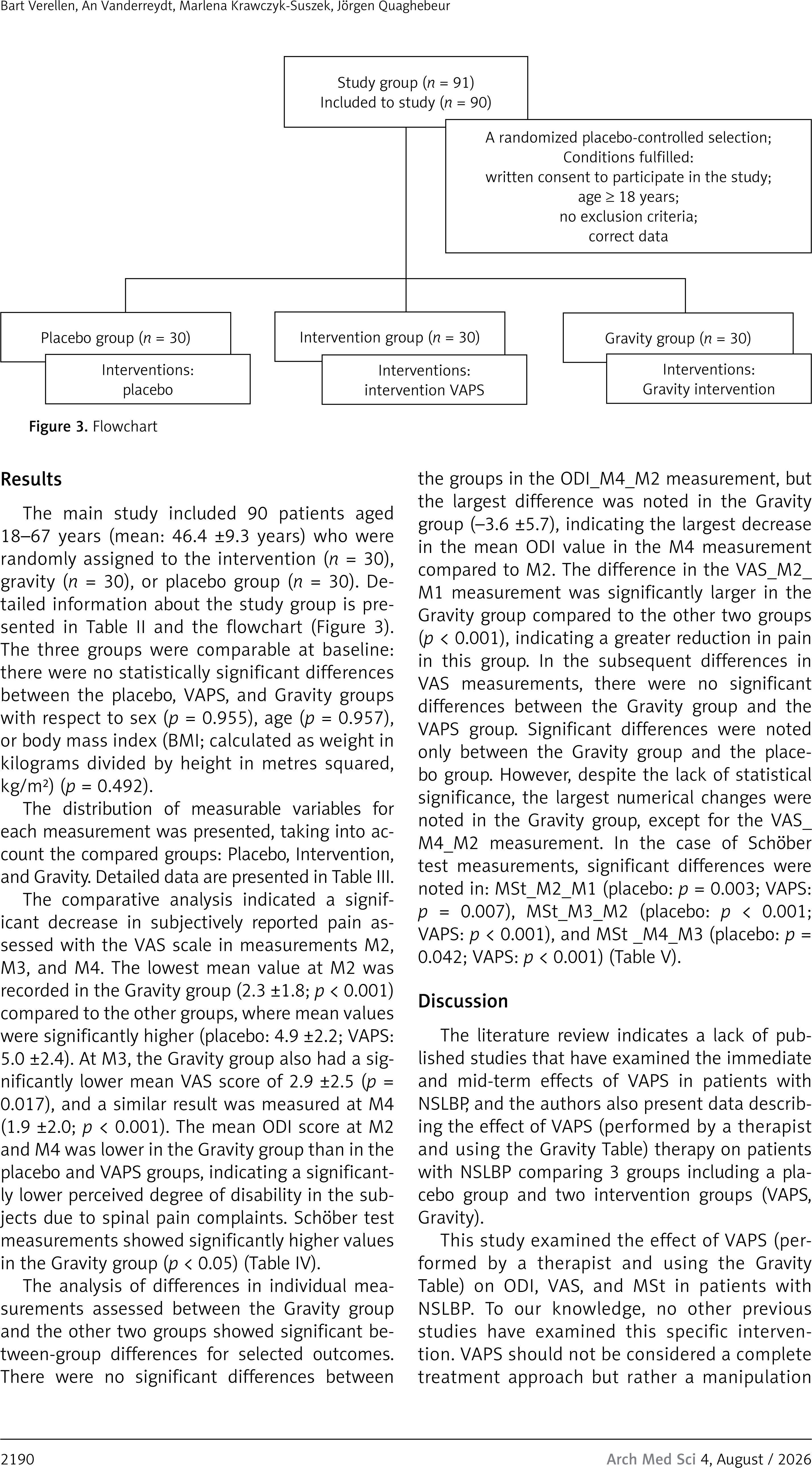
The main study included 90 patients aged 18–67 years (mean: 46.4 ±9.3 years) who were randomly assigned to the intervention (n = 30), gravity (n = 30), or placebo group (n = 30). Detailed information about the study group is presented in Table II and the flowchart (Figure 3). The three groups were comparable at baseline: there were no statistically significant differences between the placebo, VAPS, and Gravity groups with respect to sex (p = 0.955), age (p = 0.957), or body mass index (BMI; calculated as weight in kilograms divided by height in metres squared, kg/m2) (p = 0.492).
Table II
General characteristics of the study group
The distribution of measurable variables for each measurement was presented, taking into account the compared groups: Placebo, Intervention, and Gravity. Detailed data are presented in Table III.
Table III
Values of individual measurements and scales at subsequent measurement points
[i] VAS – Visual Analogue Scale, ODI – Oswestry Disability Index, MSt – modified Schöber test, M (95% CI) – mean and 95% confidence interval, SD (95% CI) – standard deviation and 95% confidence interval, Range (min-max) – range between minimum (min) and maximum (max) values, Q1 – lower quartile, Q3 – upper quartile, M1–M4 – measurement time points.
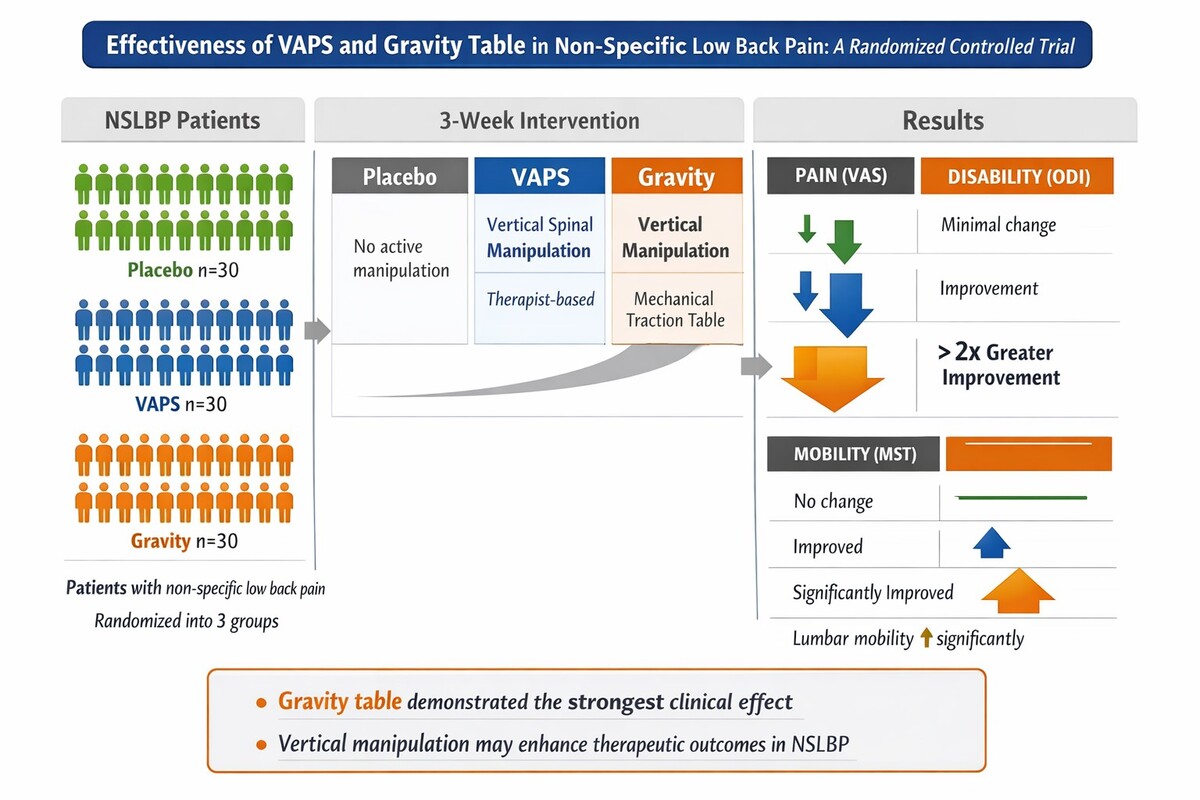
The comparative analysis indicated a significant decrease in subjectively reported pain assessed with the VAS scale in measurements M2, M3, and M4. The lowest mean value at M2 was recorded in the Gravity group (2.3 ±1.8; p < 0.001) compared to the other groups, where mean values were significantly higher (placebo: 4.9 ±2.2; VAPS: 5.0 ±2.4). At M3, the Gravity group also had a significantly lower mean VAS score of 2.9 ±2.5 (p = 0.017), and a similar result was measured at M4 (1.9 ±2.0; p < 0.001). The mean ODI score at M2 and M4 was lower in the Gravity group than in the placebo and VAPS groups, indicating a significantly lower perceived degree of disability in the subjects due to spinal pain complaints. Schöber test measurements showed significantly higher values in the Gravity group (p < 0.05) (Table IV).
Table IV
Differences in individual measurements between the compared groups
The analysis of differences in individual measurements assessed between the Gravity group and the other two groups showed significant between-group differences for selected outcomes. There were no significant differences between the groups in the ODI_M4_M2 measurement, but the largest difference was noted in the Gravity group (–3.6 ±5.7), indicating the largest decrease in the mean ODI value in the M4 measurement compared to M2. The difference in the VAS_M2_M1 measurement was significantly larger in the Gravity group compared to the other two groups (p < 0.001), indicating a greater reduction in pain in this group. In the subsequent differences in VAS measurements, there were no significant differences between the Gravity group and the VAPS group. Significant differences were noted only between the Gravity group and the placebo group. However, despite the lack of statistical significance, the largest numerical changes were noted in the Gravity group, except for the VAS_M4_M2 measurement. In the case of Schöber test measurements, significant differences were noted in: MSt_M2_M1 (placebo: p = 0.003; VAPS: p = 0.007), MSt_M3_M2 (placebo: p < 0.001; VAPS: p < 0.001), and MSt _M4_M3 (placebo: p = 0.042; VAPS: p < 0.001) (Table V).
Table V
Analysis of mean differences between measurement time points, taking into account intergroup differences
Discussion
The literature review indicates a lack of published studies that have examined the immediate and mid-term effects of VAPS in patients with NSLBP, and the authors also present data describing the effect of VAPS (performed by a therapist and using the Gravity Table) therapy on patients with NSLBP comparing 3 groups including a placebo group and two intervention groups (VAPS, Gravity).
This study examined the effect of VAPS (performed by a therapist and using the Gravity Table) on ODI, VAS, and MSt in patients with NSLBP. To our knowledge, no other previous studies have examined this specific intervention. VAPS should not be considered a complete treatment approach but rather a manipulation technique that has been investigated in previous research.
The use of an osteopathic approach, including chiropractic, is reported to show good results of therapy and the possibility of using treatment in many regions of the body, sometimes remote from the symptomatic area [40]. Neuroimaging studies covering the mechanisms of osteopathic manipulative treatment (OMT) are becoming increasingly popular among researchers aiming to evaluate the effects of therapy [41, 42]. Some authors emphasise the importance of OMT in the process of sensitisation through the influence of the technique on interoceptive pathways [43]. However, this area of research is relatively young and requires further advanced empirical research using innovative diagnostic techniques.
Other studies have examined the effects of spinal manipulative treatment. However, they used high-velocity, low-amplitude spinal manipulation (HVLA-SM) of the lumbar spine with participants placed in a side-lying position, with the upper lumbar segments maintained in flexion and lumbar rotation until the L3–L4 level. These studies primarily compared this technique with other manipulation techniques or exercise [25, 44].
Analyses of the literature on the subject have shown a reduction in pain within 3 months with OMT, but the exclusion criteria did not include pure osteopathic interventions [45]. This study also combined patients with specific and nonspecific LBP, so the conclusions from the study may be questionable. Subsequent years of research have shown clinically significant therapeutic effects in reducing pain [17]. Partial evidence of the effectiveness of OMT led to the American Osteopathic Association presenting guidelines for OMT in LBP, focusing on the need to identify somatic dysfunction as the most likely cause of pain [46].
The observed reduction in pain and disability is in line with previous systematic reviews and meta-analyses indicating that spinal manipulative therapy produces small-to-moderate but clinically relevant improvements in pain and functional outcomes in patients with NSLBP [17, 19]. Moreover, recent high-impact evidence supports the role of SMT as one of the recommended non-invasive treatment strategies in international guidelines [9]. The magnitude of pain reduction observed in the present study, particularly in the Gravity group, appears greater than the average effects reported in previous meta-analyses, suggesting a potentially enhanced therapeutic effect of vertical traction-based manipulation.
Previous randomised trials comparing different spinal manipulation techniques have provided evidence that high-velocity low-amplitude (HVLA) manipulation improves pain and mobility in NSLBP patients [25]. However, most of these studies applied techniques in a side-lying position. In contrast, the present study introduces a vertical manipulation approach (VAPS), which may provide additional biomechanical advantages related to axial loading and traction. This may explain the greater magnitude of improvement observed in the Gravity group.
The mechanisms underlying the observed clinical effects are likely multifactorial. Previous studies suggest that spinal manipulation may modulate pain through neurophysiological mechanisms, including the reduction of temporal sensory summation and central sensitisation [12]. Furthermore, osteopathic manipulative approaches have been shown to influence interoceptive pathways and cortical processing of bodily signals [41, 43]. The vertical traction component of the VAPS and Gravity techniques may additionally enhance mechanoreceptor stimulation and reduce spinal loading, contributing to both immediate and sustained effects.
The present study demonstrated a reduction in pain intensity following the applied VAPS and Gravity interventions, as assessed using the VAS scale. In particular, in the case of the Gravity intervention, where an innovative therapy table was used, a reduction in pain was achieved from 4.6 ±1.9 in the M1 measurement to 1.9 ±2.0 on the VAS scale in the M4 measurement. These findings suggest potential benefits of using the VAPS vertical manipulation table in patient therapy, while also indicating that the technique may provide support for therapists and reduce physical demands during patient treatment.
Moreover, emerging evidence suggests that spinal manipulative therapy may also exert anti-inflammatory effects, including modulation of cytokine production [22]. Although inflammatory markers were not assessed in the present study, such mechanisms may partially contribute to the sustained reduction in pain observed at follow-up.
The superior outcomes observed in the Gravity group may be explained by the combination of vertical traction, controlled mechanical loading, and reproducibility of force application. Unlike therapist-dependent techniques, the Gravity Table allows more standardised delivery of mechanical stimuli, which may reduce variability and potentially improve treatment precision. Additionally, the unloading phase followed by controlled axial compression may influence spinal loading patterns and neuromuscular responses, potentially contributing to greater pain relief and improved mobility.
Disability was assessed in the medium term because an improvement in disability in the short term is not necessarily expected in chronic conditions, and the questionnaire properties of the ODI may not be appropriate for short-term evaluation. These factors should be considered methodological limitations of this study.
The medium-term effect was limited to 3 weeks, and therefore provides no information about long-term effects. This study also did not take into account possible confounding factors such as workload, emotional state, and somatisation. These variables will be addressed in future extended studies by the authors.
A further methodological limitation arises from the nature of manual therapy itself: although participants and the outcome assessor were blinded to group allocation, the practitioner delivering the intervention could not be blinded, since the execution of VAPS, Gravity and the sham procedure were physically distinguishable. This carries a residual risk of performance bias, which we attempted to minimise by standardising the soft-tissue protocol applied to all three groups, by separating the roles of the assessing and the treating practitioner, and by using objective and validated outcome measures (VAS, MSt, ODI). Nonetheless, the impossibility of fully blinding the therapist remains an inherent limitation of trials evaluating manipulative interventions and should be considered when interpreting the magnitude of the observed effects. The generalizability of our findings is also constrained. The trial was conducted in a single private osteopathic practice in Belgium and recruited a relatively homogeneous sample of adults with chronic NSLBP who fulfilled specific inclusion and exclusion criteria. Patients with prior spinal surgery, specific spinal pathology, neurological disease, pregnancy or recent abdominal surgery were excluded, and individuals using particular classes of medication (e.g., anticoagulants, corticosteroids) were not eligible. Consequently, our results may not be directly transferable to multi-centre populations, to patients with acute or sub-acute LBP, to older adults with multimorbidity, or to healthcare settings outside private osteopathic practice. Confirmatory multi-centre randomised controlled trials, with larger and more demographically diverse samples and longer follow-up periods, are warranted to further evaluate the short- and medium-term findings reported here and to better characterise the long-term efficacy and safety of vertical-position spinal manipulation, both in its therapist-delivered (VAPS) and table-assisted (Gravity) forms.
In conclusion, VAPS (Gravity) table therapy was associated with significantly reduced pain and improved lumbar spine mobility in the short and medium term compared to the VAPS and placebo groups. The use of table-based interventions (VAPS (Gravity)) may reduce the physical demands placed on the therapist during patient treatment, potentially supporting more ergonomic working conditions. Further studies are needed to directly evaluate the impact of table-based interventions on therapist workload and musculoskeletal strain.