Introduction
The comorbidity of cardiovascular disease and cognitive dysfunction is a clinical concern of growing importance [1]. Shared risk factors and molecular mechanism for atherosclerotic cardiovascular disease (ASCVD), such as hypertension, diabetes, dyslipidemia, sleep apnea, and lack of exercise, are known to contribute to cerebrovascular pathology and impair cognitive function, leading to a higher prevalence of cognitive deficits in patients with coronary artery disease (CAD) compared to the general population [2–7]. Consequently, understanding the prognostic implications of cognitive impairment in this high-risk group is of significant clinical interest.
While prior studies have linked cognitive impairment to adverse outcomes in patients with acute coronary syndrome (ACS), the interpretation of these findings is challenging [8–10]. The acute physiological stress of an ACS event, characterized by systemic inflammation and hemodynamic instability, can precipitate transient cognitive dysfunction [11–13]. This confounds the distinction between pre-existing, stable cognitive decline and acute, illness-induced fluctuations.
Cognitive screening holds considerable promise for the comprehensive management of patients with CAD, serving a dual purpose: identifying individuals with underlying mild cognitive impairment (MCI) or dementia and enhancing prognostic risk stratification [14, 15]. The Montreal Cognitive Assessment (MoCA) is widely employed for this purpose due to its efficiency and established diagnostic validity. However, conventional MoCA cutoffs are calibrated to optimize the diagnosis of neurological syndromes (e.g., MCI) and are not necessarily tailored to identify patients at the highest risk for recurrent cardiovascular events.
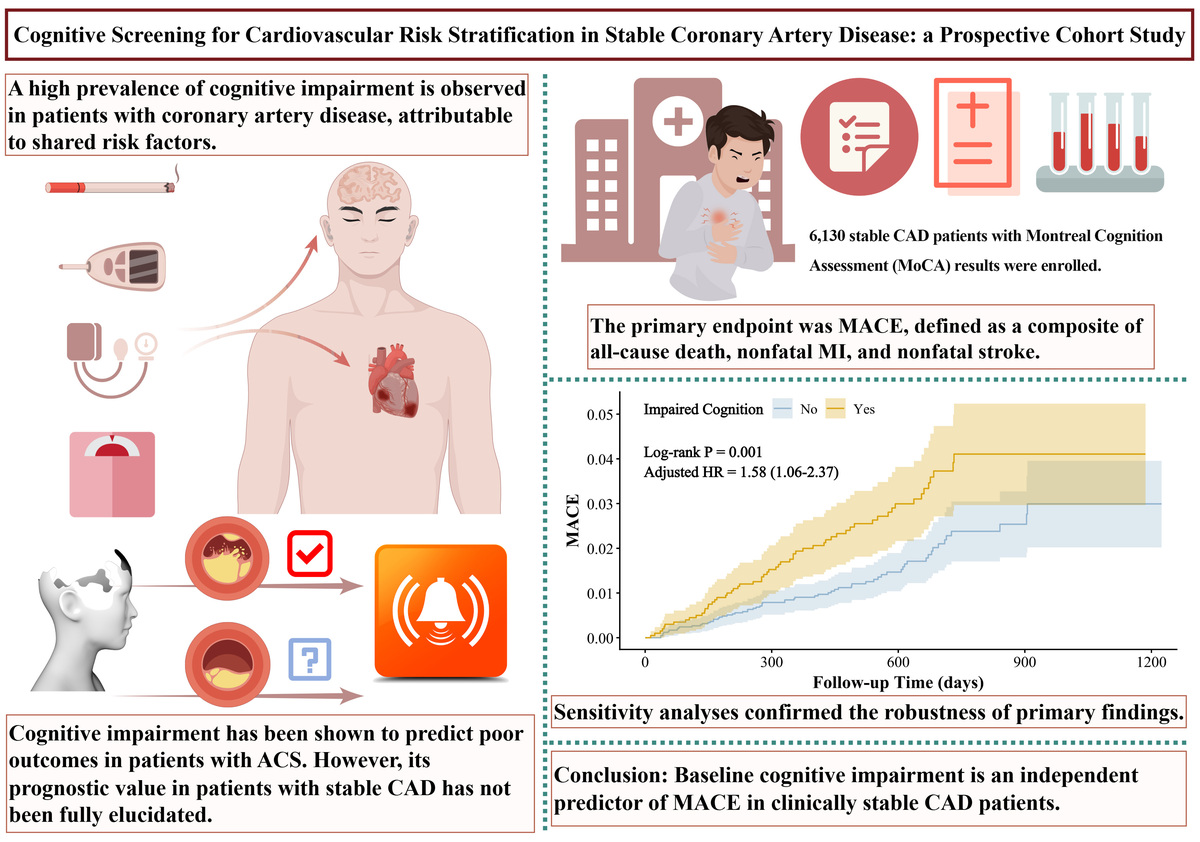
To address these knowledge gaps, the primary aim of the present study was to determine the independent prognostic value of baseline cognitive impairment regarding adverse outcomes in a cohort of clinically stable CAD patients.
Material and methods
Study design and participants
Between September 2021 and August 2024, this prospective cohort study enrolled 7,091 patients admitted for the evaluation of symptoms (e.g., chest pain) and diagnosed with CAD at the Coronary Artery Disease Center of Beijing Anzhen Hospital, Capital Medical University. All participants underwent cognitive screening using the MoCA during their index hospitalization. Clinical management, including indications for invasive interventions and the prescription of secondary prevention medications at discharge, adhered to current guidelines [16]. Exclusion criteria were defined as follows: (1) loss to follow-up or inability to comply with telephone interviews; (2) active malignancy; (3) acute myocardial infarction (AMI) or other unstable clinical conditions, defined as unstable angina, acute decompensated heart failure, or hemodynamic instability; and (4) a prior diagnosis of dementia. The study protocol was approved by the Institutional Review Board of Beijing Anzhen Hospital, Capital Medical University (Ethics Approval Code: KS2023081).
Data collection and definitions
Baseline clinical data were collected via structured interviews conducted by trained physicians who were blinded to the study endpoints. Demographic variables included age, sex, and educational attainment (stratified as 0–6 years, 7–12 years, and > 12 years). Anthropometric measurements included height, weight, and body mass index (BMI). Smoking status was categorized as never, current, or former smoking. Documented medical history included hypertension, type 2 diabetes mellitus (T2DM), atrial fibrillation (AF), heart failure (HF), chronic kidney disease (CKD), prior myocardial infarction (MI), prior stroke, and previous revascularization (percutaneous coronary intervention [PCI] or coronary artery bypass grafting [CABG]). Hypertension and T2DM were defined based on self-reported history or the current use of antihypertensive or antidiabetic agents; for T2DM, diagnosis was further confirmed by fasting plasma glucose and glycated hemoglobin (HbA1c) levels. Obesity was defined as a body mass index (BMI) > 28 kg/m2. CKD stages 3–5 were defined as estimated glomerular filtration rate < 60 ml/min/1.73 m2. Other comorbidities were ascertained via self-report.
Laboratory analyses were performed at the Clinical Laboratory Center of Beijing Anzhen Hospital following standardized protocols. Measured parameters included lipid profiles, glycemic markers, liver and renal function tests, coagulation profiles, and complete blood counts. Procedural data regarding invasive strategies were extracted from catheterization reports. Discharge medications, including antiplatelet agents, lipid-lowering drugs, oral glucose-lowering agents, and antihypertensive drugs, were retrieved from electronic medical records.
Missing data were imputed using the missRanger package in R, which implements a fast non-parametric imputation algorithm based on random forests.
Cognition assessment
Cognitive function was evaluated in all participants using the Mandarin Chinese version of the MoCA. This scale yields a maximum total score of 30, derived from the summation of domain-specific subscores. For patients undergoing invasive procedures during their hospitalization, cognitive assessment was strictly conducted prior to the intervention to avoid confounding by perioperative factors. The Mandarin MoCA has been validated in Chinese populations, demonstrating high reliability and validity, as detailed in prior studies [17].
Follow-up and outcome
Post-discharge follow-up was conducted via telephone interviews at 6-month intervals for the first 2 years and annually thereafter. The primary endpoint was major adverse cardiovascular events (MACE), defined as a composite of all-cause mortality, nonfatal MI, and nonfatal stroke. Secondary endpoints included: (1) all-cause mortality; (2) the composite of nonfatal MI and nonfatal stroke; and (3) unplanned revascularization. Event status and timing were ascertained during follow-up interviews and corroborated by medical records whenever possible. The follow-up period concluded in January 2025.
Statistical analysis
Continuous variables are reported as mean ± standard deviation (SD) or median with interquartile range (IQR) and were compared using Student’s t-test or the Mann-Whitney U test, respectively. Categorical variables are presented as frequencies and percentages [n (%)] and were compared using the χ2 test or Fisher’s exact test. Cumulative event rates were estimated using the Kaplan-Meier method, with differences between groups assessed via the log-rank test. Receiver operating characteristic (ROC) curve analysis was used to determine the optimal prognostic cutoff for the MoCA scale regarding MACE prediction, identified by maximizing the Youden index (sensitivity + specificity – 1).
To quantify the independent prognostic impact of cognitive impairment, univariable and multivariable Cox proportional hazards regression models were constructed. Candidate variables for adjustment included those with a p-value < 0.10 in univariable analysis (Table III, Supplementary Figure S1) or established clinical relevance. A hierarchical modeling strategy was employed involving four nested models: Model 1 adjusted for baseline demographics; Model 2 added clinical comorbidities; Model 3 further included laboratory biomarkers; and Model 4 (fully adjusted) incorporated medication use. Results are reported as hazard ratios (HRs) with 95% confidence intervals (CIs).
Consistency of findings was evaluated via pre-specified subgroup analyses across key clinical and demographic strata. To verify the robustness of the primary results, three sensitivity analyses were performed: (1) applying the standard MoCA correction for educational attainment (adding one point for participants with ≤ 12 years of education); (2) excluding patients with a history of stroke; and (3) employing propensity score matching (PSM). For PSM, a logistic regression model generated propensity scores using all baseline covariates with a univariable p-value < 0.2 between groups. A 1:1 nearest-neighbor matching algorithm (caliper = 0.2) was applied, followed by Cox regression on the matched cohort.
Statistical analyses were performed using R software (version 4.5.0; R Foundation for Statistical Computing, Vienna, Austria). A two-sided p-value < 0.05 was considered statistically significant.
Results
Baseline characteristics
The patient enrollment and selection process is illustrated in Figure 1. Baseline characteristics, stratified by clinical outcome, are detailed in Table I. The overall cohort had a mean age of 61.2 ±9.6 years and was predominantly male (75.8%). Compared with event-free patients, those who experienced MACE were significantly older and bore a higher burden of cardiovascular risk factors and comorbidities, including smoking history, hypertension, T2DM, prior MI, stroke, and heart failure. Laboratory profiling indicated that the MACE group was characterized by elevated inflammatory and metabolic markers (white blood cell count, glucose, and hs-CRP), accompanied by lower hemoglobin levels and reduced eGFR.
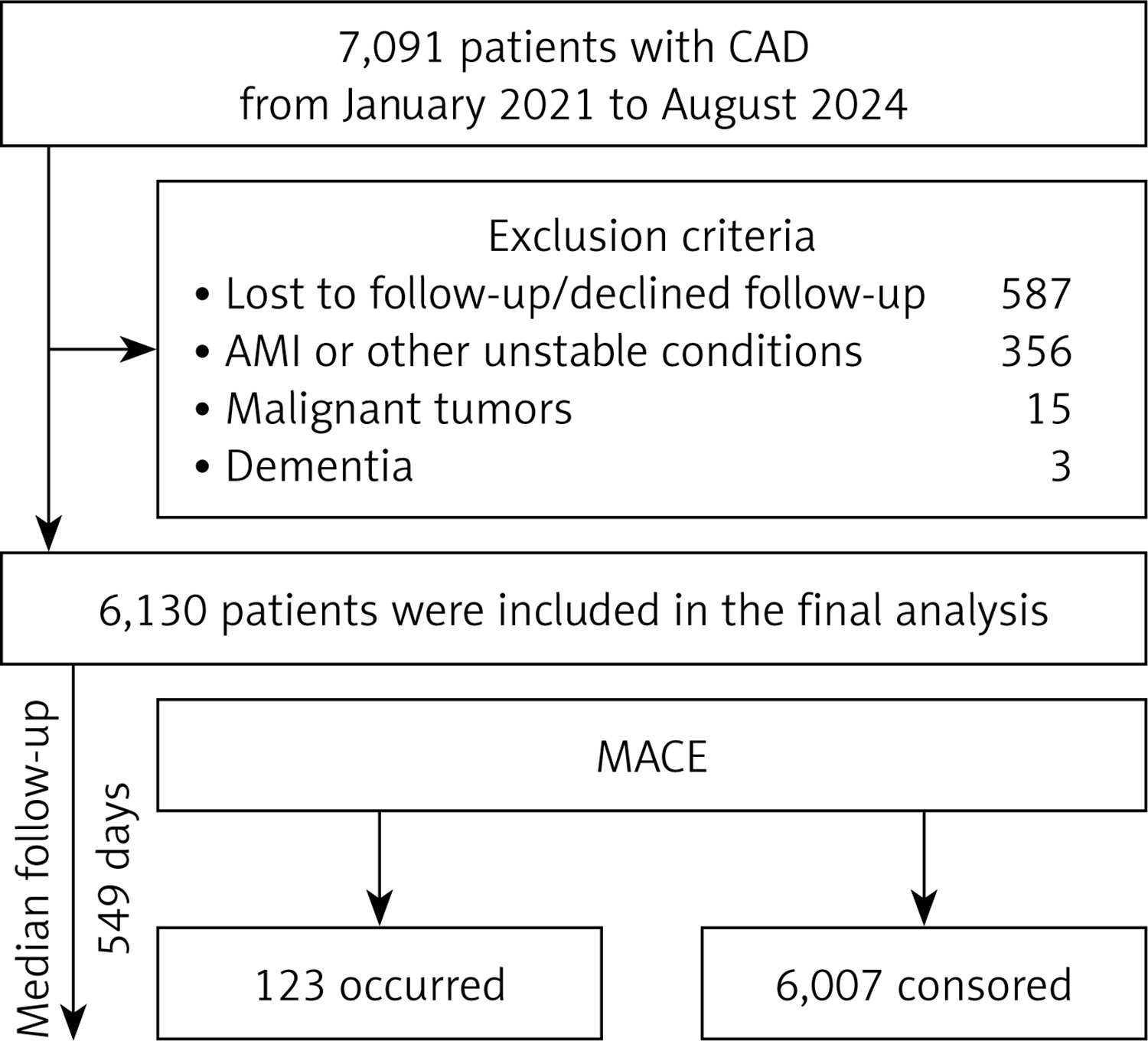
Table I
Baseline characteristics of participants
[i] ACEI – angiotensin-converting enzyme inhibitor, ALB – albumin, AMI – acute myocardial infarction, ARB – angiotensin II receptor blocker, BMI – body mass index, CABG – coronary artery bypass grafting, DCB – drug-coated balloon, DSA – digital subtraction angiography, eGFR – estimated glomerular filtration rate, GLU – glucose, HB – hemoglobin, HDL-C – high-density lipoprotein cholesterol, hs-CRP – high-sensitivity C-reactive protein, LDL-C – low-density lipoprotein cholesterol, T2DM – type 2 diabetes mellitus, MACE – major adverse cardiovascular events, P2Y12ri – P2Y12 receptor inhibitor, PCI – percutaneous coronary intervention, PLT – platelets, TC – total cholesterol, TG – triglyceride, WBC – white blood cells.
Distribution of cognitive impairment across key clinical subgroups
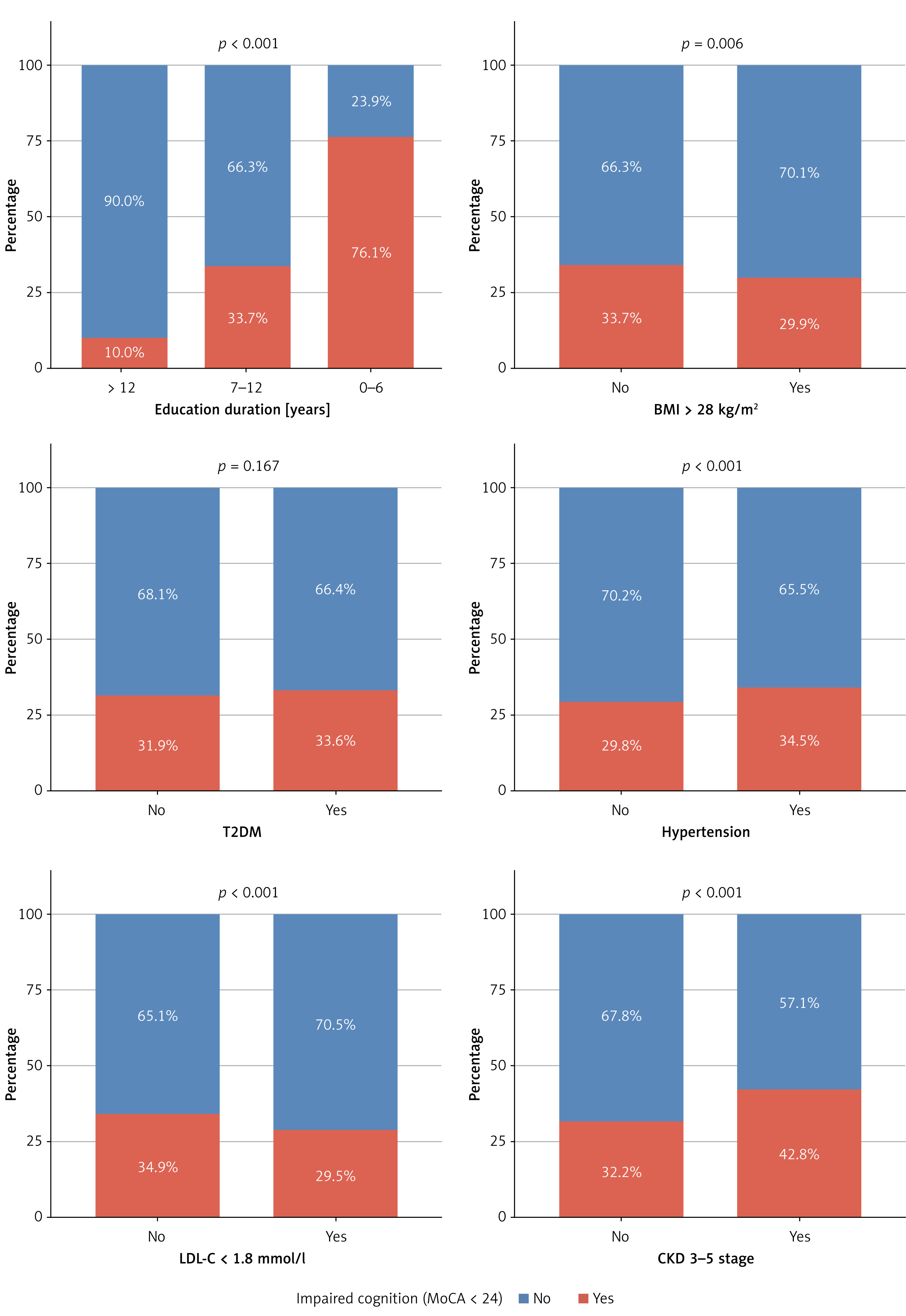
Based on ROC curve analysis (Figure 2), the optimal prognostic threshold was identified as a MoCA score of < 24 (corresponding to the maximum Youden index); this cutoff was subsequently used to define cognitive impairment. Figure 3 illustrates the distribution of cognitive impairment across key subgroups. Notably, demographic stratification revealed pronounced disparities, with a significantly higher prevalence observed in older patients (44.8% vs. 17.2%), females (50.6% vs. 27.0%), and those with lower educational attainment. Furthermore, cognitive impairment was more frequent among patients with established metabolic and vascular risk factors, including obesity, hypertension, dyslipidemia, and renal insufficiency.
Figure 2
Receiver operating characteristic analysis of the MoCA score for predicting MACE. A – The ROC curve illustrates the predictive performance of the baseline MoCA score for MACE. B – Plot of the Youden index as a function of MoCA score thresholds. The peak of the curve indicates the optimal prognostic cutoff value (< 24)
AUC – area under the curve, MoCA – Montreal Cognitive Assessment, ROC – receiver operating characteristic.
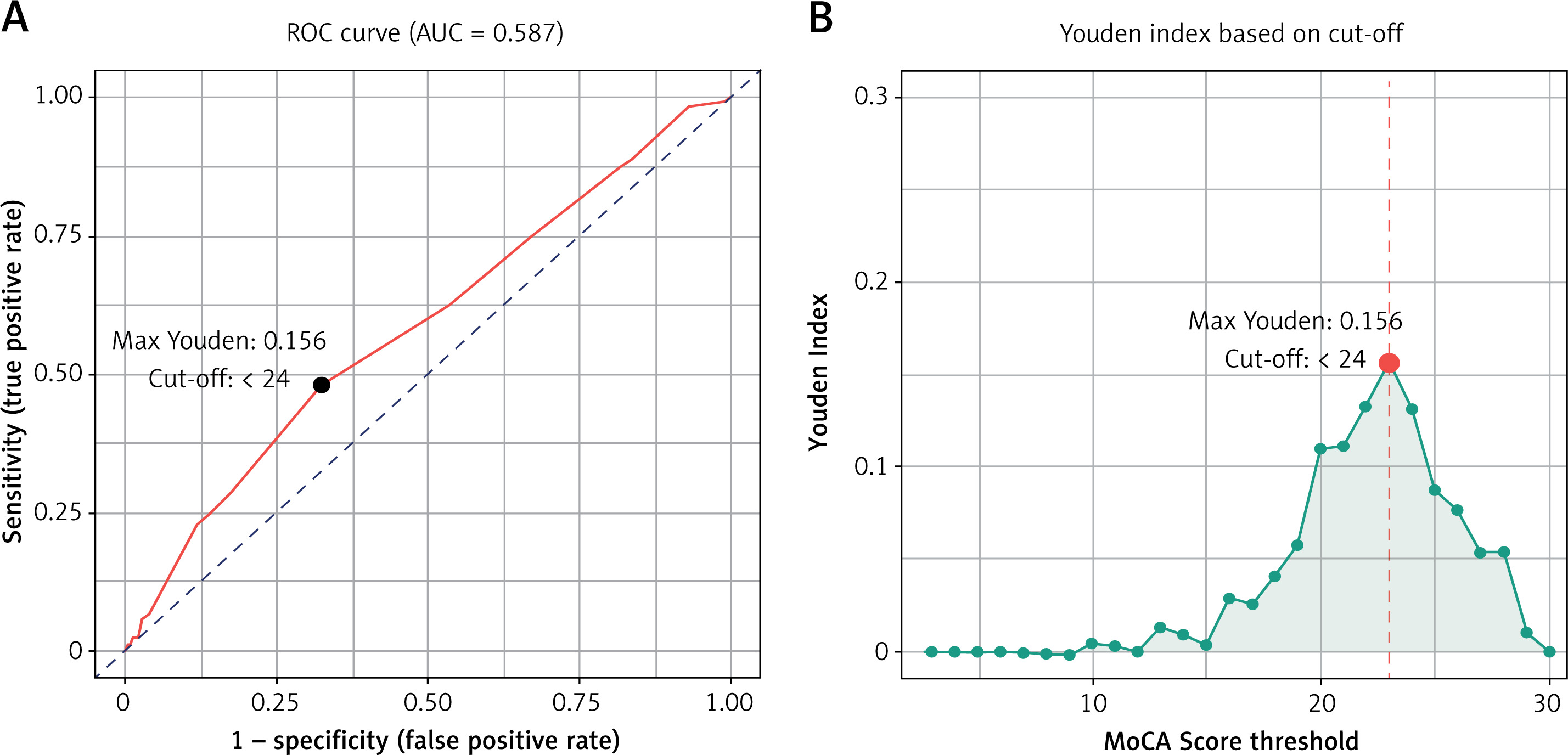
Figure 3
Prevalence of cognitive impairment stratified by key clinical and demographic subgroups. The bar chart illustrates the proportion of patients with cognitive impairment (defined as a MoCA score < 24) across various subgroups
BMI – body mass index, CKM – cardiovascular-kidney-metabolic, LDL-C – low-density lipoprotein cholesterol, MoCA – Montreal
Cognitive Assessment, T2DM – type 2 diabetes mellitus.
Cognitive impairment increases the risk of major adverse cardiovascular events
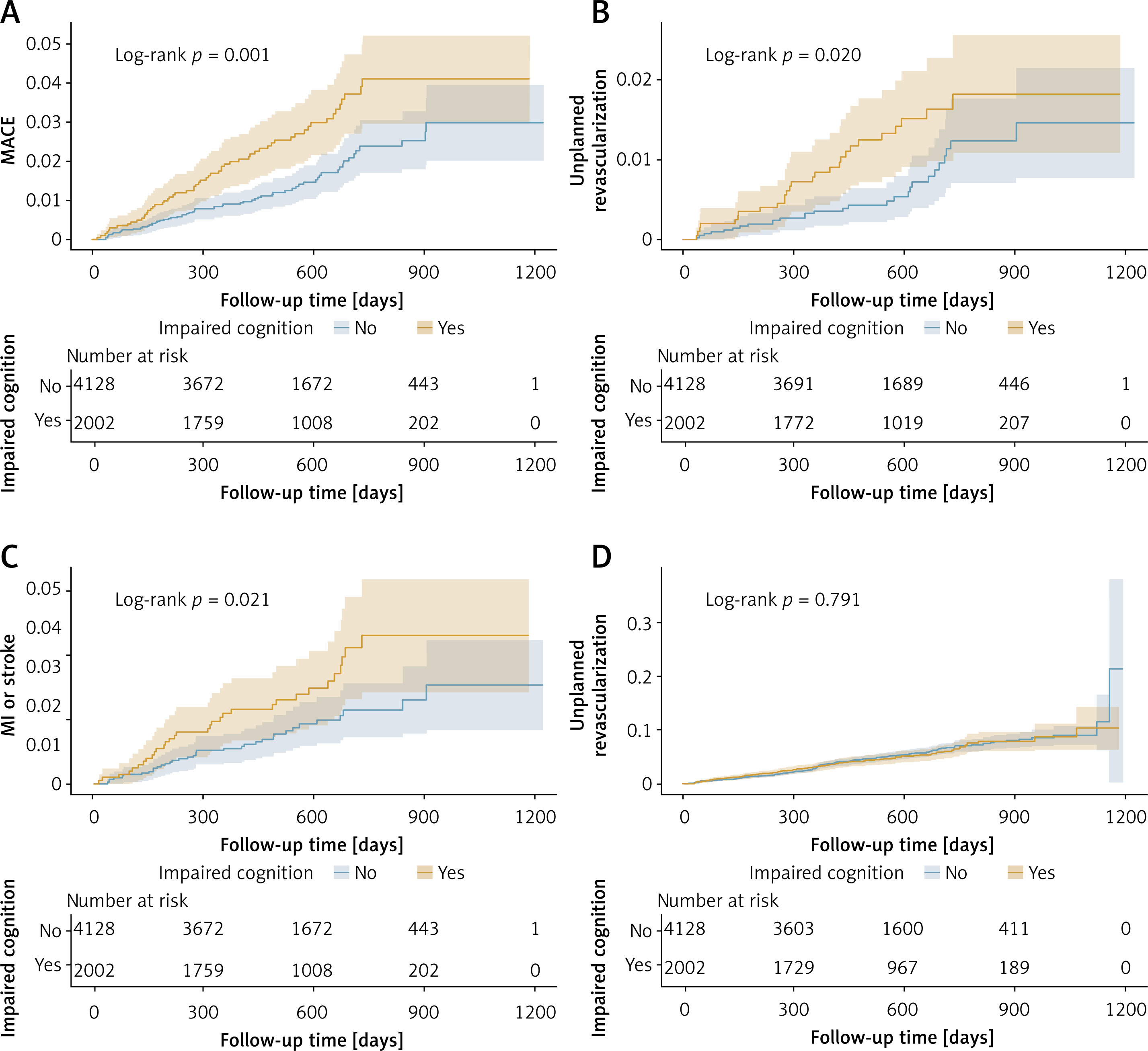
During a median follow-up of 546 days, MACE occurred in 123 (2.0%) of the 6,130 participants. Specifically, there were 55 all-cause deaths, 25 nonfatal myocardial infarctions, and 53 nonfatal strokes. Unplanned revascularization was recorded in 315 (5.1%). Figure 4 depicts the cumulative incidence of the primary and secondary endpoints. Kaplan-Meier analysis demonstrated that patients with baseline cognitive impairment exhibited a significantly higher incidence of MACE compared to those with preserved cognition (Figure 4 A, log-rank p = 0.001). Similarly, the cognitively impaired group experienced a significantly higher rate of all-cause mortality (Figure 4 B, log-rank p = 0.020) and the composite of nonfatal MI or stroke (Figure 4 C, log-rank p = 0.021). Conversely, no significant intergroup difference was observed in the cumulative incidence of unplanned revascularization (Figure 4 D, log-rank p = 0.791).
Figure 4
Kaplan-Meier cumulative incidence curves for primary and secondary outcomes stratified by cognitive status. A – Major adverse cardiovascular events (MACE). B – All-cause mortality. C – Composite of nonfatal myocardial infarction (MI) or stroke. D – Unplanned revascularization
To identify independent prognostic factors for MACE, univariable and multivariable Cox proportional hazards regression analyses were performed (Table II). In univariable analysis, baseline cognitive impairment was significantly associated with an increased risk of MACE (HR = 1.79, 95% CI: 1.26–2.55, p < 0.001). To evaluate the robustness of this finding, a hierarchical modeling strategy was employed. In the fully adjusted model (Model 4), which controlled for a comprehensive set of demographic, clinical, and laboratory covariates, cognitive impairment remained an independent and significant predictor of MACE (HR = 1.58, 95% CI: 1.06–2.37, p = 0.026) (Figure 5).
Table II
Multivariable Cox regression analysis
| Variables | HR (95% CI) and p-value | |||||||||
|---|---|---|---|---|---|---|---|---|---|---|
| Model 0 | Model 1 | Model 2 | Model 3 | Model 4 | ||||||
| β-blocker | 1.20 (0.83–1.73) | 0.346 | ||||||||
| ACEI/ARB | 1.24 (0.84–1.84) | 0.273 | ||||||||
| Statin | 2.24 (0.68–7.30) | 0.183 | ||||||||
[i] ACEI – angiotensin-converting enzyme inhibitor, ALT – alanine aminotransferase, ARB – angiotensin receptor blocker, BMI – body mass index, CKD – chronic kidney disease, CI – confidence interval, HB – hemoglobin, HR – hazard ratio, hs-CRP – high-sensitivity C-reactive protein, LDL-C – low-density lipoprotein cholesterol, MI – myocardial infarction, SAS – Zung Self-Rating Anxiety Scale, SDS – Zung Self-Rating Depression Scale, T2DM – type 2 diabetes mellitus, WBC – white blood cell.
Subgroup and sensitivity analyses
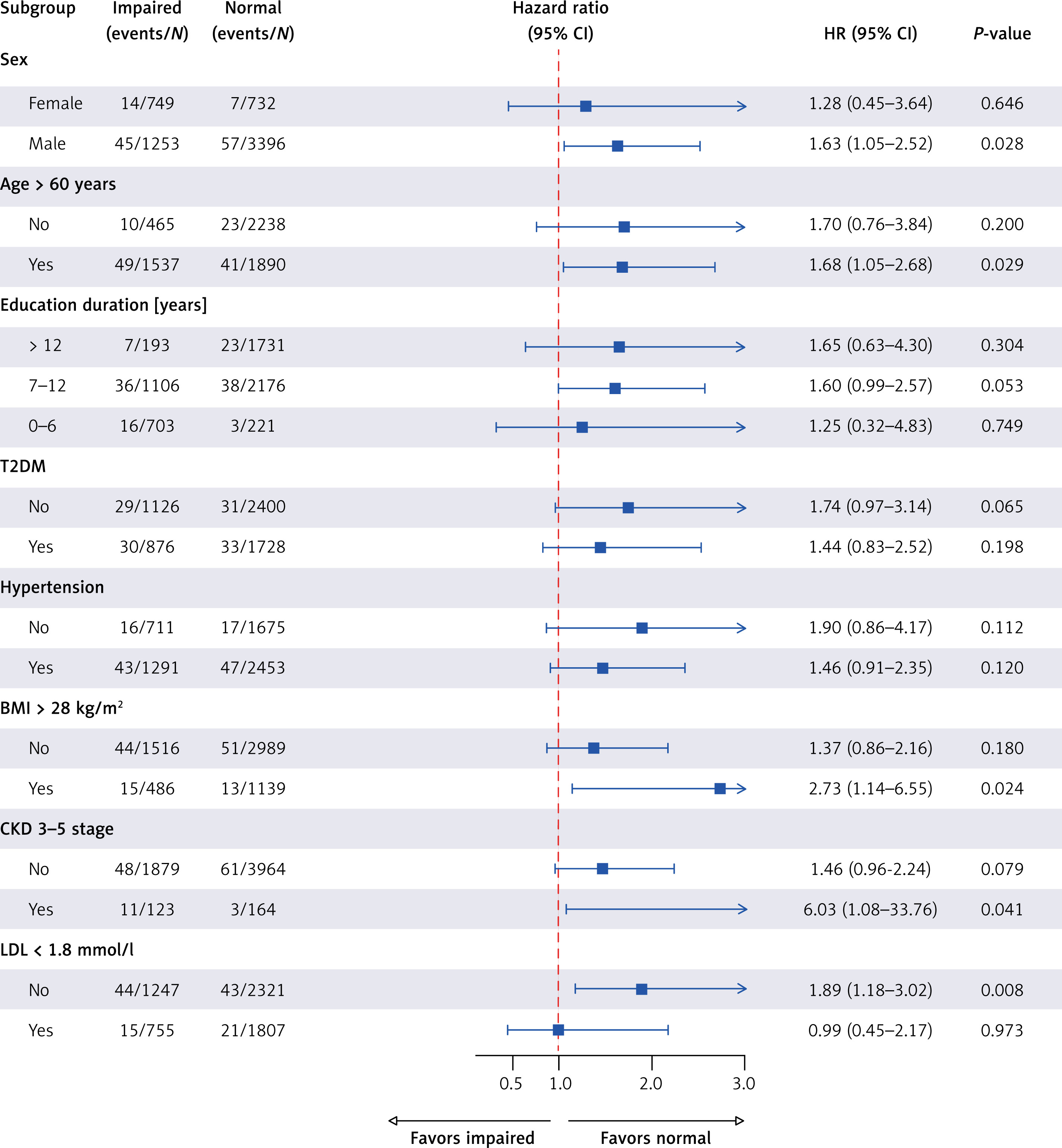
Subgroup analyses demonstrated a directional consistency, as cognitive impairment was associated with a tendency toward elevated risk (HR > 1) across the majority of clinical strata. We focused specifically on subgroups defined by age, sex, and educational attainment, given our earlier finding that these were the three factors with the most pronounced impact on cognitive function. Despite the loss of statistical significance in specific strata, the direction of the association between cognitive impairment and MACE remained unchanged. In the subgroup with LDL-C < 1.8 mmol/l, no statistically significant association was observed (HR = 0.99, 95% CI: 0.45–2.17; p = 0.973); however, the wide confidence interval indicates substantial uncertainty, making it inconclusive whether a true association is absent.
Sensitivity analyses confirmed the robustness of our primary findings. First, the association between cognitive impairment and MACE remained significant after excluding patients with a history of stroke (Supplementary Table SI; HR = 1.63, 95% CI: 1.07–2.47, p = 0.023). Second, the results remained consistent when applying standard educational adjustments to MoCA scores (Supplementary Table SII; HR = 1.58, 95% CI: 1.06–2.37, p = 0.026). Supplementary Figures S1 and S2 illustrate the distribution of propensity scores and the balance of covariates before and after matching. Finally, analysis of the propensity score-matched cohort further corroborated these findings (Supplementary Table SIII; HR = 1.57, 95% CI: 1.00–2.47, p = 0.050), with baseline covariates well balanced (Supplementary Figures S1, S2).
Discussion
Main findings
We investigated the prognostic value of baseline cognitive function in a cohort of patients with clinically stable CAD. Our primary finding demonstrates that, even in this stable setting, the presence of cognitive impairment serves as a robust and independent predictor of future MACE.
Prognostic implications of cognitive impairment in CAD
Epidemiological evidence has established that risk factors for ASCVD also elevate the risk of cognitive impairment, contributing to detrimental changes in brain structure and function [18, 19]. This association is particularly evident in patients with CAD, who experience an accelerated rate of cognitive decline, leading to a high prevalence of cognitive disorders within this population [20].
Several prior studies have investigated the prognostic implications of cognitive function in patients with CAD. For instance, in a cohort of patients with AMI on short-term follow-up, Gharacholou et al. demonstrated that cognitive impairment was associated with an increased risk of 1-year mortality [21]. Similarly, a study by Sanchis et al. with a median follow-up of 8.7 years in patients with ACS identified cognitive impairment as an independent predictor of death and MI [22]. Furthermore, cognitive dysfunction can significantly compromise patients’ decision-making capacity and treatment adherence. Bagai et al., using data from the NCDR Chest Pain registry, found that cognitive impairment not only increased the risk of in-hospital mortality but was also associated with a lower likelihood of receiving cardiac reperfusion and invasive strategies [8]. Notably, the majority of existing evidence is derived from populations with ACS. An acute, severe illness such as ACS can itself precipitate cognitive dysfunction [23]. Given that cognitive assessments during an acute event can be confounded by the illness itself, the present study will focus on a clinically stable population of CAD patients. This approach allows us to determine the true prognostic impact of cognitive function, devoid of acute confounding factors.
We observed that while cognitive impairment was a strong independent predictor of MACE, the MoCA score alone demonstrated limited discriminative ability. This is consistent with the performance of most individual cardiovascular risk factors, which rarely achieve high concordance statistics in isolation. Therefore, the MoCA should not be viewed as a standalone prognostic tool but rather as a complementary marker. It captures a distinct dimension of patient vulnerability – neurocognitive fragility – that provides additive value to traditional cardiovascular risk stratification.
Although statistical significance was not reached in some subgroups, the point estimates of the hazard ratios remained directionally consistent across most strata. This lack of significance in certain subgroups likely reflects reduced statistical power due to smaller sample sizes and fewer outcome events, rather than providing evidence of no effect. Notably, the association between cognitive impairment and MACE appeared particularly pronounced among patients with obesity, suboptimal lipid control, and CKD. These findings suggest that the detrimental impact of cognitive deficits is magnified in the presence of these comorbidities, identifying these patients as priority candidates for targeted cognitive screening. However, specific caution is warranted regarding the interpretation of sex differences. While our data indicated a higher prevalence of cognitive impairment in women, the cohort was predominantly male (75.8%), reflecting the typical epidemiology of CAD. This lack of gender homogeneity limits the statistical robustness of sex-specific conclusions. Therefore, these findings should be considered hypothesis-generating and require confirmation in future cohorts with a more balanced gender distribution.
Potential mechanisms underlying the association
Our analysis supports the hypothesis of a shared etiology for the observed association between cognitive impairment and MACE. As illustrated in Figure 3, cognitive function was significantly correlated with traditional ASCVD risk factors. This suggests that MACE and cognitive impairment are not merely coincidentally linked but are likely parallel manifestations of the same underlying systemic vasculopathy. The brain, with its high metabolic demand and dense microvasculature, is highly susceptible to systemic vascular dysfunction. Consequently, this dysfunction often manifests as chronic cerebral hypoperfusion, microinfarcts, and white matter lesions, which are the pathological hallmarks of vascular cognitive impairment [24–26].
Given that cognitive function is closely intertwined with multiple ASCVD risk factors, we employed two distinct methods to mitigate confounding: multivariable adjustment in Cox regression models and a PSM analysis. Across both approaches, our primary finding, that cognitive impairment independently predicts MACE, remained robust.
Beyond shared pathophysiology, cognitive impairment may directly exacerbate MACE risk through behavioral pathways. Impaired memory can lead to missed medication doses, while poor executive function undermines the ability to manage complex medication schedules, which is a common challenge for CAD patients on polypharmacy [27–29]. Since medication adherence was not explicitly assessed during hospitalization or follow-up, the potential mediating role of adherence discussed above remains speculative. Deficits in these cognitive domains compromise adherence to essential secondary prevention therapies (e.g., dual antiplatelet therapy and statins), thereby attenuating their cardioprotective effects [30]. Furthermore, beyond medication adherence, cognitive dysfunction may significantly prolong the interval between symptom onset and seeking medical care. Patients with cognitive deficits may struggle to accurately interpret ischemic symptoms (e.g., chest pain) or assess their urgency, leading to delayed presentation and missed windows for optimal therapeutic intervention. This pre-hospital delay represents a critical behavioral mechanism that warrants further investigation in future studies. Executive dysfunction can substantially impede the adoption and maintenance of crucial lifestyle modifications [31–33]. Complex health behaviors, such as adhering to a heart-healthy diet, engaging in regular physical activity, and smoking cessation, are cognitively demanding. They require higher-order processes including goal-setting, long-term planning, and impulse control, all of which are governed by the brain’s executive functions.
A noteworthy finding was that cognitive impairment predicted spontaneous MACE, but not the risk of unplanned revascularization. We hypothesize that this divergence stems from the different natures of these endpoints. MACE, as defined in our study, consists of primarily spontaneous, pathophysiological events. In contrast, the pathway to an unplanned revascularization is a complex process strongly influenced by subjective and behavioral factors. This pathway requires a patient to accurately perceive symptoms, make sound judgments under the duress of an acute event, effectively communicate their condition, and participate in shared decision-making regarding recommendations for invasive strategies [34]. As cognitive impairment can compromise all of these critical abilities, the true severity of a patient’s clinical condition may be masked. This may provide a plausible explanation for the observed null association [34, 35].
Our study has several limitations that merit consideration. First, the observational design inherently precludes the determination of causal relationships between cognitive impairment and MACE. Second, as a single-center study involving a specific cohort of Chinese patients with stable CAD, the generalizability of our findings to other ethnic groups or healthcare settings remains to be verified. Furthermore, we acknowledge that the relatively short median follow-up and the low absolute number of events limit the strength of long-term prognostic inferences. Consequently, multicenter external validation with extended follow-up duration is strictly warranted. Third, cognitive function was assessed at a single time point; consequently, we could not evaluate the prognostic impact of longitudinal cognitive trajectories. Fourth, we acknowledge the strong correlation between cognitive impairment and traditional risk factors such as age, educational attainment, and comorbidities (e.g., CKD and diabetes). Although we employed rigorous multivariable adjustment and propensity score matching to mitigate these biases, the possibility of residual confounding remains. For instance, the intricate interplay between vascular pathology and neurodegeneration suggests that shared underlying mechanisms might partially drive the observed association, beyond what can be statistically adjusted. Fifth, the optimal MoCA cutoff (< 24) was derived using ROC analysis within the current dataset. We acknowledge that this internal derivation, without external validation, inevitably introduces optimism bias and overfitting, potentially inflating the observed prognostic performance. Consequently, this threshold is likely population-specific and differs from the standard diagnostic cutoff (< 26). Therefore, our findings must be interpreted with caution, and external validation is strictly required to confirm its generalizability and clinical utility. Finally, we acknowledge that the number of events (n = 123) relative to the number of covariates in the fully adjusted model resulted in a suboptimal events-per-variable (EPV) ratio, which may theoretically increase the risk of overfitting. However, the variables included were selected based on established clinical relevance to minimize residual confounding. Furthermore, the robustness of our findings was confirmed by the propensity score matching (PSM) analysis, a method that effectively mitigates dimensionality issues. The high consistency between the multivariable Cox model and the PSM analysis supports the validity of the reported estimates.
In conclusion, among clinically stable patients with coronary artery disease, baseline cognitive impairment is an independent predictor of future major adverse cardiovascular events, including death, myocardial infarction, and stroke.