Current issue
Archive
Manuscripts accepted
About the Journal
Editorial office
Editorial board
Section Editors
Abstracting and indexing
Subscription
Contact
Ethical standards and procedures
Most read articles
Instructions for authors
Article Processing Charge (APC)
Regulations of paying article processing charge (APC)


PULMONOLOGY / RESEARCH PAPER
FTY720 attenuates LPS-induced acute lung injury through PP2A- tristetraprolin–dependent anti-inflammatory signaling
1
Department of Respiratory and Critical Care Medicine, The Second Affliated Hospital of Xi’an Jiaotong University, China
2
Department of Respiratory and Critical Care Medicine, Luoyang Central Hospital, China
Submission date: 2025-11-02
Final revision date: 2026-03-31
Acceptance date: 2026-05-12
Online publication date: 2026-09-05
Corresponding author
Nali Zhang
Department of Respiratory and Critical Care Medicine, Luoyang Central Hospital, No.288, Zhongzhou Middle Road, 471009, Luoyang City, China
Department of Respiratory and Critical Care Medicine, Luoyang Central Hospital, No.288, Zhongzhou Middle Road, 471009, Luoyang City, China
KEYWORDS
TOPICS
ABSTRACT
Introduction:
Acute lung injury (ALI) is characterized excessive inflammatory signaling and uncontrolled cytokine production. Tristetraprolin (TTP) is a key post-transcriptional regulator of inflammatory cytokines that negatively regulates inflammatory pathways. PP2A emerges as an important player to activate TTP. However, whether pharmacological activation of PP2A can restore TTP activity and thereby attenuate ALI remains unexplored.
Material and methods:
A lipopolysaccharide (LPS)-induced mice model of ALI and LPS-stimulated RAW264.7 macrophages were used to evaluate the effects of FTY720 or siRNA PP2A. Lung injury and inflammation were assessed by histopathology, wet-to-dry weight ratio, bronchoalveolar lavage fluid analysis, and cytokine quantification. PP2A activity, p38 MAPK and TTP phosphorylation, and gene expression were analyzed using phosphatase assays, Western blot, ELISA, and quantitative RT-PCR.
Results:
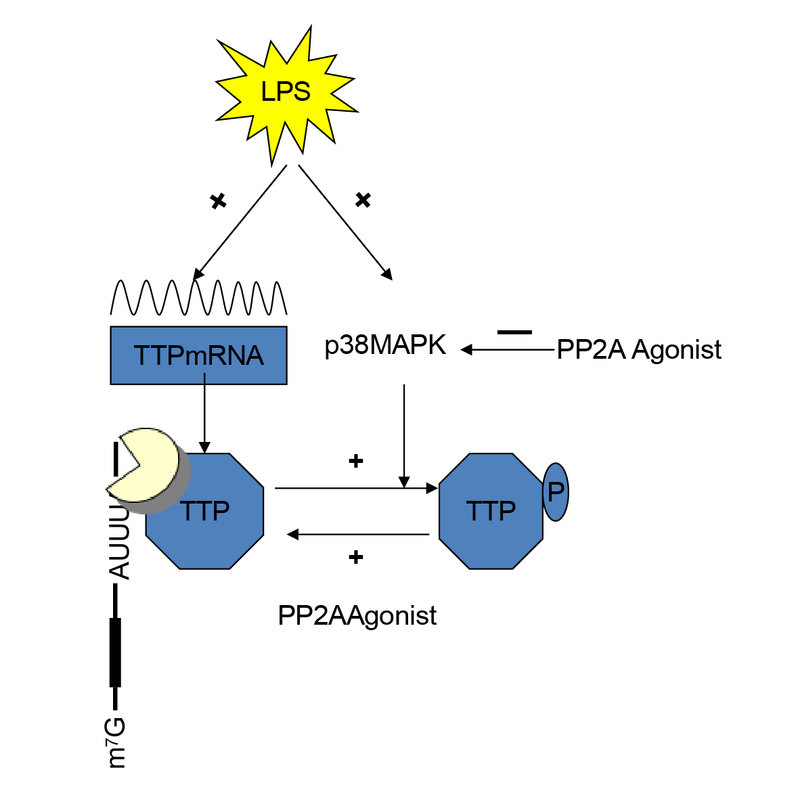
Pretreatment of FTY720, a well-established PP2A activator, significantly alleviated LPS-induced lung injury, inflammatory cell infiltration, and inflammatory cytokines release in vivo. Treatment with PP2A siRNA blocked the improvement effect induced by FTY720 in LPS-induced lung injury mice. LPS exposure significantly impaired PP2A activity without altering PP2A protein abundance, whereas FTY720 restored PP2A activity in lung tissues. Mechanistically, PP2A activation suppressed p38 MAPK phosphorylation and/or promoted dephosphorylation of TTP in LPS-induced macrophages. Moreover, PP2A activation by FTY720 inhibited p38 MAPK and TTP phosphorylation without affecting TTP transcription, leading to reduced inflammatory cytokine production.
Conclusions:
Our findings demonstrate that PP2A activation blocked inflammatory responses by reprogramming the TTP activity. Pharmacological targeting of PP2A may represent a promising strategy for the treatment of acute lung injury.
Acute lung injury (ALI) is characterized excessive inflammatory signaling and uncontrolled cytokine production. Tristetraprolin (TTP) is a key post-transcriptional regulator of inflammatory cytokines that negatively regulates inflammatory pathways. PP2A emerges as an important player to activate TTP. However, whether pharmacological activation of PP2A can restore TTP activity and thereby attenuate ALI remains unexplored.
Material and methods:
A lipopolysaccharide (LPS)-induced mice model of ALI and LPS-stimulated RAW264.7 macrophages were used to evaluate the effects of FTY720 or siRNA PP2A. Lung injury and inflammation were assessed by histopathology, wet-to-dry weight ratio, bronchoalveolar lavage fluid analysis, and cytokine quantification. PP2A activity, p38 MAPK and TTP phosphorylation, and gene expression were analyzed using phosphatase assays, Western blot, ELISA, and quantitative RT-PCR.
Results:
Pretreatment of FTY720, a well-established PP2A activator, significantly alleviated LPS-induced lung injury, inflammatory cell infiltration, and inflammatory cytokines release in vivo. Treatment with PP2A siRNA blocked the improvement effect induced by FTY720 in LPS-induced lung injury mice. LPS exposure significantly impaired PP2A activity without altering PP2A protein abundance, whereas FTY720 restored PP2A activity in lung tissues. Mechanistically, PP2A activation suppressed p38 MAPK phosphorylation and/or promoted dephosphorylation of TTP in LPS-induced macrophages. Moreover, PP2A activation by FTY720 inhibited p38 MAPK and TTP phosphorylation without affecting TTP transcription, leading to reduced inflammatory cytokine production.
Conclusions:
Our findings demonstrate that PP2A activation blocked inflammatory responses by reprogramming the TTP activity. Pharmacological targeting of PP2A may represent a promising strategy for the treatment of acute lung injury.
REFERENCES (39)
1.
Liang D, Liu C, Yang M. Mesenchymal stem cells and their derived exosomes for ALI/ARDS: A promising therapy. Heliyon. Oct 2023;9(10):e20387. doi:10.1016/j.heliyon.2023.e20387.
2.
Liao J, Liang Y, Liu Z, Xie Q, Zhang JM, Song SY, Huang X, Cao L, Wang Y. Pyroptosis in acute respiratory distress syndrome and pulmonary fibrosis. Biomedicine & pharmacotherapy = Biomedecine & pharmacotherapie. Aug 2025;189:118286. doi:10.1016/j.biopha.2025.118286.
3.
Bredeck G, Dobner J, Stahlmecke B, Fomba KW, Herrmann H, Rossi A, Schins RPF. Saharan dust induces NLRP3-dependent inflammatory cytokines in an alveolar air-liquid interface co-culture model. Particle and fibre toxicology. Oct 20 2023;20(1):39. doi:10.1186/s12989-023-00550-w.
4.
Wu B, Xu MM, Fan C, Feng CL, Lu QK, Lu HM, Xiang CG, Bai F, Wang HY, Wu YW, Tang W. STING inhibitor ameliorates LPS-induced ALI by preventing vascular endothelial cells-mediated immune cells chemotaxis and adhesion. Acta pharmacologica Sinica. Aug 2022;43(8):2055-2066. doi:10.1038/s41401-021-00813-2.
5.
Ito J, Miyake K, Chiba T, Takahashi K, Uchida Y, Blackshear PJ, Asahara H, Karasuyama H. Tristetraprolin-mediated mRNA destabilization regulates basophil inflammatory responses. Allergology international : official journal of the Japanese Society of Allergology. Apr 2025;74(2):263-273. doi:10.1016/j.alit.2024.10.005.
6.
Tiedje C, Diaz-Munoz MD, Trulley P, Ahlfors H, Laass K, Blackshear PJ, Turner M, Gaestel M. The RNA-binding protein TTP is a global post-transcriptional regulator of feedback control in inflammation. Nucleic acids research. Sep 6 2016;44(15):7418-7440. doi:10.1093/nar/gkw474.
7.
Zhang Y, Wang G, Zhang D, Sun X. Resveratrol Ameliorates LPS-induced Acute Lung Injury Mouse Model via Induction of Tristetraprolin. Combinatorial chemistry & high throughput screening. 2023;26(4):838-847. doi:10.2174/1386207325666220601123047.
8.
Clark AR, Dean JL. The control of inflammation via the phosphorylation and dephosphorylation of tristetraprolin: a tale of two phosphatases. Biochemical Society transactions. Oct 15 2016;44(5):1321-1337. doi:10.1042/BST20160166.
9.
Carreno A, Lykke-Andersen J. The Conserved CNOT1 Interaction Motif of Tristetraprolin Regulates ARE-mRNA Decay Independently of the p38 MAPK-MK2 Kinase Pathway. Molecular and cellular biology. Sep 15 2022;42(9):e0005522. doi:10.1128/mcb.00055-22.
10.
Rahman MM, Rumzhum NN, Morris JC, Clark AR, Verrills NM, Ammit AJ. Basal protein phosphatase 2A activity restrains cytokine expression: role for MAPKs and tristetraprolin. Scientific reports. May 18 2015;5:10063. doi:10.1038/srep10063.
11.
De Palma RM, Parnham SR, Li Y, Oaks JJ, Peterson YK, Szulc ZM, Roth BM, Xing Y, Ogretmen B. The NMR-based characterization of the FTY720-SET complex reveals an alternative mechanism for the attenuation of the inhibitory SET-PP2A interaction. FASEB journal : official publication of the Federation of American Societies for Experimental Biology. Jun 2019;33(6):7647-7666. doi:10.1096/fj.201802264R.
12.
Rahman MM, Prunte L, Lebender LF, Patel BS, Gelissen I, Hansbro PM, Morris JC, Clark AR, Verrills NM, Ammit AJ. The phosphorylated form of FTY720 activates PP2A, represses inflammation and is devoid of S1P agonism in A549 lung epithelial cells. Scientific reports. Nov 16 2016;6:37297. doi:10.1038/srep37297.
13.
Qadri M, ElSayed S, Elsaid KA. Fingolimod Phosphate (FTY720-P) Activates Protein Phosphatase 2A in Human Monocytes and Inhibits Monosodium Urate Crystal-Induced Interleukin-1beta Production. The Journal of pharmacology and experimental therapeutics. Feb 2021;376(2):222-230. doi:10.1124/jpet.120.000321.
14.
Shi ZA, Yu CX, Wu ZC, Chen CL, Tu FP, Wan Y. The effect of FTY720 at different doses and time-points on LPS-induced acute lung injury in rats. International immunopharmacology. Oct 2021;99:107972. doi:10.1016/j.intimp.2021.107972.
15.
Wang L, Sammani S, Moreno-Vinasco L, Letsiou E, Wang T, Camp SM, Bittman R, Garcia JG, Dudek SM. FTY720 (s)-phosphonate preserves sphingosine 1-phosphate receptor 1 expression and exhibits superior barrier protection to FTY720 in acute lung injury. Critical care medicine. Mar 2014;42(3):e189-199. doi:10.1097/CCM.0000000000000097.
16.
Yamaguchi M, Levy RM. The combination of catechin, baicalin and beta-caryophyllene potentially suppresses the production of inflammatory cytokines in mouse macrophages in vitro. Experimental and therapeutic medicine. May 2019;17(5):4312-4318. doi:10.3892/etm.2019.7452.
17.
Yu H, Herbert BA, Valerio M, Yarborough L, Hsu LC, Argraves KM. FTY720 inhibited proinflammatory cytokine release and osteoclastogenesis induced by Aggregatibacter actinomycetemcomitans. Lipids in health and disease. Jul 4 2015;14:66. doi:10.1186/s12944-015-0057-7.
18.
Zhao G, Zhang T, Ma X, Jiang K, Wu H, Qiu C, Guo M, Deng G. Oridonin attenuates the release of pro-inflammatory cytokines in lipopolysaccharide-induced RAW264.7 cells and acute lung injury. Oncotarget. Sep 15 2017;8(40):68153-68164. doi:10.18632/oncotarget.19249.
19.
Chen C, Shi L, Li Y, Wang X, Yang S. Disease-specific dynamic biomarkers selected by integrating inflammatory mediators with clinical informatics in ARDS patients with severe pneumonia. Cell biology and toxicology. Jun 2016;32(3):169-184. doi:10.1007/s10565-016-9322-4.
20.
Shen X, He L, Cai W. Role of Lipopolysaccharides in the Inflammation and Pyroptosis of Alveolar Epithelial Cells in Acute Lung Injury and Acute Respiratory Distress Syndrome. Journal of inflammation research. 2024;17:5855-5869. doi:10.2147/JIR.S479051.
21.
Beisang D, Bohjanen PR. Perspectives on the ARE as it turns 25 years old. Wiley interdisciplinary reviews RNA. Sep-Oct 2012;3(5):719-731. doi:10.1002/wrna.1125.
22.
Kovarik P, Bestehorn A, Fesselet J. Conceptual Advances in Control of Inflammation by the RNA-Binding Protein Tristetraprolin. Frontiers in immunology. 2021;12:751313. doi:10.3389/fimmu.2021.751313.
23.
Pommier A, Bleuse S, Deletang K, Varilh J, Nadaud M, Boisguerin P, Bourdin A, Taulan-Cadars M. The RNA-Binding Protein Tristetraprolin Contributes to CFTR mRNA Stability in Cystic Fibrosis. American journal of respiratory cell and molecular biology. Mar 2025;72(3):320-331. doi:10.1165/rcmb.2023-0209OC.
24.
Prabhala P, Bunge K, Ge Q, Ammit AJ. Corticosteroid-Induced MKP-1 Represses Pro-Inflammatory Cytokine Secretion by Enhancing Activity of Tristetraprolin (TTP) in ASM Cells. Journal of cellular physiology. Oct 2016;231(10):2153-2158. doi:10.1002/jcp.25327.
25.
Rezcallah MC, Al-Mazi T, Ammit AJ. Cataloguing the phosphorylation sites of tristetraprolin (TTP): Functional implications for inflammatory diseases. Cellular signalling. Feb 2021;78:109868. doi:10.1016/j.cellsig.2020.109868.
26.
Scinicariello S, Soderholm A, Schafer M, Shulkina A, Schwartz I, Hacker K, Gogova R, Kalis R, Froussios K, Budroni V, Bestehorn A, Clausen T, Kovarik P, Zuber J, Versteeg GA. HUWE1 controls tristetraprolin proteasomal degradation by regulating its phosphorylation. eLife. Mar 24 2023;12doi:10.7554/eLife.83159.
27.
Ivovic D, Kabelikova P, Jurkovicova D. Unraveling the complexity: A comprehensive analysis of the PP2A in cancer and its potential for novel targeted therapies. Neoplasma. Aug 2023;70(4):485-499. doi:10.4149/neo_2023_230806N411.
28.
Zhang L, Ma P, Guan Q, Meng L, Su L, Wang L, Zhao J, Ji S. Protein phosphatase 2A regulates the p38 signaling pathway to affect the migration of astrocytes. Molecular medicine reports. Nov 2018;18(5):4328-4334. doi:10.3892/mmr.2018.9425.
29.
Park SY, Jeong YJ, Lee KS, Park JY, Park J, Tesh VL, Lee MS. Shiga Toxins Produced by Enterohaemorrhagic Escherichia coli Induce Inflammation in Toxin-Sensitive Cells through the p38 MAPK/MK2/Tristetraprolin Signaling Pathway. Journal of microbiology and biotechnology. Dec 28 2024;34(12):2439-2449. doi:10.4014/jmb.2410.10016.
30.
Rahman MM, Rumzhum NN, Hansbro PM, Morris JC, Clark AR, Verrills NM, Ammit AJ. Activating protein phosphatase 2A (PP2A) enhances tristetraprolin (TTP) anti-inflammatory function in A549 lung epithelial cells. Cellular signalling. Apr 2016;28(4):325-334. doi:10.1016/j.cellsig.2016.01.009.
31.
Zhang HH, Kuo WS, Tu PY, Lee CT, Wang HC, Huang YT, Shen MC, Lin TS, Su PL, Tsai JS, Pan MH, Lin CC, Wu PC. Enhancing Lung Recovery: Inhaled Poly(lactic-co-glycolic) Acid Encapsulating FTY720 and Nobiletin for Lipopolysaccharide-Induced Lung Injury, with Advanced Inhalation Tower Technology. ACS nano. Mar 4 2025;19(8):7634-7649. doi:10.1021/acsnano.3c12532.
32.
Wang M, Zhu M, Jia X, Wu J, Yuan Q, Xu T, Wang Z, Huang M, Ji N, Zhang M. LincR-PPP2R5C regulates IL-1beta ubiquitination in macrophages and promotes airway inflammation and emphysema in a murine model of COPD. International immunopharmacology. Sep 30 2024;139:112680. doi:10.1016/j.intimp.2024.112680.
33.
Almukram AM, Al-hussaniy HA, Jabarah MA, Al-Abdeen SH. MDM2 Antagonists and p53-Targeting Therapies in Cancer: Clinical Applications, Adverse Effects, and Resistance Mechanisms. Medical and Pharmaceutical Journal. 2025 Apr 4;4(1):47-63. DOI: https://doi.org/10.55940/medph....
34.
Caturano A, Rocco M, Tagliaferri G, Piacevole A, Nilo D, Di Lorenzo G, Iadicicco I, Donnarumma M, Galiero R, Acierno C, Sardu C, Russo V, Vetrano E, Conte C, Marfella R, Rinaldi L, Sasso FC. Oxidative Stress and Cardiovascular Complications in Type 2 Diabetes: From Pathophysiology to Lifestyle Modifications. Antioxidants. Jan 9 2025;14(1)doi:10.3390/antiox14010072.
35.
Sardu C, Pieretti G, D'Onofrio N, Ciccarelli F, Paolisso P, Passavanti MB, Marfella R, Cioffi M, Mone P, Dalise AM, Ferraraccio F, Panarese I, Gambardella A, Passariello N, Rizzo MR, Balestrieri ML, Nicoletti G, Barbieri M. Inflammatory Cytokines and SIRT1 Levels in Subcutaneous Abdominal Fat: Relationship With Cardiac Performance in Overweight Pre-diabetics Patients. Frontiers in physiology. 2018;9:1030. doi:10.3389/fphys.2018.01030.
36.
Sardu C, Gatta G, Pieretti G, Onofrio N, Balestrieri ML, Scisciola L, Cappabianca S, Ferraro G, Nicoletti GF, Signoriello G, Sportiello L, Savarese G, Melchionna M, Ciccarelli F, La Forgia D, Paolisso G, Marfella R. SGLT2 breast expression could affect the cardiovascular performance in pre-menopausal women with fatty vs. non fatty breast via over-inflammation and sirtuins' down regulation. European journal of internal medicine. Jul 2023;113:57-68. doi:10.1016/j.ejim.2023.04.012.
37.
Sardu C, Gatta G, Pieretti G, Viola L, Sacra C, Di Grezia G, Musto L, Minelli S, La Forgia D, Capodieci M, Galiano A, Vestito A, De Lisio A, Pafundi PC, Sasso FC, Cappabianca S, Nicoletti G, Paolisso G, Marfella R. Pre-Menopausal Breast Fat Density Might Predict MACE During 10 Years of Follow-Up: The BRECARD Study. JACC Cardiovascular imaging. Feb 2021;14(2):426-438. doi:10.1016/j.jcmg.2020.08.028.
38.
Liu J, Zhang L, Liu L, Wu T, Wang L, Han Q. The potential capacities of FTY720: Novel therapeutic functions, targets, and mechanisms against diseases. European journal of medicinal chemistry. Jun 5 2025;290:117508. doi:10.1016/j.ejmech.2025.117508.
39.
Coyle PK, Freedman MS, Cohen BA, Cree BAC, Markowitz CE. Sphingosine 1-phosphate receptor modulators in multiple sclerosis treatment: A practical review. Annals of clinical and translational neurology. Apr 2024;11(4):842-855. doi:10.1002/acn3.52017.
| eISSN: | 1896-9151 |
| ISSN: | 1734-1922 |

We process personal data collected when visiting the website. The function of obtaining information about users and their behavior is carried out by voluntarily entered information in forms and saving cookies in end devices. Data, including cookies, are used to provide services, improve the user experience and to analyze the traffic in accordance with the Privacy policy. Data are also collected and processed by Google Analytics tool (more).
You can change cookies settings in your browser. Restricted use of cookies in the browser configuration may affect some functionalities of the website.
You can change cookies settings in your browser. Restricted use of cookies in the browser configuration may affect some functionalities of the website.