Current issue
Archive
Manuscripts accepted
About the Journal
Editorial office
Editorial board
Section Editors
Abstracting and indexing
Subscription
Contact
Ethical standards and procedures
Most read articles
Instructions for authors
Article Processing Charge (APC)
Regulations of paying article processing charge (APC)


BASIC RESEARCH
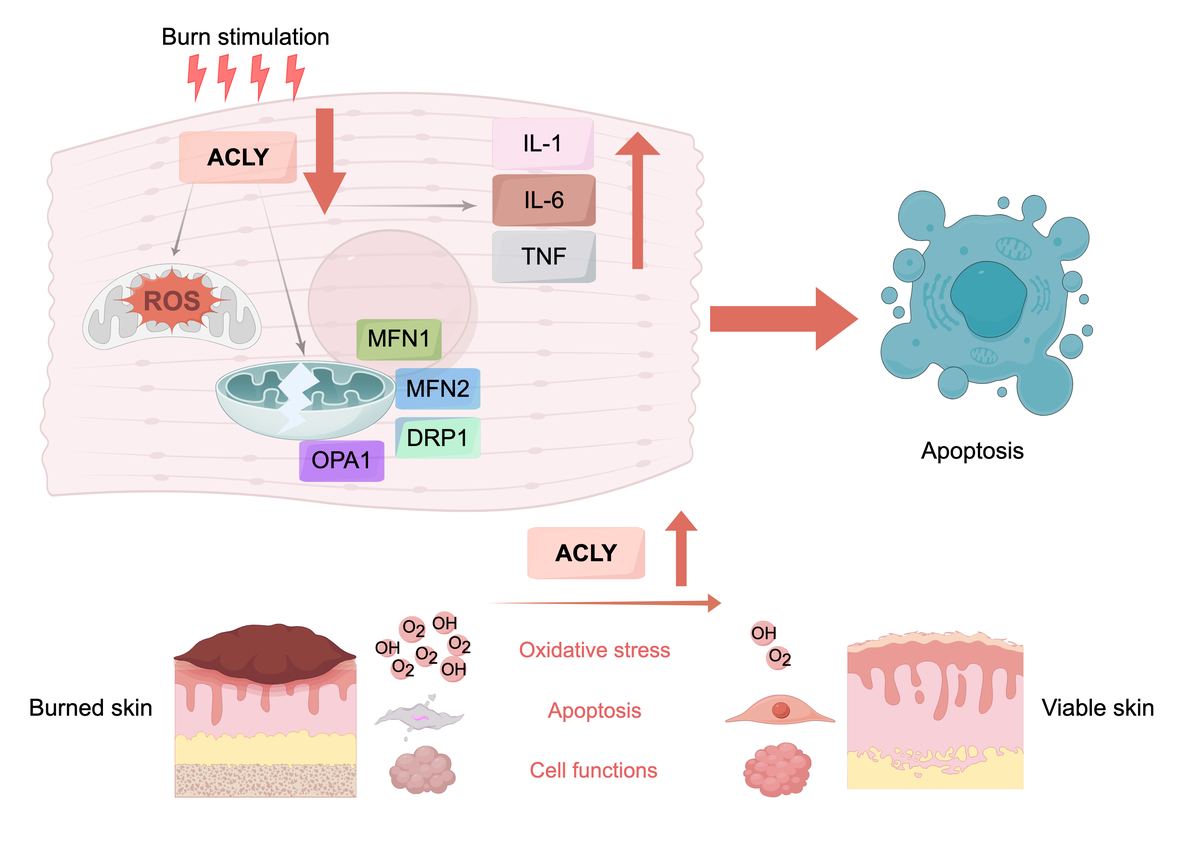
ACLY promotes epidermal regeneration and mitochondrial homeostasis in burn injury by reducing oxidative stress
1
Department of Burns,The First Affiliated Hospital of Anhui Medical University, Hefei, China
2
Department of Burns and Plastic Surgery,The First Affiliated Hospital of Wannan Medical University (Yijishan Hospital of Wannan Medical University), Wuhu, China
3
Department of Laboratory Medicine, The First Affiliated Hospital of Wannan Medical
University (Yijishan Hospital of Wannan Medical University), Wuhu, Chin
These authors had equal contribution to this work
Submission date: 2026-02-11
Final revision date: 2026-05-02
Acceptance date: 2026-05-30
Online publication date: 2026-09-04
Corresponding author
Qinglian Xu
Department of Burns The First Affiliated Hospital of Anhui Medical University Hefei, China
Department of Burns The First Affiliated Hospital of Anhui Medical University Hefei, China
KEYWORDS
TOPICS
ABSTRACT
Introduction:
Burn injury causes cellular and metabolic dysfunction associated with mitochondrial damage, oxidative stress and impaired epidermal regeneration, delaying wound healing and raising the risk of chronic complications. As a key metabolic enzyme connecting the tricarboxylic acid cycle (TCA) cycle to lipid synthesis and epigenetic regulation, ATP citrate lyase (ACLY) maintains mitochondrial homeostasis and redox balance, while its role in thermal skin repair remains unclear.
Material and methods:
RNA-seq analysis identified molecular changes in thermal injury, while polymerase chain reaction (PCR) and Western blot were used to validate ACLY expression in burn-injured skin tissue. To dissect ACLY function in wound repair, we performed in vivo AAV-mediated ACLY knockdown. A panel of assays was also conducted in in vivo and in vitro ACLY-overexpression models, including hematoxylin and eosin (HE), immunohistochemistry, 5-ethynyl-2-deoxyuridine (EdU) assay, Transwell migration and invasion, transferase dUTP nick end labelling (TUNEL) staining, acetyl coenzyme A (acetyl-CoA) and ATP quantification, malondialdehyde (MDA) and glutathione (GSH) detection, as well as JC-1 and 2,7-dichlorofluorescin diacetate (DCFH-DA) staining.
Results:
ACLY expression was markedly downregulated in burn tissues with associated metabolic reprogramming. In vivo AAV-mediated ACLY knockdown markedly aggravated burn injury and impaired wound repair. In contrast, ACLY overexpression improved repair outcomes in both in vivo and in vitro thermal injury models. It relieved oxidative damage by lowering reactive oxygen species (ROS) and MDA, maintained mitochondrial integrity through modulating mitochondrial dynamics, attenuated inflammatory response and cellular apoptosis, and enhanced keratinocyte proliferation as well as migration, ultimately accelerating epidermal regeneration and wound healing.
Conclusions:
ACLY plays an important role in regulating mitochondrial stability and epidermal repair following burns. These findings provide novel insights into metabolic mechanisms underlying tissue regeneration and suggest that ACLY may represent a potential therapeutic target for burn healing and regenerative medicine.
Burn injury causes cellular and metabolic dysfunction associated with mitochondrial damage, oxidative stress and impaired epidermal regeneration, delaying wound healing and raising the risk of chronic complications. As a key metabolic enzyme connecting the tricarboxylic acid cycle (TCA) cycle to lipid synthesis and epigenetic regulation, ATP citrate lyase (ACLY) maintains mitochondrial homeostasis and redox balance, while its role in thermal skin repair remains unclear.
Material and methods:
RNA-seq analysis identified molecular changes in thermal injury, while polymerase chain reaction (PCR) and Western blot were used to validate ACLY expression in burn-injured skin tissue. To dissect ACLY function in wound repair, we performed in vivo AAV-mediated ACLY knockdown. A panel of assays was also conducted in in vivo and in vitro ACLY-overexpression models, including hematoxylin and eosin (HE), immunohistochemistry, 5-ethynyl-2-deoxyuridine (EdU) assay, Transwell migration and invasion, transferase dUTP nick end labelling (TUNEL) staining, acetyl coenzyme A (acetyl-CoA) and ATP quantification, malondialdehyde (MDA) and glutathione (GSH) detection, as well as JC-1 and 2,7-dichlorofluorescin diacetate (DCFH-DA) staining.
Results:
ACLY expression was markedly downregulated in burn tissues with associated metabolic reprogramming. In vivo AAV-mediated ACLY knockdown markedly aggravated burn injury and impaired wound repair. In contrast, ACLY overexpression improved repair outcomes in both in vivo and in vitro thermal injury models. It relieved oxidative damage by lowering reactive oxygen species (ROS) and MDA, maintained mitochondrial integrity through modulating mitochondrial dynamics, attenuated inflammatory response and cellular apoptosis, and enhanced keratinocyte proliferation as well as migration, ultimately accelerating epidermal regeneration and wound healing.
Conclusions:
ACLY plays an important role in regulating mitochondrial stability and epidermal repair following burns. These findings provide novel insights into metabolic mechanisms underlying tissue regeneration and suggest that ACLY may represent a potential therapeutic target for burn healing and regenerative medicine.
REFERENCES (68)
1.
Radzikowska-Büchner E, Łopuszyńska I, Flieger W, et al. An overview of recent developments in the management of burn injuries. Int J Mol Sci 2023; 24: 16357.
2.
Dobson GP, Morris JL, Letson HL. Pathophysiology of severe burn injuries: new therapeutic opportunities from a systems perspective. J Burn Care Res 2024; 45: 1041-50.
3.
Shah NR, Palackic A, Brondeel KC, et al. The burn wound. Surg Clin North Am 2023; 103: 453-62.
4.
Palackic A, Duggan RP, Campbell MS, et al. The role of skin substitutes in acute burn and reconstructive burn surgery: an updated comprehensive review. Semin Plast Surg 2022; 36: 33-42.
5.
Huang S, Xie K, Li X, Xu X, Chen P. The role of the STING inflammatory pathway in hepatic damage in psoriasis with type 2 diabetes mellitus. Arch Med Sci 2024; 20: 1426-41.
6.
Wang Z, Zhao F, Xu C, et al. Metabolic reprogramming in skin wound healing. Burns Trauma 2024; 12: tkad047.
7.
Badoiu SC, Miricescu D, Stanescu-Spinu II, et al. Glucose metabolism in burns-what happens? Int J Mol Sci 2021; 22: 5159.
8.
Li HH, Zhou XM, Liu T, et al. The clinical value of metagenomic next-generation sequencing for rapid microbial identification of chronic granulation wound infections. Arch Med Sci 2023; 19: 1162-7.
9.
Clark A, Imran J, Madni T, Wolf SE. Nutrition and metabolism in burn patients. Burns Trauma 2017; 5: 11.
10.
Asuku M, Shupp JW. Burn wound conversion: clinical implications for the treatment of severe burns. J Wound Care 2023; 32 (Suppl. 5): S11-20.
11.
Pratap A, Monge KM, Qualman AC, Kovacs EJ, Idrovo JP. Burn-induced mitochondrial dysfunction in hepatocytes: The role of methylation-controlled J protein silencing. J Trauma Acute Care Surg 2025; 98: 204-11.
12.
Harrington JS, Ryter SW, Plataki M, Price DR, Choi AMK. Mitochondria in health, disease, and aging. Physiol Rev 2023; 103: 2349-422.
13.
Vringer E, Tait SWG. Mitochondria and cell death-associated inflammation. Cell Death Differ 2023; 30: 304-12.
14.
Al Amir Dache Z, Thierry AR. Mitochondria-derived cell-to-cell communication. Cell Rep 2023; 42: 112728.
15.
Palma FR, Gantner BN, Sakiyama MJ, et al. ROS production by mitochondria: function or dysfunction? Oncogene 2024; 43: 295-303.
16.
Piipponen M, Li D, Landén NX. The immune functions of keratinocytes in skin wound healing. Int J Mol Sci 2020; 21: 8790.
17.
Rennekampff HO, Alharbi Z. Burn injury: mechanisms of keratinocyte cell death. Med Sci (Basel) 2021; 9: 51.
18.
Prabhakaran HS, Hu D, He W, Luo G, Liou YC. Mitochondrial dysfunction and mitophagy: crucial players in burn trauma and wound healing. Burns Trauma 2023; 11: tkad029.
19.
Liu Y, Birsoy K. Metabolic sensing and control in mitochondria. Mol Cell 2023; 83: 877-89.
20.
Dominguez M, Brüne B, Namgaladze D. Exploring the role of ATP-citrate lyase in the immune system. Front Immunol 2021; 12: 632526.
21.
Korobkina ED, Martinez Calejman C, Haley JA, et al. Brown fat ATP-citrate lyase links carbohydrate availability to thermogenesis and guards against metabolic stress. Nat Metab 2024; 6: 2187-202.
22.
Convertini P, Santarsiero A, Todisco S, et al. ACLY as a modulator of liver cell functions and its role in metabolic dysfunction-associated steatohepatitis. J Transl Med 2023; 21: 568.
23.
Li W, Han J, Huang B, et al. SLC25A1 and ACLY maintain cytosolic acetyl-CoA and regulate ferroptosis susceptibility via FSP1 acetylation. EMBO J 2025; 44: 1641-62.
24.
Chen Q, Du J, Cui K, et al. Acetyl-CoA derived from hepatic mitochondrial fatty acid -oxidation aggravates inflammation by enhancing p65 acetylation. iScience 2021; 24: 103244.
25.
Pay SL, Qi X, Willard JF, et al. Improving the transduction of bone marrow-derived cells with an integrase-defective lentiviral vector. Hum Gene Ther Methods 2017; 29: 44-59.
26.
Cai EZ, Ang CH, Raju A, et al. Creation of consistent burn wounds: a rat model. Arch Plast Surg 2014; 41: 317-24.
27.
Singer AJ, Wang E, Taira BR, Steinhauff N, Rooney J, Zimmerman T. Controlled mild hypothermia prolongs survival in a rat model of large scald burns. Acad Emerg Med 2011; 18: 287-91.
28.
Davenport L, Dobson G, Letson H. A new model for standardising and treating thermal injury in the rat. MethodsX 2019; 6: 2021-7.
29.
Xu Z, Zhu X, Mu S, et al. FTO overexpression expedites wound healing and alleviates depression in burn rats through facilitating keratinocyte migration and angiogenesis via mediating TFPI-2 demethylation. Mol Cell Biochem 2024; 479: 325-35.
30.
Pourfath MR, Behzad-Behbahani A, Hashemi SS, Derakhsahnfar A, Taheri MN, Salehi S. Monitoring wound healing of burn in rat model using human Wharton’s jelly mesenchymal stem cells containing cGFP integrated by lentiviral vectors. Iran J Basic Med Sci 2018; 21: 70-6.
31.
Livak KJ, Schmittgen TD. Analysis of relative gene expression data using real-time quantitative PCR and the 2(-Delta Delta C(T)) method. Methods 2001; 25: 402-8.
32.
Haruta A, Mandell SP. Assessment and management of acute burn injuries. Phys Med Rehabil Clin N Am 2023; 34: 701-16.
33.
Sengul T, Kirkland-Kyhn H, Gul A. Postacute overview of burn injuries: pathophysiology, management, and future directions. Nurs Clin North Am 2025; 60: 15-25.
35.
Kiley JL, Greenhalgh DG. Infections in burn patients. Surg Clin North Am 2023; 103: 427-37.
36.
Kirchner S, Lei V, MacLeod AS. The cutaneous wound innate immunological microenvironment. Int J Mol Sci 2020; 21: 8748.
37.
Alharbi MA, Shahlol AMA, Albureikan MOI, et al. Investigating the multi-targeted pharmacological profile of an exopolysaccharide from Bacillus rugosus SYG20 via in vitro evaluation of its antioxidant, anti-inflammatory, antidiabetic, wound healing, and antimicrobial properties. Arch Med Sci 2025; 21: 2389-405.
38.
Li Q, Song H, Li S, et al. Macrophage metabolism reprogramming EGCG-Cu coordination capsules delivered in polyzwitterionic hydrogel for burn wound healing and regeneration. Bioact Mater 2023; 29: 251-64.
39.
Feng J, Thangaveloo M, Ong YS, Chong SJ, Joethy YV, Becker DL. Connexin 43 upregulation in burns promotes burn conversion through spread of apoptotic death signals. Burns 2020; 46: 1389-97.
40.
Liu Z, Bian X, Luo L, et al. Spatiotemporal single-cell roadmap of human skin wound healing. Cell Stem Cell 2025; 32: 479-98.e8.
41.
Ashouri S. An introduction to burns. Phys Med Rehabil Clin N Am 2022; 33: 871-83.
42.
Hu C, Xin Z, Sun X, et al. Activation of ACLY by SEC63 deploys metabolic reprogramming to facilitate hepatocellular carcinoma metastasis upon endoplasmic reticulum stress. J Exp Clin Cancer Res 2023; 42: 108.
43.
Wellen KE, Hatzivassiliou G, Sachdeva UM, Bui TV, Cross JR, Thompson CB. ATP-citrate lyase links cellular metabolism to histone acetylation. Science 2009; 324: 1076-80.
44.
Nitsch S, Zorro Shahidian L, Schneider R. Histone acylations and chromatin dynamics: concepts, challenges, and links to metabolism. EMBO Rep 2021; 22: e52774.
45.
Nguyen PTT, Shiue M, Kuprasertkul N, et al. Acetyl-CoA synthesis in the skin is a key determinant of systemic lipid homeostasis. Cell Rep 2025; 44: 115284.
46.
Izzo LT, Trefely S, Demetriadou C, et al. Acetylcarnitine shuttling links mitochondrial metabolism to histone acetylation and lipogenesis. Sci Adv 2023; 9: eadf0115.
47.
Puccini J, Wei J, Tong L, Bar-Sagi D. Cytoskeletal association of ATP citrate lyase controls the mechanodynamics of macropinocytosis. Proc Natl Acad Sci USA 2023; 120: e2213272120.
48.
Gibson BHY, Wollenman CC, Moore-Lotridge SN, et al. Plasmin drives burn-induced systemic inflammatory response syndrome. JCI Insight 2021; 6: e154439.
49.
Prudovsky I, Kacer D, Lindner V, Rappold J, Carter DW. Tranexamic acid reduces inflammation, edema and burn wound conversion in a rodent model. Burns 2024; 50: 947-56.
50.
AlHawaj A, lMadhoob M, Alkhanaizi R, AlHaddad A. Evaluation of white blood cell count, lymphocyte percentage, neutrophil percentage, and elevated temperature as predictors of wound infection in burn patients. Cureus 2024; 16: e63172.
51.
Wu LJ, Lin W, Liu JJ, et al. Transplantation of human induced pluripotent stem cell derived keratinocytes accelerates deep second-degree burn wound healing. World J Stem Cells 2023; 15: 713-33.
52.
Lampropoulou V, Sergushichev A, Bambouskova M, et al. Itaconate links inhibition of succinate dehydrogenase with macrophage metabolic remodeling and regulation of inflammation. Cell Metab 2016; 24: 158-66.
53.
Mills EL, Kelly B, Logan A, et al. Succinate dehydrogenase supports metabolic repurposing of mitochondria to drive inflammatory macrophages. Cell 2016; 167: 457-70.e13.
54.
Maassen S, Coenen B, Ioannidis M, et al. Itaconate promotes a wound resolving phenotype in pro-inflammatory macrophages. Redox Biol 2023; 59: 102591.
55.
Claeyssen R, Andriollo-Sanchez M, Arnaud J, et al. Burn-induced oxidative stress is altered by a low zinc status: kinetic study in burned rats fed a low zinc diet. Biol Trace Elem Res 2008; 126 Suppl. 1: S80-96.
56.
Horton JW. Free radicals and lipid peroxidation mediated injury in burn trauma: the role of antioxidant therapy. Toxicology 2003; 189: 75-88.
57.
Raposio E, Grieco MP, Caleffi E. Evaluation of plasma oxidative stress, with or without antioxidant supplementation, in superficial partial thickness burn patients: a pilot study. J Plast Surg Hand Surg 2017; 51: 393-8.
58.
Sriram G, Bigliardi PL, Bigliardi-Qi M. Fibroblast heterogeneity and its implications for engineering organotypic skin models in vitro. Eur J Cell Biol 2015; 94: 483-512.
59.
Huang J, Zhu Z, Ji D, et al. Single-cell transcriptome profiling reveals neutrophil heterogeneity and functional multiplicity in the early stage of severe burn patients. Front Immunol 2021; 12: 792122.
60.
Cheng XC, Tong WZ, Rui W, Feng Z, Shuai H, Zhe W. Single-cell sequencing technology in skin wound healing. Burns Trauma 2024; 12: tkae043.
61.
Santarsiero A, Convertini P, Todisco S, et al. ACLY nuclear translocation in human macrophages drives proinflammatory gene expression by NF-κB acetylation. Cells 2021; 10: 2969.
62.
Yu L, Zhou X, Liu Z, et al. Carrier-free nanoagent interfering with cancer-associated fibroblasts’ metabolism to promote tumor penetration for boosted chemotherapy. Nano Lett 2024; 24: 11976-84.
63.
Lucenay KS, Doostan I, Karakas C, et al. Cyclin E associates with the lipogenic enzyme ATP-citrate lyase to enable malignant growth of breast cancer cells. Cancer Res 2016; 76: 2406-18.
64.
Su S, Ndiaye M, Singh CK, Ahmad N. Mitochondrial sirtuins in skin and skin cancers. Photochem Photobiol 2020; 96: 973-80.
65.
Liu X, Xie X, Li D, et al. Sirt3-dependent regulation of mitochondrial oxidative stress and apoptosis contributes to the dysfunction of pancreatic islets after severe burns. Free Radic Biol Med 2023; 198: 59-67.
66.
Su J, Liu J, Yan XY, et al. Cytoprotective effect of the UCP2-SIRT3 signaling pathway by decreasing mitochondrial oxidative stress on cerebral ischemia-reperfusion injury. Int J Mol Sci 2017; 18: 1599.
67.
Manchanda M, Torres M, Inuossa F, et al. Metabolic reprogramming and reliance in human skin wound healing. J Invest Dermatol 2023; 143: 2039-51.e10.
68.
Kusumo MHB, Prayitno A, Soetrisno, Laqif A. Synergistic therapeutic approach for hemorrhoids: integrating mesenchymal stem cells with diosmin-hesperidin to target tissue edema and inflammation. Arch Med Sci 2024; 20: 1556-66.
Share
RELATED ARTICLE
| eISSN: | 1896-9151 |
| ISSN: | 1734-1922 |

We process personal data collected when visiting the website. The function of obtaining information about users and their behavior is carried out by voluntarily entered information in forms and saving cookies in end devices. Data, including cookies, are used to provide services, improve the user experience and to analyze the traffic in accordance with the Privacy policy. Data are also collected and processed by Google Analytics tool (more).
You can change cookies settings in your browser. Restricted use of cookies in the browser configuration may affect some functionalities of the website.
You can change cookies settings in your browser. Restricted use of cookies in the browser configuration may affect some functionalities of the website.