Current issue
Archive
Manuscripts accepted
About the Journal
Editorial office
Editorial board
Section Editors
Abstracting and indexing
Subscription
Contact
Ethical standards and procedures
Most read articles
Instructions for authors
Article Processing Charge (APC)
Regulations of paying article processing charge (APC)


CLINICAL RESEARCH
Alkalinised filtered water induces changes in the gut microbiome in inflammatory bowel disease

1
Instituto de Investigaciones Biomédicas Sols-Morreale (CSIC-UAM), Spain
2
Universidad Autónoma de Madrid (UAM), Spain
3
Departamento de Bioquímica, Universidad Autónoma de Madrid (UAM), Spain
4
Instituto de Ciencia y Tecnologia de Alimentos y Nutricion (ICTAN), CSIC, Spain
Submission date: 2025-09-19
Final revision date: 2026-06-11
Acceptance date: 2026-07-04
Online publication date: 2026-10-21
Corresponding author
KEYWORDS
TOPICS
ABSTRACT
Introduction:
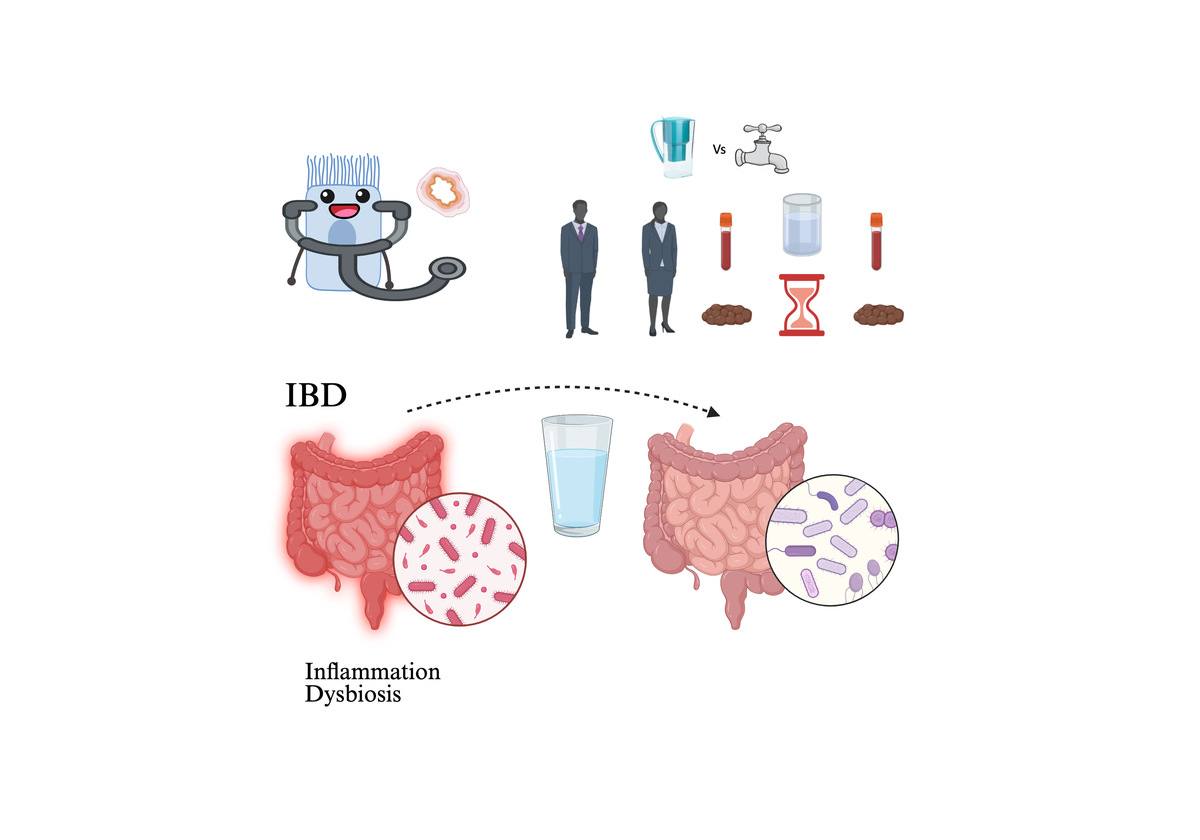
This study evaluated the effects of filtered, alkalinised water on inflammation and intestinal dysbiosis in individuals with inflammatory bowel disease (IBD).
Material and methods:
We conducted a three-month, two-arm, randomised intervention study involving 46 patients with IBD in remission. Fifty-two volunteers were recruited and divided into two groups (n = 26): the control group consumed water from a mock device, and the test group consumed alkalinised filtered water. Forty-six (21/25) volunteers completed the study. Blood and stool samples were collected before and after the intervention. We assessed antioxidant capacity and circulating cytokine levels from plasma. Gene expression levels of inflammatory mediators were determined using mRNA from peripheral blood mononuclear cells (PBMCs). The microbial composition of faecal samples was characterised by qPCR analysis using primers targeting 16S rRNA genes.
Results:
Consumption of alkalinised filtered water significantly reduced IL1B gene expression in PBMCs. Furthermore, subjects drinking alkalinised filtered water exhibited a consistent, albeit not statistically significant, decrease in circulating IL-1b and significantly lower levels of IL-4 than controls. Microbiome analysis revealed that the levels of the Bacteroides fragilis Group were significantly reduced in subjects consuming tap water but not in those consuming filtered water.
Conclusions:
These changes suggest that consuming alkalinised water for three months leads to an improved inflammatory status compared with consuming tap water.
REFERENCES (38)
1.
Ananthakrishnan AN. Epidemiology and Risk Factors for IBD. Nat Rev Gastroenterol Hepatol 2015; 12: 205-17.
2.
Liu JZ, van Sommeren S, Huang H, et al. Association analyses identify 38 susceptibility loci for inflammatory bowel disease and highlight shared genetic risk across populations. Nat Genet 2015; 47: 979-86.
3.
Caron B, Honap S, Peyrin-Biroulet L. Epidemiology of inflammatory bowel disease across the ages in the era of advanced therapies. J Crohn’s Colitis 2024; 18: ii3-15.
4.
Zsálig D, Berta A, Tóth V, et al. A review of the relationship between gut microbiome and obesity. Appl Sci 2023; 13: 610.
5.
Lee M, Chang EB. Inflammatory bowel diseases (IBD) and the microbiome – searching the crime scene for clues. Gastroenterology 2021; 160: 524-37.
6.
Roy S, Dhaneshwar S. Role of prebiotics, probiotics, and synbiotics in management of inflammatory bowel disease: current perspectives. World J Gastroenterol 2023; 29: 2078-100.
7.
Zhou S, Chai P, Dong X, et al. Drinking water quality and inflammatory bowel disease: a prospective cohort study. Environ Sci Pollut Res 2023; 30: 71171-83.
8.
Pan F, Zhu S, Shang L, et al. Assessment of drinking water quality and health risk using water quality index and multiple computational models: a case study of yangtze river in suburban areas of Wuhan, Central China, from 2016 to 2021. Environ Sci Pollut Res 2024; 31: 22736-58.
9.
Aamodt G, Bukholm G, Jahnsen J, Moum B, Vatn MH; the IBSEN Study Group. The association between water supply and inflammatory bowel disease based on a 1990–1993 Cohort Study in Southeastern Norway. Am J Epidemiol 2008; 168: 1065-72.
10.
Holik D, Bezdan A, Marković M, et al. The association between drinking water quality and inflammatory bowel disease-a study in Eastern Croatia. Int J Environ Res Public Health 2020; 17: 8495.
11.
Xu Y, Li Y, Scott K, et al. Inflammatory bowel disease and biomarkers of gut inflammation and permeability in a community with high exposure to perfluoroalkyl substances through drinking water. Environ Res 2020; 181: 108923.
12.
Ji J, Wu X, Li X, Zhu Y. Effects of microplastics in aquatic environments on inflammatory bowel disease. Environ Res 2023; 229: 115974.
13.
Li LY, Duan YJ, Hou J. Research progress on source, risk assessment, and management of emerging pollutants in drinking water. Ying Yong Sheng Tai Xue Bao 2023; 34: 3447-56.
14.
Vanhaecke T, Bretin O, Poirel M, Tap J. Drinking water source and intake are associated with distinct gut microbiota signatures in US and UK Populations. J Nutr 2022; 152: 171-82.
15.
Bajgai J, Kim CS, Rahman MH, et al. Effects of alkaline-reduced water on gastrointestinal diseases. Processes 2022; 10: 87.
16.
Hansen TH, Thomassen MT, Madsen ML, et al. The effect of drinking water pH on the human gut microbiota and glucose regulation: results of a randomized controlled cross-over intervention. Sci Rep 2018; 8: 16626.
17.
Higashimura Y, Baba Y, Inoue R, et al. Effects of molecular hydrogen-dissolved alkaline electrolyzed water on intestinal environment in mice. Med Gas Res 2018; 8: 6-11.
18.
García-Gómez R, Prieto I, Amor S, et al. Evaluation of the potential benefits of alkaline drinking water on tumor development reveals vascular protective effects. Arch Med Sci Civil Dis 2021; 6: 84-102.
19.
Melnyk S, Hakkak R. Metabolic status of lean and obese zucker rats based on untargeted and targeted metabolomics analysis of serum. Biomedicines 2022; 10: 153.
20.
Doblado L, Díaz LE, Nova E, Marcos A, Monsalve M. Intestinal effects of filtered alkalinized water in lean and obese zucker rats. Microorganisms 2024; 12: 316.
21.
Certificados Alkanatur. Productos avalados por profesionales Available online: https://alkanatur.com/es/certi....
22.
Bartosch S, Fite A, Macfarlane GT, McMurdo MET. Characterization of bacterial communities in feces from healthy elderly volunteers and hospitalized elderly patients by using real-time PCR and effects of antibiotic treatment on the fecal microbiota. Appl Environ Microbiol 2004; 70: 3575-81.
23.
Matsuki T, Watanabe K, Fujimoto J, et al. Quantitative PCR with 16S rRNA-gene-targeted species-specific primers for analysis of human intestinal bifidobacteria. Appl Environ Microbiol 2004; 70: 167-73.
24.
Rinttilä T, Kassinen A, Malinen E, Krogius L, Palva A. Development of an extensive set of 16S rDNA-targeted primers for quantification of pathogenic and indigenous bacteria in faecal samples by real-time PCR. J Appl Microbiol 2004; 97: 1166-77.
25.
Heilig HGHJ, Zoetendal EG, Vaughan EE, Marteau P, Akkermans ADL, de Vos WM. Molecular diversity of Lactobacillus Spp. and other lactic acid bacteria in the human intestine as determined by specific amplification of 16s ribosomal DNA. Appl Environ Microbiol 2002; 68: 114-23.
26.
Walter J, Hertel C, Tannock GW, Lis CM, Munro K, Hammes WP. Detection of Lactobacillus, Pediococcus, Leuconostoc, and Weissella species in human feces by using group-specific PCR primers and denaturing gradient gel electrophoresis. Appl Environ Microbiol 2001; 67: 2578-85.
27.
Derrien M, Vaughan EE, Plugge CM, de Vos WM. Akkermansia Muciniphila Gen. Nov., Sp. Nov., a Human Intestinal Mucin-Degrading Bacterium. Int J Syst Evol Microbiol 2004; 54: 1469-76.
28.
Laursen MF, Larsson MW, Lind MV, et al. Intestinal Enterococcus abundance correlates inversely with excessive weight gain and increased plasma leptin in breastfed infants. FEMS Microbiol Ecol 2020; 96: fiaa066.
29.
Jin J, Cheng R, Ren Y, et al. Distinctive gut microbiota in patients with overweight and obesity with dyslipidemia and its responses to long-term orlistat and ezetimibe intervention: a randomized controlled open-label trial. Front Pharmacol 2021; 12: 732541.
30.
Ignacio A, Fernandes MR, Rodrigues VAA, et al. Correlation between body mass index and faecal microbiota from children. Clin Microbiol Infect 2016; 22: 258.e1-8.
31.
Zhuang X, Xiong L, Li L, Li M, Chen M. Alterations of gut microbiota in patients with irritable bowel syndrome: a systematic review and meta-analysis. J Gastroenterol Hepatol 2017; 32: 28-38.
32.
Jean S, Wallace MJ, Dantas G, Burnham CAD. Time for some group therapy: update on identification, antimicrobial resistance, taxonomy, and clinical significance of the Bacteroides fragilis group. J Clin Microbiol 2022; 60: e02361-20.
33.
Becker HEF, Jamin C, Bervoets L, et al. Higher prevalence of Bacteroides fragilis in Crohn’s disease exacerbations and strain-dependent increase of epithelial resistance. Front Microbiol 2021; 12: 598232.
34.
Chan JL, Wu S, Geis AL, et al. Non-toxigenic Bacteroides fragilis (NTBF) administration reduces bacteria-driven chronic colitis and tumor development independent of polysaccharide A. Mucosal Immunol 2019; 12: 164-77.
35.
Wu L, Park SH, Kim H. Direct and indirect evidence of effects of Bacteroides spp. on obesity and inflammation. Int J Mol Sci 2023; 25: 438.
36.
Blandford LE, Johnston EL, Sanderson JD, Wade WG, Lax AJ. Promoter orientation of the immunomodulatory Bacteroides fragilis capsular polysaccharide A (PSA) is off in individuals with inflammatory bowel disease (IBD). Gut Microbes 2019; 10: 569-77.
37.
Aggeletopoulou I, Kalafateli M, Tsounis EP, Triantos C. Exploring the role of IL-1 in inflammatory bowel disease pathogenesis. Front Med 2024; 11: 1307394.
38.
Lavalle-Carrasco J, Molina-Frechero N, López-Verdín S, Bologna-Molina R. Health implications of proinflammatory cytokine activity at different levels of fluoride exposure: a systematic review. J Appl Toxicol 2025; 45: 1191-202.
Share
RELATED ARTICLE
| eISSN: | 1896-9151 |
| ISSN: | 1734-1922 |

We process personal data collected when visiting the website. The function of obtaining information about users and their behavior is carried out by voluntarily entered information in forms and saving cookies in end devices. Data, including cookies, are used to provide services, improve the user experience and to analyze the traffic in accordance with the Privacy policy. Data are also collected and processed by Google Analytics tool (more).
You can change cookies settings in your browser. Restricted use of cookies in the browser configuration may affect some functionalities of the website.
You can change cookies settings in your browser. Restricted use of cookies in the browser configuration may affect some functionalities of the website.