Current issue
Archive
Manuscripts accepted
About the Journal
Editorial office
Editorial board
Section Editors
Abstracting and indexing
Subscription
Contact
Ethical standards and procedures
Most read articles
Instructions for authors
Article Processing Charge (APC)
Regulations of paying article processing charge (APC)


CLINICAL RESEARCH
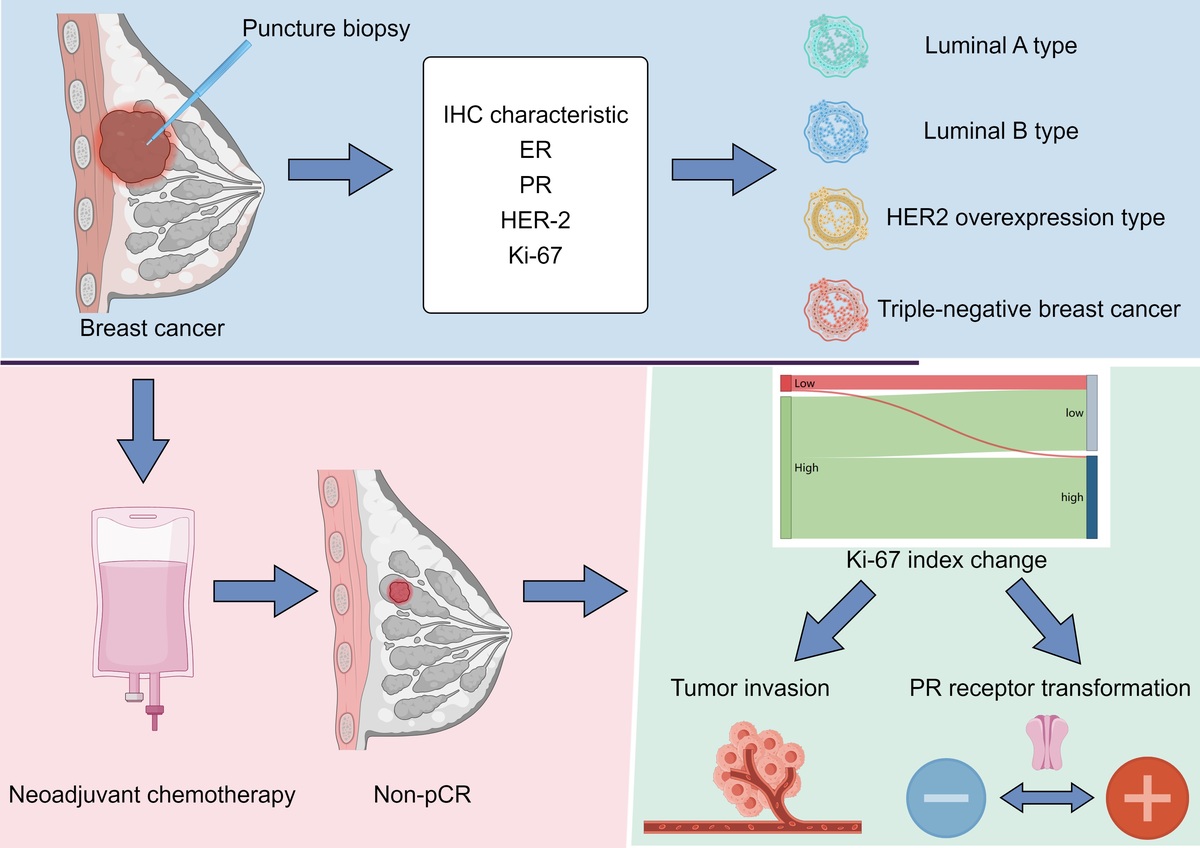
Ki-67 index changes and their association with PR status changes and tumor invasion: a real-world study of patients with non-pCR breast cancer after neoadjuvant chemotherapy
1
Department of Pathology, Baoji Central Hospital, Baoji, China
2
Department of Breast Surgery, Baoji Central Hospital, Baoji, China
Submission date: 2026-03-19
Final revision date: 2026-05-20
Acceptance date: 2026-06-18
Online publication date: 2026-10-13
Corresponding author
Xiaotian Zhang
Baoji Central Hospital No. 8 Jiangtan Road Weibin District, Baoji City Shaanxi Province, China
Baoji Central Hospital No. 8 Jiangtan Road Weibin District, Baoji City Shaanxi Province, China
KEYWORDS
receptor status changesneoadjuvant chemotherapyimmunohistochemistryHER2biopsymolecular biology technology
TOPICS
ABSTRACT
Introduction:
Neoadjuvant chemotherapy (NAC) represents a crucial treatment strategy designed to reduce tumor size and facilitate surgical intervention. In patients who do not achieve a pathological complete response (pCR) following NAC, the alteration of receptor status has been observed, but their clinical implications remain unclear. The aim of this study was to investigate the dynamic changes in immunohistochemical (IHC) expression and their association with clinicopathological features in non-pCR breast cancer patients.
Material and methods:
A total of 88 non-pCR breast cancer patients diagnosed by core needle biopsy at Baoji Central Hospital between January 1, 2024, and June 1, 2025, were included. Estrogen receptor (ER), progesterone receptor (PR), human epidermal growth factor receptor 2 (HER2), and the proliferation marker Ki-67 were assessed in biopsy and radical resection tissues after NAC.
Results:
A total of 147 breast cancer patients were retrieved, and 88 patients were included in the study. Among them, there were 3 cases of luminal A type (3.42%), 71 cases of luminal B type (80.68%), 7 cases of HER2-enriched type (7.95%) and 7 cases of triple-negative breast cancer (TNBC) type (7.95%). The overall change rate of ER, PR, HER2, Ki-67 was 6.82%, 15.91%, 22.73% and 40.91%, respectively. Changes in the Ki-67 index change were significantly associated with tumor invasion and PR receptor status changes (p < 0.001), but not with ER and HER2 changes (p = 0.267, p = 0.620).
Conclusions:
Ki-67 exhibited the highest alteration rate following NAC in non-pCR breast cancer patients, and its change was significantly associated with aggressive tumor features and PR conversion, suggesting a potential association with tumor biological characteristics.
Neoadjuvant chemotherapy (NAC) represents a crucial treatment strategy designed to reduce tumor size and facilitate surgical intervention. In patients who do not achieve a pathological complete response (pCR) following NAC, the alteration of receptor status has been observed, but their clinical implications remain unclear. The aim of this study was to investigate the dynamic changes in immunohistochemical (IHC) expression and their association with clinicopathological features in non-pCR breast cancer patients.
Material and methods:
A total of 88 non-pCR breast cancer patients diagnosed by core needle biopsy at Baoji Central Hospital between January 1, 2024, and June 1, 2025, were included. Estrogen receptor (ER), progesterone receptor (PR), human epidermal growth factor receptor 2 (HER2), and the proliferation marker Ki-67 were assessed in biopsy and radical resection tissues after NAC.
Results:
A total of 147 breast cancer patients were retrieved, and 88 patients were included in the study. Among them, there were 3 cases of luminal A type (3.42%), 71 cases of luminal B type (80.68%), 7 cases of HER2-enriched type (7.95%) and 7 cases of triple-negative breast cancer (TNBC) type (7.95%). The overall change rate of ER, PR, HER2, Ki-67 was 6.82%, 15.91%, 22.73% and 40.91%, respectively. Changes in the Ki-67 index change were significantly associated with tumor invasion and PR receptor status changes (p < 0.001), but not with ER and HER2 changes (p = 0.267, p = 0.620).
Conclusions:
Ki-67 exhibited the highest alteration rate following NAC in non-pCR breast cancer patients, and its change was significantly associated with aggressive tumor features and PR conversion, suggesting a potential association with tumor biological characteristics.
REFERENCES (89)
1.
Trayes KP, Cokenakes SEH. Breast cancer treatment. Am Fam Physician 2021; 104: 171-8.
2.
Wu Y, He S, Cao M, et al. Comparative analysis of cancer statistics in China and the United States in 2024. Chin Med J (Engl) 2024; 137: 3093-100.
3.
Qiao X, Chen H, Zhao P, et al. Global burden and developments in pre- and post-menopausal estrogen-related cancer from 1990 to 2021, with estimates for 2035. Arch Med Sci 2025; 21: 1861-73.
4.
Xiong X, Zheng LW, Ding Y, et al. Breast cancer: pathogenesis and treatments. Signal Transduct Target Ther 2025; 10: 49.
5.
Moura T, Caramelo O, Silva I, Silva S, Laranjeira P, Paiva A. Systemic immune profiling reveals candidate biomarkers in luminal a breast cancer: a comparative pilot study. Biomedicines 2025; 13: 2787.
6.
Di Leone A, Franco A, Castagnetta V, et al. Personalizing neoadjuvant chemotherapy: the impact of BRCA variants on pathologic complete response in luminal B breast cancer. Cancers (Basel) 2025; 17: 1619.
7.
Shang A, Xiong Y, Li M, et al. Focusing on the advances and challenges of HER2-targeted therapy: cutting-edge breakthroughs in neoadjuvant treatment for HER2-positive breast cancer. Technol Cancer Res Treat 2026; 25: 15330338261446455.
8.
Zhuang Z, Hu J, Yu H, Xie Y. MYB: A potential therapeutic target in triple-negative breast cancer based on the PI3K/AKT signaling pathway. Comput Biol Chem 2026; 122: 108938.
9.
Herzog SK, Stevens JH, Gu G, et al. Defective DNA damage response is a targetable therapeutic vulnerability in esr1-mutant breast cancer. Cancer Res 2026; 86: 1707-23.
10.
Meng S, Tripathy D, Shete S, et al. HER-2 gene amplification can be acquired as breast cancer progresses. Proc Natl Acad Sci USA 2004; 101: 9393-8.
11.
Liu ET, Antonio M, Nance T, Menghi F. Prevalence of BRCA1 promoter methylation in cohorts of individuals with and without cancer assessed by circulating cell-free DNA. JCO Precis Oncol 2026; 10: e2500854.
12.
Sabu A, Pant D, Mutnuru SA, Varun K, Kakani P, Shukla S. PKM2-DNMT3A-SMAD2 axis regulates cell proliferation via histone lactylation in breast cancer. Mol Cell Biol 2026; 46: 584-95.
13.
Hossain A, Islam MA, Khalekuzzaman M, et al. Gene expression profiling to unveil novel biomarkers for early diagnosis and therapies for breast cancer. Curr Top Med Chem 2026; 26: 525-42.
14.
Liu X, Yu D, Yu Z, Su S, Jiang M, Zhao C. LHPP-P38 MAPK/ERK-ETS1 axis negative feedback signaling restrains progression in breast cancer. Cancer Sci 2025; 116: 923-35.
15.
Hong T, Dong D, Li J, Wang L. PARP9 knockdown confers protection against chemoresistance and immune escape of breast cancer cells by blocking the PI3K/AKT pathway. Arch Med Sci 2024; 20: 1228-48.
16.
Bi Z, Ren TY, Zhang ZP, Wang YS. The management concept of breast cancer with clinically node-negative/imaging node-positive disease. Int J Surg 2023; 109: 3727-9.
17.
Séka EN, Traoré DA, Saki CT, Traoré K, Tuo AG, Doukouré B. Pathological response to neoadjuvant chemotherapy and survival in patients with breast cancer: a multicentric retrospective study. Oncol Lett 2026; 31: 93.
18.
Zhang D, Yang L, Zheng Y, Zhou Q. Adjuvant chemotherapy in breast cancer after neoadjuvant therapy: essential or optional? Cancer Res Treat 2026; 58: 208-20.
19.
Ying XH, Zhang KY, Jiang SH, et al. Integrated genomic profiling identifies predictive biomarkers for neoadjuvant therapy response in Chinese breast cancer patients. Cancer Lett 2026; 651: 218503.
20.
Pistilli B, Jhaveri K, Im SA, et al. Datopotamab deruxtecan versus chemotherapy in previously treated inoperable/metastatic hormone receptor-positive, HER2-negative breast cancer: final overall survival analysis of the phase III TROPION-Breast01 study. Ann Oncol 2026; 37: 663-74.
21.
Loibl S, Jassem J, Sonnenblick A, et al. Adjuvant pertuzumab and trastuzumab in early human epidermal growth factor receptor 2-positive breast cancer in the APHINITY trial: third interim overall survival analysis with efficacy update. J Clin Oncol 2024; 42: 3643-51.
22.
Jiang Q, Li M, Li H, Chen L. Entrectinib, a new multi-target inhibitor for cancer therapy. Biomed Pharmacother 2022; 150: 112974.
23.
Lloyd MR, Wander SA, Hamilton E, Razavi P, Bardia A. Next-generation selective estrogen receptor degraders and other novel endocrine therapies for management of metastatic hormone receptor-positive breast cancer: current and emerging role. Ther Adv Med Oncol 2022; 14: 17588359221113694.
24.
Sonke GS, van Ommen-Nijhof A, Wortelboer N, et al. Early versus deferred use of CDK4/6 inhibitors in advanced breast cancer. Nature 2024; 636: 474-80.
25.
Zhong L, Gan L, Wang B, et al. Hyperacute rejection-engineered oncolytic virus for interventional clinical trial in refractory cancer patients. Cell 2025; 188: 1119-36.e23.
26.
Lu Y, Chen Y, Hou G, et al. Zinc-iron bimetallic peroxides modulate the tumor stromal microenvironment and enhance cell immunogenicity for enhanced breast cancer immunotherapy therapy. ACS Nano 2024; 18: 10542-56.
27.
Chen H, Shi Y, Yuan M, Li H, Liu X. Integrating multi-omics and artificial intelligence fuels advanced target identification and drug discovery. Biotechnol Adv 2026; 87: 108785.
28.
Jia F, Sun S, Li J, et al. Neoadjuvant chemotherapy-induced remodeling of human hormonal receptor-positive breast cancer revealed by single-cell RNA sequencing. Cancer Lett 2024; 585: 216656.
29.
Bo J, Yu B, Bi R, et al. Conversion of ER and HER2 status after neoadjuvant therapy in chinese breast cancer patients. Clin Breast Cancer 2023; 23: 436-46.
30.
Wang J, Long X, Tang M, Xiao X. HER2 and hormone receptor conversion after neoadjuvant therapy for breast cancer. Front Oncol 2025; 15: 1522460.
31.
Zhang RZ, Liu D, Ke Y, et al. A study on the impact of neoadjuvant therapy on molecular subtype conversion in breast cancer. World J Surg Oncol 2025; 23: 155.
32.
Shiino S, Ball G, Syed BM, et al. Prognostic significance of receptor expression discordance between primary and recurrent breast cancers: a meta-analysis. Breast Cancer Res Treat 2022; 191: 1-14.
33.
World Medical Association Declaration of Helsinki: ethical principles for medical research involving human subjects. JAMA 2013; 310: 2191-4.
34.
Li J, Jiang Z. Chinese Society of Clinical Oncology Breast Cancer (CSCO BC) Guidelines in 2024: international contributions from China. Cancer Biol Med 2024; 21: 838-43.
35.
Weiss A, Chavez-MacGregor M, Lichtensztajn DY, et al. Validation study of the American Joint Committee on Cancer eighth edition prognostic stage compared with the anatomic stage in breast cancer. JAMA Oncol 2018; 4: 203-9.
36.
Lim TH, Lim AST, Tien SL, Tan PH. Impact of the updated 2018 American Society of Clinical Oncology/College of American Pathologists (ASCO/CAP) guidelines on Human Epidermal Growth Factor Receptor 2 (HER2) gene testing in invasive breast cancers: A single center study. Ann Diagn Pathol 2022; 58: 151935.
37.
[Guidelines on clinical practice of molecular tests in breast cancer in China (2025 edition)]. Zhonghua Zhong Liu Za Zhi 2025; 47: 929-45.
38.
Güth U, Elfgen C, Zadeh SN, et al. The impact of intraoperative frozen section in patients with clinically node-negative breast cancer (cN0/ycN0) who received neoadjuvant systemic therapy. Eur J Surg Oncol 2023; 49: 1423-8.
39.
Baek SH, Lee MJ, Kook Y, et al. Pathological complete response, histologic grade, and level of stromal tumor-infiltrating lymphocytes in ER + HER2– breast cancer. Breast Cancer Res 2025; 27: 42.
40.
He M, Su J, Ruan H, Song Y, Ma M, Xue F. Nomogram based on quantitative dynamic contrast-enhanced magnetic resonance imaging, apparent diffusion coefficient, and clinicopathological features for early prediction of pathologic complete response in breast cancer patients receiving neoadjuvant chemotherapy. Quant Imaging Med Surg 2023; 13: 4089-102.
41.
Antmen SE, Yalaza C, Tuncel F, Berkesoglu M, Erturk SE, Canacankatan N. Triple-negative breast cancer and ferroptosis: expression profiling of key regulatory genes. Arch Med Sci 2025; 21: 2079-87.
42.
Zaliunas BR, Pileckaite E, Duseikaite M, et al. Associations of MEG3 rs7158663, rs4081134 gene variants and Ki-67, p53, CK18 immunohistochemical markers with clinical features of pituitary neuroendocrine tumors. Front Endocrinol (Lausanne) 2025; 16: 1657520.
43.
Yerushalmi R, Pomerantz A, Lewin R, et al. BRCA1/2 mutation carriers vs the general breast cancer population (N = 799,986): 21-gene assay-based molecular characterization. Breast Cancer Res Treat 2024; 206: 67-76.
44.
Wang B, Liu C, Zhou F, Tang Q. Expression differences of circINTS4 in various molecular subtypes of breast cancer and its association with clinical pathological features. Arch Med Sci 2025; 21: 2184-8.
45.
Ping L, Zhu L, Chen N, et al. Endocrine resistance score based on three key genes predicts prognosis and reveals potential therapeutic targets for ER+HER2– breast cancer. Cell Prolif 2026; 59: e70100.
46.
García-Sancha N, Corchado-Cobos R, Pérez-Losada J. Understanding susceptibility to breast cancer: from risk factors to prevention strategies. Int J Mol Sci 2025; 26: 2993.
47.
Clusan L, Ferrière F, Flouriot G, Pakdel F. A basic review on estrogen receptor signaling pathways in breast cancer. Int J Mol Sci 2023; 24: 6834.
48.
Liang Y, Zhang H, Song X, Yang Q. Metastatic heterogeneity of breast cancer: Molecular mechanism and potential therapeutic targets. Semin Cancer Biol 2020; 60: 14-27.
49.
Li X, Zhuo S, Zhuang T, et al. YAP inhibits ER and ER(+) breast cancer growth by disrupting a TEAD-ER signaling axis. Nat Commun 2022; 13: 3075.
50.
Moisand A, Madéry M, Boyer T, Domblides C, Blaye C, Larmonier N. Hormone receptor signaling and breast cancer resistance to anti-tumor immunity. Int J Mol Sci 2023; 24: 15048.
51.
Wang J, Yang B, Bian L, et al. Long-term outcomes for neoadjuvant versus adjuvant chemotherapy in ER+/HER2– locally advanced breast cancer. Ann Surg Oncol 2025; 32: 4890-8.
52.
Mishra A, Srivastava A, Pateriya A, Tomar MS, Mishra AK, Shrivastava A. Metabolic reprograming confers tamoxifen resistance in breast cancer. Chem Biol Interact 2021; 347: 109602.
53.
Gue YX, Lau D, Shantsila A, Lip GYH, Palmieri C. Cardiovascular and metabolic effects of ovarian suppression in combination with tamoxifen or an aromatase inhibitor as adjuvant therapy for early oestrogen receptor-positive breast cancer: a systematic review. Arch Med Sci 2025; 21: 577-87.
54.
Aromatase inhibitors versus tamoxifen in premenopausal women with oestrogen receptor-positive early-stage breast cancer treated with ovarian suppression: a patient-level meta-analysis of 7030 women from four randomised trials. Lancet Oncol 2022; 23: 382-92.
55.
Aromatase inhibitors versus tamoxifen in early breast cancer: patient-level meta-analysis of the randomised trials. Lancet 2015; 386: 1341-52.
56.
Breast cancer and hormonal contraceptives: collaborative reanalysis of individual data on 53 297 women with breast cancer and 100 239 women without breast cancer from 54 epidemiological studies. Lancet 1996; 347: 1713-27.
57.
Fitzpatrick D, Pirie K, Reeves G, Green J, Beral V. Combined and progestagen-only hormonal contraceptives and breast cancer risk: a UK nested case-control study and meta-analysis. PLoS Med 2023; 20: e1004188.
58.
Beltjens F, Molly D, Bertaut A, et al. ER–/PR+ breast cancer: a distinct entity, which is morphologically and molecularly close to triple-negative breast cancer. Int J Cancer 2021; 149: 200-13.
59.
Song C, Kendi AT, Shim JY, et al. ER–/PR+ breast cancer is controlled more effectively with an inflammatory inhibitor than hormonal inhibitor. Breast Cancer 2023; 30: 436-52.
60.
Li X, Zhang X, Yin S, Nie J. Challenges and prospects in HER2-positive breast cancer-targeted therapy. Crit Rev Oncol Hematol 2025; 207: 104624.
61.
Schettini F, Prat A. Dissecting the biological heterogeneity of HER2-positive breast cancer. Breast 2021; 59: 339-50.
62.
Andrikopoulou A, Chatzinikolaou S, Panourgias E, et al. The emerging role of capivasertib in breast cancer. Breast 2022; 63: 157-67.
63.
Muntasell A, Cabo M, Servitja S, et al. Interplay between natural killer cells and anti-HER2 antibodies: perspectives for breast cancer immunotherapy. Front Immunol 2017; 8: 1544.
64.
Martín M, Pandiella A, Vargas-Castrillón E, et al. Trastuzumab deruxtecan in breast cancer. Crit Rev Oncol Hematol 2024; 198: 104355.
65.
Gerdes J, Schwab U, Lemke H, Stein H. Production of a mouse monoclonal antibody reactive with a human nuclear antigen associated with cell proliferation. Int J Cancer 1983; 31: 13-20.
66.
Wang W, Liang X, Yang Y, et al. Survival benefit of neoadjuvant chemotherapy in HR+/HER2- early breast cancer stratified by luminal B status and clinical risk: a real-world cohort study in a Chinese population. Front Oncol 2026; 16: 1804093.
67.
Rodríguez de Trujillo Campo-Cossío M, Romero-Martín S, Rodríguez-Alonso B, Font-Ugalde P, Raya-Povedano JL, Álvarez-Benito M. Predictive factors of axillary pathological complete response in HER2-positive breast cancer patients treated with neoadjuvant chemotherapy. Eur Radiol 2026; 36: 3367-77.
68.
Tavares GM, Ramalho SOB, da Silva LR, et al. Adjuvant capecitabine in women with triple-negative breast cancer with residual disease after carboplatin-containing neoadjuvant chemotherapy. Breast Cancer Res Treat 2026; 217: 4.
69.
Arteaga-Arteaga HB, Oyola-Martinez KA, de la Cruz R, Bravo-Ortíz MA, Guillen-Rondon P, Tabares-Soto R. Deep learning approaches for predicting Ki-67 index in breast cancer histopathology images: a systematic review. Comput Biol Med 2026; 210: 111678.
70.
Yeo SK, Zhu X, Okamoto T, et al. Single-cell RNA-sequencing reveals distinct patterns of cell state heterogeneity in mouse models of breast cancer. Elife 2020; 9: e58810.
71.
Turner KM, Yeo SK, Holm TM, Shaughnessy E, Guan JL. Heterogeneity within molecular subtypes of breast cancer. Am J Physiol Cell Physiol 2021; 321: C343-c54.
72.
Antonini M, Mattar A, Madeira M, et al. Prognostic impact of real-world immunohistochemical changes in breast cancer treated with neoadjuvant chemotherapy. Clin Breast Cancer 2026; 26: 276-89.e4.
73.
Lu Y, Yuan Q, Yu H, et al. Impact of Post-neoadjuvant chemotherapy biomarker changes on long-term oncological outcomes in non-pCR breast cancer. Clin Breast Cancer 2026; 26: 144-9.e2.
74.
Niikura N, Tomotaki A, Miyata H, et al. Changes in tumor expression of HER2 and hormone receptors status after neoadjuvant chemotherapy in 21,755 patients from the Japanese breast cancer registry. Ann Oncol 2016; 27: 480-7.
75.
Candás G, García A, Ocampo MD, et al. Impact of immunohistochemical profile changes following neoadjuvant therapy in the treatment of breast cancer. Ecancermedicalscience 2021; 15: 1162.
76.
Haerslev T, Jacobsen GK, Zedeler K. Correlation of growth fraction by Ki-67 and proliferating cell nuclear antigen (PCNA) immunohistochemistry with histopathological parameters and prognosis in primary breast carcinomas. Breast Cancer Res Treat 1996; 37: 101-13.
77.
Okcu O, Öztürk Ç, Şen B. Tumor budding and Ki-67 proliferation index as biomarkers for NAC response and prognosis in breast cancer. Future Oncol 2025; 21: 2885-93.
78.
Toli MA, Liu X, Massa D, et al. Prognostic significance of tumour Ki-67 dynamics during neoadjuvant treatment in patients with breast cancer: a population-based cohort study. Lancet Reg Health Eur 2025; 58: 101432.
79.
Ono M, Tsuda H, Yoshida M, Shimizu C, Kinoshita T, Tamura K. Prognostic significance of progesterone receptor expression in estrogen-receptor positive, HER2-negative, node-negative invasive breast cancer with a low Ki-67 labeling index. Clin Breast Cancer 2017; 17: 41-7.
80.
Gong Y, Booser DJ, Sneige N. Comparison of HER-2 status determined by fluorescence in situ hybridization in primary and metastatic breast carcinoma. Cancer 2005; 103: 1763-9.
81.
Long M, You C, Song Q, et al. Biomarker alteration after neoadjuvant endocrine therapy or chemotherapy in estrogen receptor-positive breast cancer. Life (Basel) 2022; 13: 74.
82.
Rey-Vargas L, Mejía-Henao JC, Sanabria-Salas MC, Serrano-Gomez SJ. Effect of neoadjuvant therapy on breast cancer biomarker profile. BMC Cancer 2020; 20: 675.
83.
Miligy IM, Badr N, Stevens A, et al. Pathological changes following neoadjuvant endocrine therapy (NAET): a multicentre study of 391 breast cancers. Int J Mol Sci 2024; 25: 7381.
84.
Vemuru S, Huang J, Colborn K, et al. Clinical implications of receptor conversions in breast cancer patients who have undergone neoadjuvant chemotherapy. Breast Cancer Res Treat 2023; 200: 247-56.
85.
Sung HJ, Kwon HJ, Bai K, et al. Alteration of HER2 status following neoadjuvant chemotherapy in breast cancer: a clinicopathological analysis focusing on HER2-low status. Cancer Res Treat 2025. DOI: 10.4143/crt.2025.761.
86.
Li C, Fan H, Xiang Q, et al. Prognostic value of receptor status conversion following neoadjuvant chemotherapy in breast cancer patients: a systematic review and meta-analysis. Breast Cancer Res Treat 2019; 178: 497-504.
87.
Ravishankar MC, Toi PC, Dubashi B, Dharanipragada K. Changes in ER, PR, HER2, and their association with disease outcome in invasive breast carcinoma (IBC) patients post-neo adjuvant chemotherapy (NAC) and surgery. Breast Cancer (Auckl) 2025; 19: 11782234251342463.
88.
Dowling GP, Daly GR, Hehir CM, et al. Prognostic significance of receptor conversion following neoadjuvant therapy in breast cancer: a systematic review and meta-analysis. Breast 2025; 82: 104516.
89.
Shamai G, Cohen S, Binenbaum Y, et al. Deep learning on histopathological images to predict breast cancer recurrence risk and chemotherapy benefit: a multicentre, model development and validation study. Lancet Oncol 2026; 27: 512-26.
Share
RELATED ARTICLE
| eISSN: | 1896-9151 |
| ISSN: | 1734-1922 |

We process personal data collected when visiting the website. The function of obtaining information about users and their behavior is carried out by voluntarily entered information in forms and saving cookies in end devices. Data, including cookies, are used to provide services, improve the user experience and to analyze the traffic in accordance with the Privacy policy. Data are also collected and processed by Google Analytics tool (more).
You can change cookies settings in your browser. Restricted use of cookies in the browser configuration may affect some functionalities of the website.
You can change cookies settings in your browser. Restricted use of cookies in the browser configuration may affect some functionalities of the website.