Introduction
Pregnancy and childbirth are key biological and psychosocial events in a woman’s life that may influence short- and long-term health outcomes [1], including physiology, metabolism, and psychology [2]. Beyond their reproductive function, these processes are increasingly recognized as being associated with long-term health patterns. Evidence from previous studies suggested that metabolic, hormonal, and vascular changes in pregnancy may be associated with long-term health risks in women. The most frequently reported conditions include hypertension, cardiovascular disease, and diabetes. Hypertensive disorders of pregnancy (HDP) were associated with an increased risk of cardiovascular disease, potentially reflecting shared underlying vascular mechanisms related to blood pressure regulation. Timely recognition and modification of the optimal BP range in peripartum and postpartum may contribute to improvement of their outcomes [3]. One systematic review showed that gestational diabetes mellitus (GDM) and HDP were associated with higher risk of type 2 diabetes mellitus (T2DM) and hypertension after pregnancy [4]. Nakimuli et al. also reported that over one-third of women with pre-eclampsia would develop hypertension at 1 year postpartum [5].
Previous studies have predominantly focused on the adverse effects of pregnancy complications on women’s health, while the influence of normal pregnancy and childbirth experience on women’s long-term health remains less well understood. Conversely, reproductive experiences have been associated with physiological adaptations that confer certain health advantages. For instance, pregnancy might lower the risks of hormone-sensitive malignancies, such as breast6 and ovarian cancers [6, 7]. Juang’s group also found that pregnancy had an impact on primary dysmenorrhea [8]. Nevertheless, research in this field remains limited. Generally, pregnant studies to date have predominantly employed single-disease paradigms, which fail to reflect the clinical reality of the women’s short- and long-term health.
Evidence suggests that pregnancy is associated with significant changes in lipid metabolism during the peripartum and postpartum periods. These changes often affect women’s health [9, 10]. Recently, remnant cholesterol (RC), defined as cholesterol other than low-density lipoprotein cholesterol (LDL-C) and high-density lipoprotein cholesterol (HDL-C), has been identified as a potential marker of perinatal diseases, especially GDM [11, 12]. Gao et al. reported RC, but not other cholesterol parameters, may serve as an early indicator of GDM at 12–14 weeks of gestation. Elevated RC levels (> 24.30 mg/dl) were associated with a higher risk of developing GDM [13]. In addition, remnant cholesterol was found to have a positive association with blood pressure and sustained hypertension in pregnancy and 6 and 9 years after pregnancy, and the effect was more significant than that of total cholesterol (TC), LDL-C and HDL-C [14]. However, the longitudinal trajectory of RC in women with typical reproductive histories and its influence on women’s health are still unclear.
In order to explore the association between childbirth experience and multiple health outcomes, we investigated seven cycles of the National Health and Nutrition Examination Survey (NHANES, 2007–2020) [15, 16]. We first examined these relations. The selected health outcomes included 16 chronic diseases and 26 disease subtypes, such as diabetes, heart disease, cancer, liver condition, failing kidney, kidney stones, thyroid problem, high blood pressure, sleep disorders, and arthritis. We further evaluated the association between blood lipid parameters, particularly cholesterol-related indices, and these outcomes. This study provides evidence on potential associations between childbirth experience and multiple health outcomes, which may have implications for future research on women’s health.
Material and methods
Data source and study population
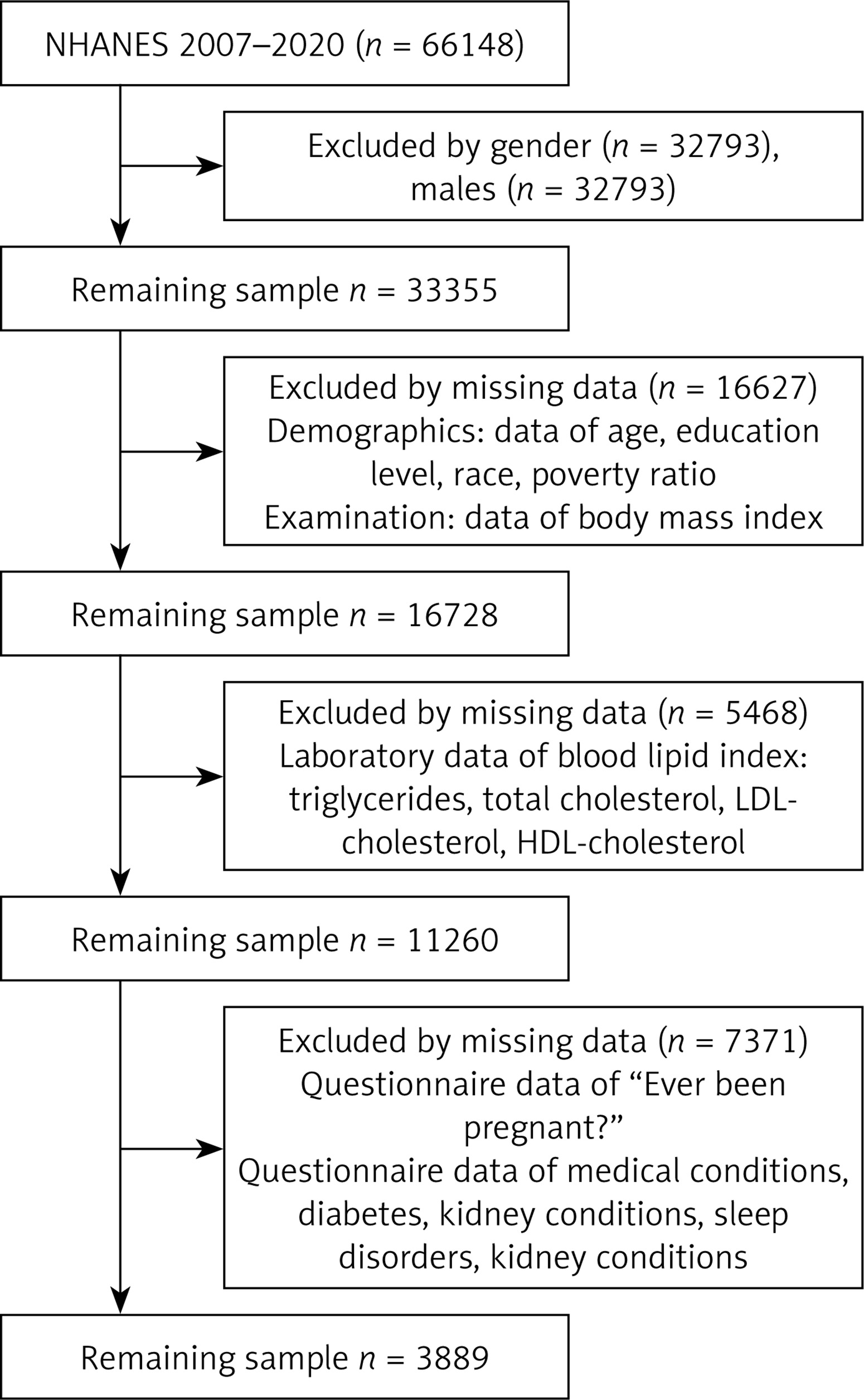
The cross-sectional study was from seven cycles of NHANES (2007–2020). Selection of participants is illustrated in Figure 1. Of 66,148 initial subjects, 32,793 were excluded due to male gender. 16,627 were excluded due to incomplete data of age, education level, race, poverty income ratio, and body mass index (BMI). 5468 were excluded due to missing the data of blood lipid indices. 7371 were excluded due to missing the information of pregnancy, childbirth, and multiple health outcomes. Finally, 3889 women were included. Among excluded female participants, 11,847 reported no pregnancy history but were excluded due to incomplete data on blood lipid indices or health outcomes. To assess potential selection bias in this specific subgroup, we compared baseline characteristics between these excluded nulligravid women and included nulligravid women (n = 649). No significant differences were observed in age (36.8 ±18.2 vs. 37.2 ±17.7 years, p = 0.62), racial composition, or education level (college graduate: 40.2% vs. 41.5%), suggesting limited evidence of selection bias in the nulligravid subgroup. Additionally, no substantial differences were observed in the measured baseline characteristics between the overall excluded female participants and the included participants, suggesting that selection bias due to these measured variables may be limited.
Definition of pregnancy and childbirth history
Pregnancy history was measured by the following question: “Ever been pregnant? (RHQ131)”. Pregnancy history included current pregnancy, live births, miscarriages, stillbirths, tubal pregnancies, and abortions. Participants who answered “No” were considered as having no pregnancy history (G1). Similarly, childbirth history and birth number were defined according to the question: “How many live births have you had? (RHQ171)”. Women who reported one or more live births were classified as having a history of childbirth (G2). Age at first birth (AFB) and age at last birth (ALB) were defined using the questionnaire items “Age at first live birth (RHQ180)” and “Age at last live birth (RHD190)”, respectively. The interval between the first and last live birth was calculated as ALB minus AFB.
Definition of multiple health outcomes
As in a previous study [17], multiple health outcomes were assessed using self-reported NHANES questionnaire data, primarily from the Medical Conditions Questionnaire (MCQ), Diabetes Questionnaire (DIQ), Kidney Conditions Questionnaire (KIQ), Sleep Disorders Questionnaire (SLQ), and Blood Pressure Questionnaire (BPQ). Women were considered as having the condition when they answered “Yes” to the question “Has a doctor or other health professional ever told you that you have?”
In this study, 16 conditions and 26 subtypes were included: heart disease (heart attack, angina pectoris, coronary heart disease, congestive heart failure), stroke, emphysema, asthma, chronic bronchitis, liver condition, failing kidney, kidney stones, cancer (breast, cervix, ovary, uterus), overweight, arthritis (osteoarthritis, rheumatoid arthritis), gout, thyroid problem, diabetes, high blood pressure, and sleep disorder.
Measurements of blood lipid indices
Women’s blood lipid indices in questionnaire were obtained from laboratory data, including triglyceride (mmol/l), total cholesterol (TC, mmol/l), LDL-cholesterol (LDL-C, mmol/l) and HDL-cholesterol (HDL-C, mmol/l). According to the study [18], remnant cholesterol (RC) was calculated as deducting the levels of LDL-C and HDL-C from TC. According to the literature [19], we divided RC into four quartile levels: Q1(< 0.43 mmol/l), Q2 (0.41–0.61 mmol/l), Q3 (0.61–0.88 mmol/l) and Q4 (≥ 0.88 mmol/l). Meanwhile, Q1 was defined as the reference in the follow-up study.
Other covariates
Similar to some other studies [20–22], age, race, education level, and poverty income ratio were obtained from demographics data. Gender was not included as a covariate since only female participants were enrolled.
Statistical analysis
DecisionLinnc1.0 software [23], a platform that integrates multiple programming language environments, was employed for data analysis. A logistic regression analysis model was employed to analyze two distinct models to examine the relationship between childbirth experience and multiple health outcomes. Next, restricted cubic splines (RCS) was used to assess potential nonlinear relationships between blood lipid indices and the risk of multiple health outcomes associated with childbirth experience. Parallel mediation analysis was carried out to clarify whether blood RC plays a potential intermediary role between childbirth and multiple health outcomes. P < 0.05 was considered statistically significant.
Results
Baseline participant characteristics
A total of 3889 participants with complete data from NHANES (2007–2020) were included in this study. Table I presents the baseline characteristics of the participants according to childbirth history. Compared to women who had never been pregnant (G1), those with a history of childbirth showed higher age and BMI, but lower education level and poverty income ratio (p < 0.001). At the same time, they also showed abnormal levels of several blood lipid indices, which were characterized by significantly lower HDL-C and significantly higher values of other indices (triglyceride, TC, LDL-C and RC).
Table I
Baseline participant characteristics according to childbirth history
The occurrence of multiple health outcomes
Table II compares the occurrence of multiple health outcomes according to childbirth history (Supplementary Figure S1). The incidence of most chronic diseases among women who had given birth was significantly higher (p < 0.05), except asthma, chronic bronchitis, and liver condition. It was particularly noteworthy that the incidence of high blood pressure (40.77% vs. 19.57%, p < 0.001), diabetes (13.15% vs. 5.86%, p < 0.001), heart disease (7.75% vs. 1.69%, p < 0.001), and arthritis (35.22% vs. 17.57%, p < 0.001) was significantly higher. The incidence of four common subtypes of cardiovascular diseases (congestive heart failure, coronary heart disease, angina pectoris, heart attack) was significantly higher. Interestingly, the incidence of uterus, cervix, and breast cancer in women with childbirth experience was significantly higher (p < 0.001), but the incidence of ovarian cancer was not significantly different.
Table II
Multiple health outcomes according to childbirth history [n (%)]
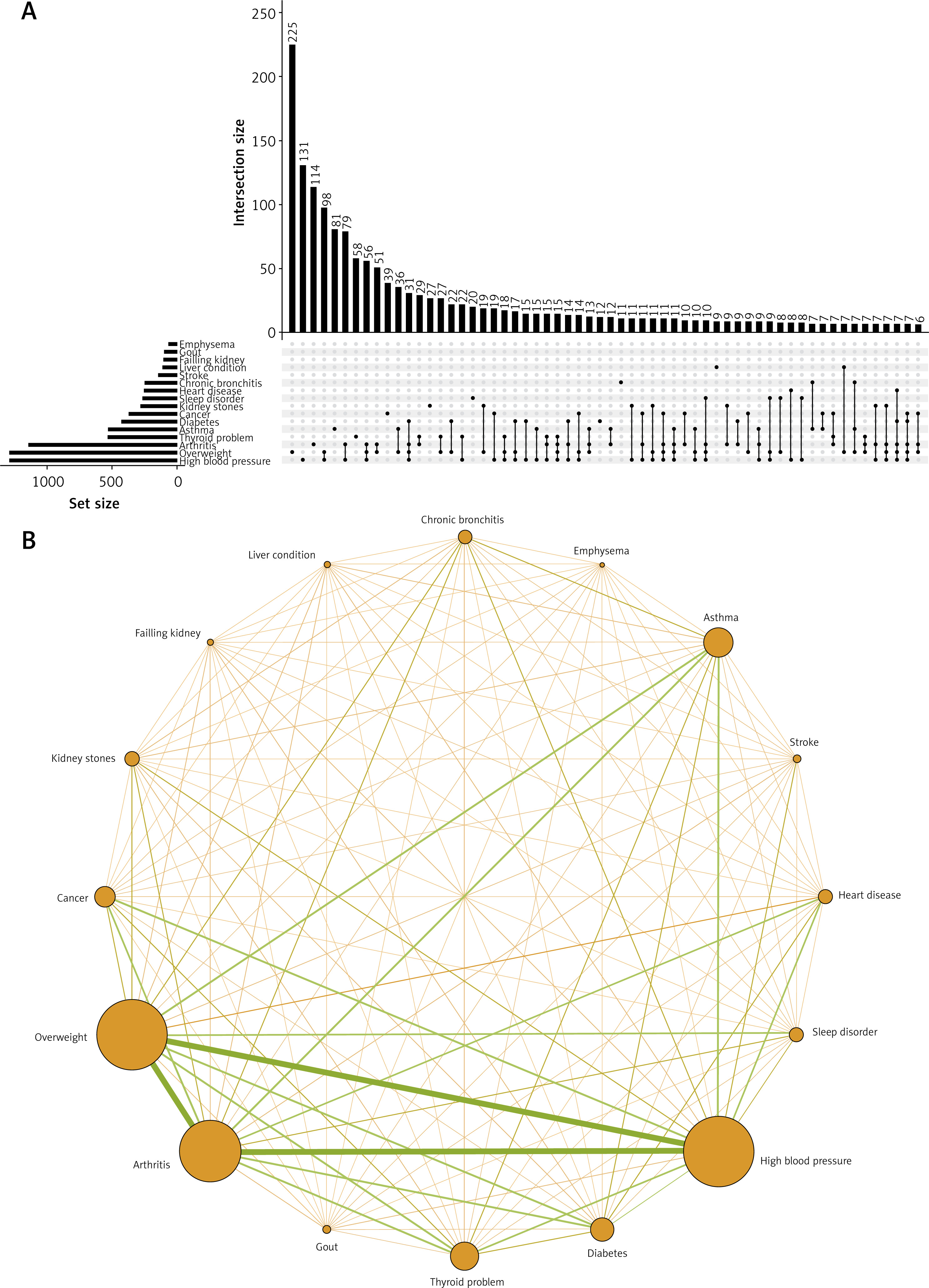
For the 16 diseases of interest, individuals with no disease accounted for 21.5% (n = 697), those with one disease made up 22.9% (n = 741), with two diseases 19.8% (n = 641), with three diseases 11.9% (n = 385), and with four diseases 10.3% (n = 333). Among all comorbid patients, individuals with two diseases were the most common (29.1%), followed by those with three diseases (25.2%). In total, there were 74 combinations of two diseases. The top three combinations were overweight–high blood pressure (15.2%), arthritis–high blood pressure (12.3%), and overweight–arthritis (8.0%). There were 113 combinations of three diseases. The top three combinations were overweight–arthritis–high blood pressure (14.5%), overweight–high blood pressure–thyroid problems (4.7%), and overweight–high blood pressure–diabetes (4.4%) (Figure 2 A). In addition, a network graph depicted the comorbidity relationships between diseases. The three largest nodes in the patient network diagram were overweight, hypertension, and arthritis. The strongest association between nodes was observed for overweight–blood pressure–arthritis (Figure 2 B).
Associations between childbirth experience and multiple health outcomes
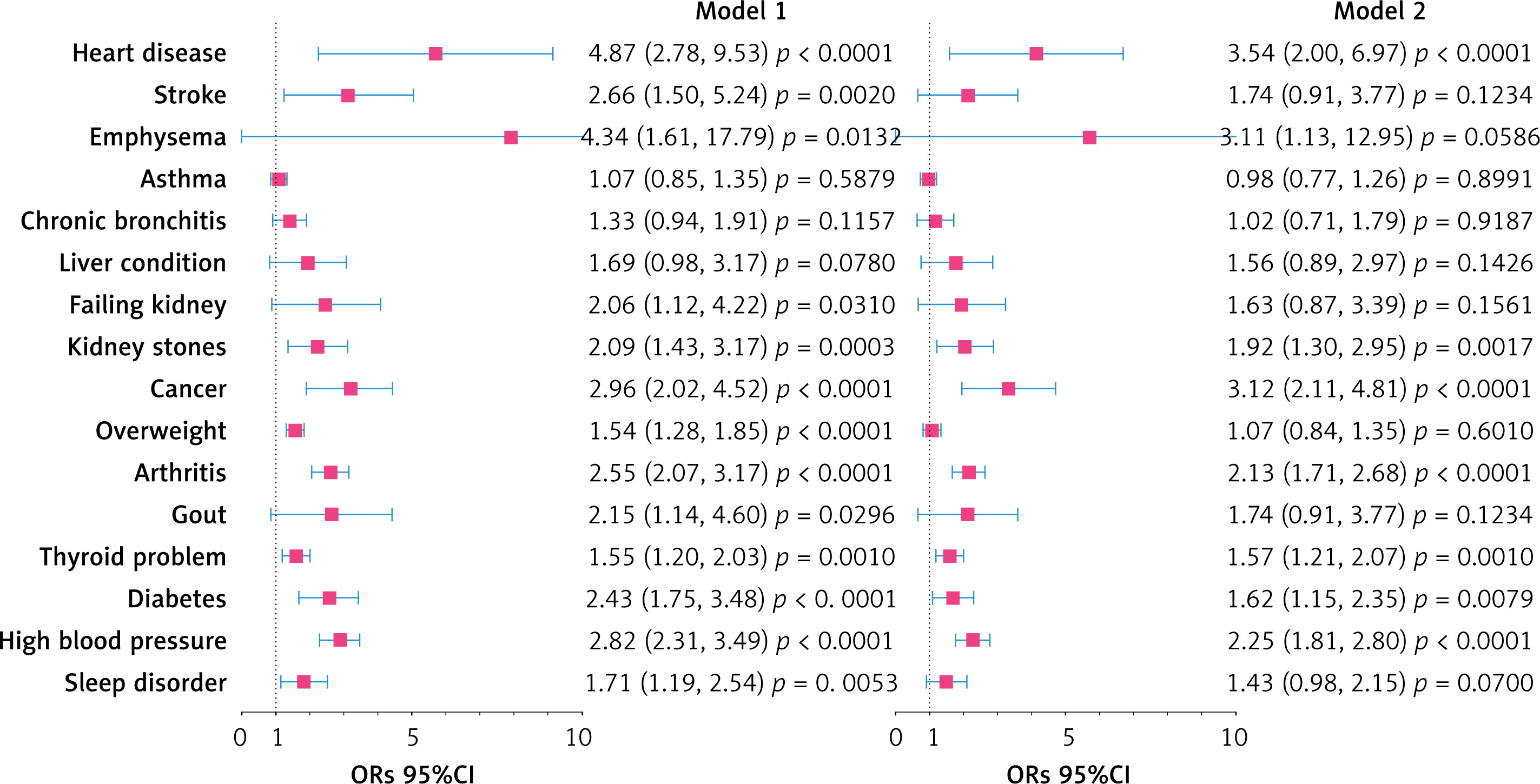
We established two models before and after adjusting for confounding factors. As shown in Figure 3, two models established a statistically significant association between childbirth experience and multiple health outcomes. After additionally adjusting for general data confounding factors such as race, education, poverty income ratio, and BMI (Model 2), the risks of seven kinds of medical conditions (heart disease, cancer, kidney stones, arthritis, thyroid problem, diabetes, and high blood pressure) in women who had given birth were significantly higher. The odds ratios (OR) were 1.57–3.54 and 95% confidence intervals (CIs) were 1.15–6.97 (p < 0.0001). The three conditions with the highest OR were heart disease (OR = 3.54, p < 0.0001), cancer (OR = 3.12, p < 0.0001), and high blood pressure (OR = 2.25, p < 0.0001). Next, we conducted the logistic regression analysis of disease subtypes (Supplementary Figure S2). Childbirth experience was associated with higher odds of breast cancer (OR = 3.52, p = 0.0016) and cervical cancer (OR = 5.27, p = 0.0223), but not uterine cancer (OR = 2.39, p = 0.2448) or ovarian cancer (OR = 0.64, p = 0.4961). Similarly, reproductive experience was associated with higher odds of osteoarthritis (OR = 4.07, p = 0.0004), but not rheumatoid arthritis. Childbirth experience was also associated with higher odds of several cardiovascular conditions, including congestive heart failure, coronary heart disease, and heart attack, but not angina pectoris.
Figure 3
Association between childbirth experience and multiple health outcomes. Model 1: unadjusted; Model 2: adjusted for age, race, education, poverty income ratio and BMI
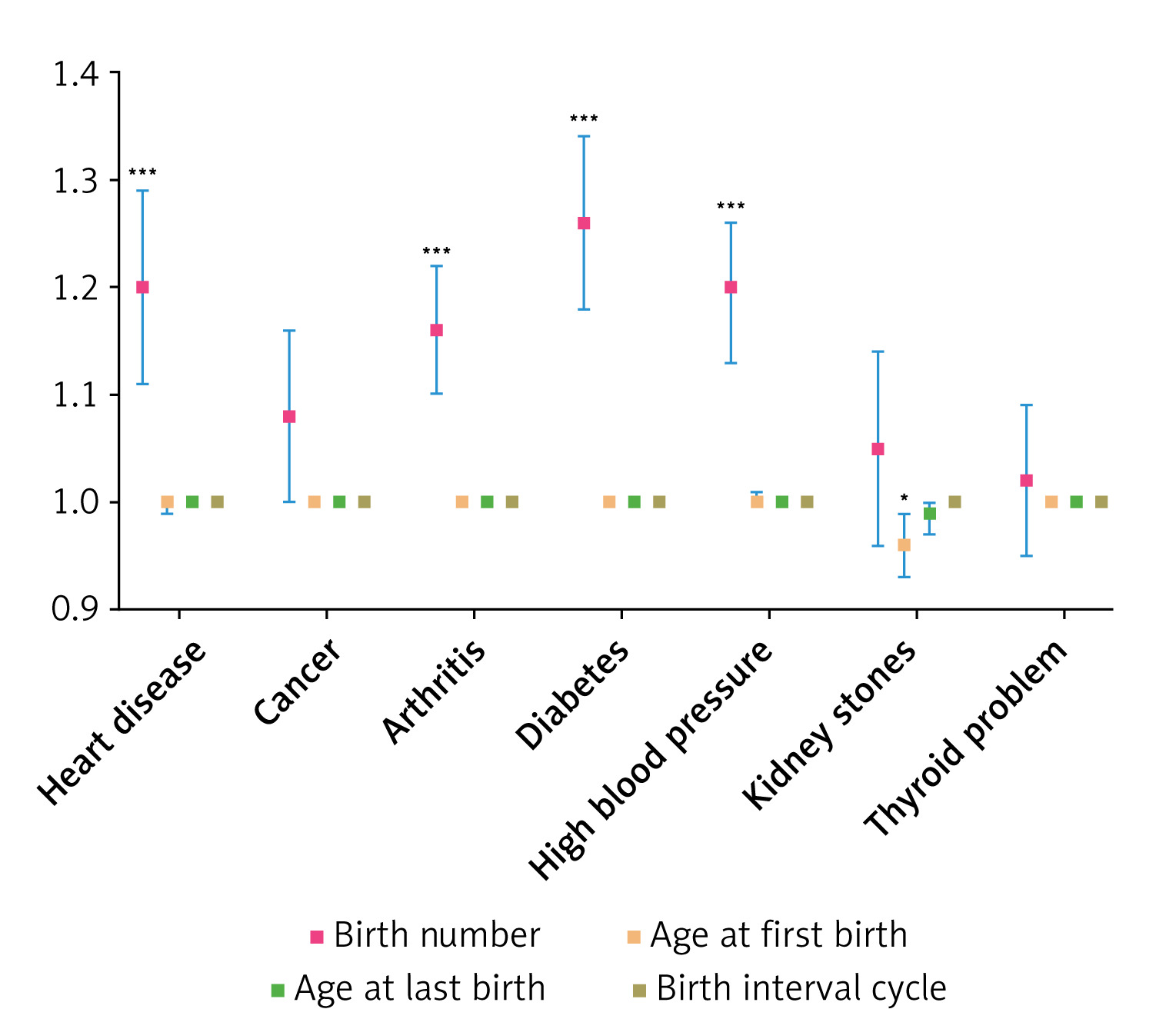
We conducted further analysis of seven conditions that showed significant associations with childbirth experience, including heart disease, cancer, kidney stones, arthritis, thyroid problem, diabetes, and high blood pressure. We examined the association between reproductive indicators (number of live births, age at first birth, age at last birth, and interval between first and last live birth) and these health outcomes. Higher number of live births was associated with increased odds of heart disease, cancer, arthritis, diabetes, and high blood pressure (Figure 4). In contrast, age at first birth, age at last birth, and birth interval were not significantly associated with these outcomes.
Effects of blood lipid indices
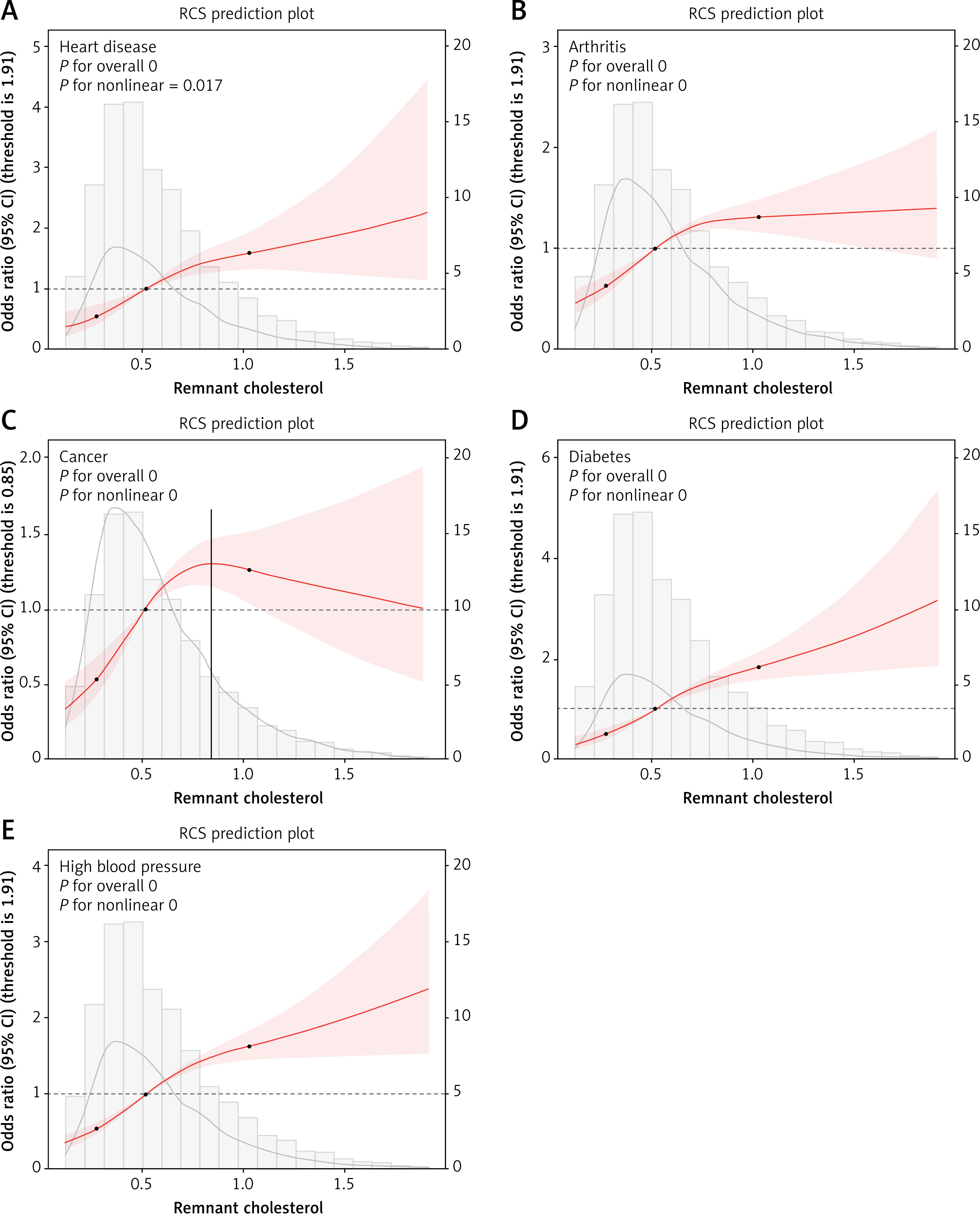
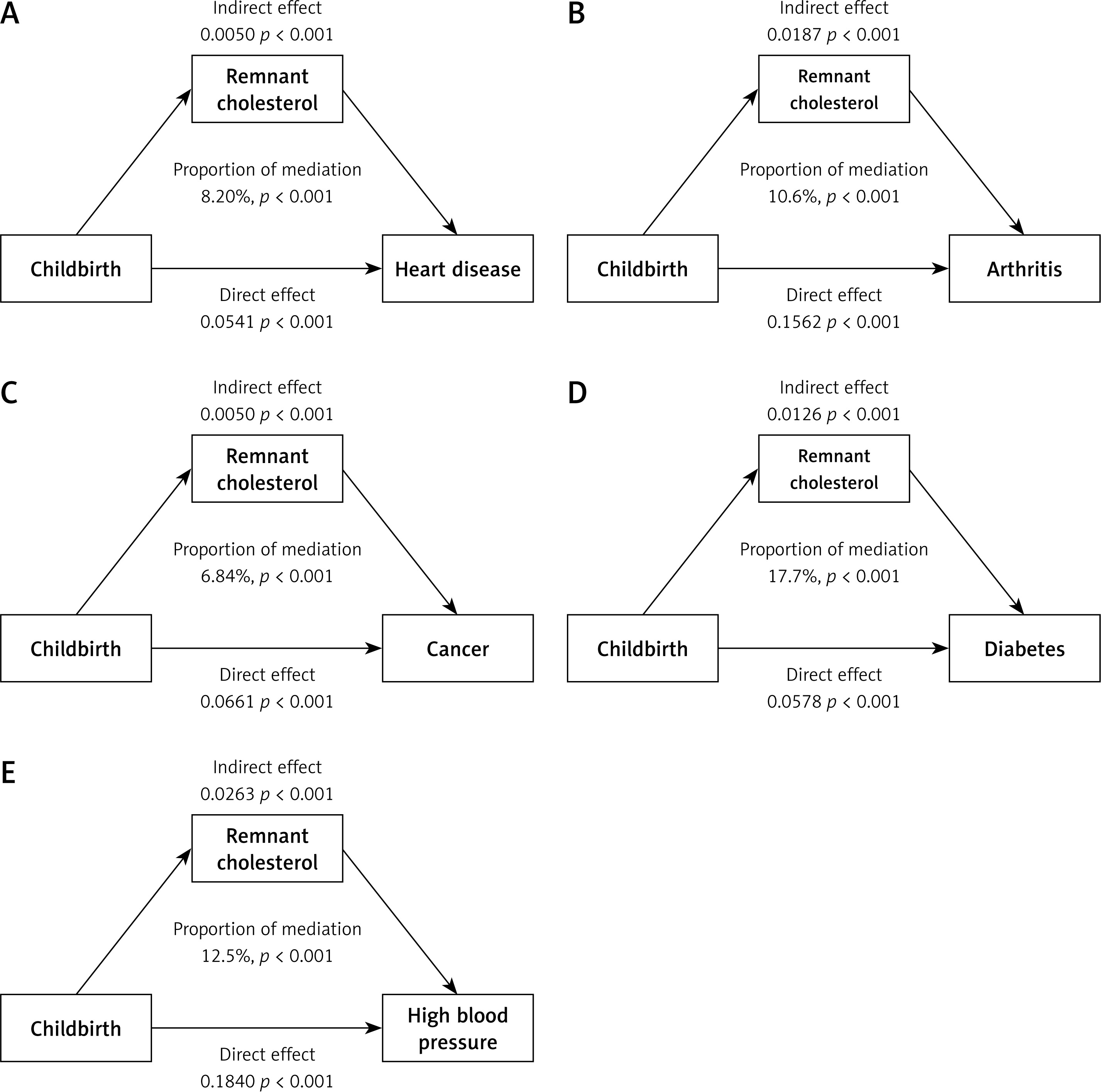
C levels were significantly higher in women with the seven medical conditions (p < 0.001, Table III). In contrast, TC, LDL-C, and HDL-C showed heterogeneous patterns across different conditions; for example, lower levels were observed among women with heart disease and diabetes, whereas higher levels were observed among women with cancer and arthritis. RC levels, however, remained higher in participants with these conditions due to its mathematical derivation from TC, LDL-C, and HDL-C. Restricted cubic spline analyses showed nonlinear associations between RC and several health outcomes, including heart disease, arthritis, cancer, diabetes, and hypertension (Figure 5). No clear nonlinear associations were observed for TC, LDL-C, or HDL-C. In mediation analyses, RC accounted for 6.84–17.7% of the association between childbirth experience and selected health outcomes; however, these results should be interpreted as statistical mediation within a cross-sectional design rather than causal pathways. ROC analysis showed modest discriminatory ability of RC for diabetes (AUC = 0.658) (Figure 6, Supplementary Figure S3).
Table III
Comparison of cholesterol levels
Discussion
This large cross-sectional study suggests that childbirth history is associated with increased risk of multiple health outcomes in women, and that remnant cholesterol (RC) may mediate part of these associations. These findings contribute to the literature suggesting that reproductive milestones may be associated with long-term cardiovascular and metabolic health in women. Using nationally representative NHANES data, we observed that women with a history of childbirth had higher odds of hypertension, diabetes, cardiovascular conditions, arthritis, and certain cancers (breast and cervical cancer), after adjustment for socioeconomic and anthropometric covariates. RC partially statistically mediated 8.2–17.7% of the observed associations between childbirth history and selected health outcomes. These findings suggest that RC may play a role in explaining part of the observed associations in this cross-sectional dataset.
Our observation of higher odds of hypertension, diabetes, and cardiovascular diseases aligns with prior studies describing pregnancy as a period of substantial metabolic and hemodynamic change. These physiological adaptations during gestation have been hypothesized in prior studies to be associated with long-term vascular and metabolic alterations. Previous studies have hypothesized that pregnancy is associated with substantial hemodynamic and metabolic adaptations that may have long-term implications for cardiovascular and metabolic health. In our analysis, a higher number of live births was associated with higher odds of diabetes, and a monotonic association was observed in the unadjusted models. Similar findings have been reported in previous studies, including Moon et al. They found that women with higher parity (more than three deliveries) had higher levels of obesity, and their plasma glucose concentrations were elevated at 2 months postpartum. The authors suggested that these findings may be related to pregnancy-associated biological changes, although the underlying mechanisms remain to be clarified [24, 25]. Childbirth history was associated with higher odds of breast and cervical cancers, but no significant association with ovarian and uterine cancers was observed. These findings contradicted previous studies [7, 26, 27]. This discrepancy may be related to differences in population characteristics, such as age at first birth and body weight, which have changed over time and are known to be associated with these outcomes.
RC was associated with part of the relationship between childbirth history and multiple health outcomes. Previous studies have suggested that pregnancy is associated with changes in lipid metabolism, although the underlying mechanisms were not examined in this study. In this cross-sectional analysis, RC was more strongly associated with the studied outcomes than LDL-C in the observed dataset. While RC was evaluated as a potential statistical mediator, these findings should be interpreted in the context of the cross-sectional design. Age may partially confound the observed associations given its relationship with both reproductive history and metabolic outcomes. Given that age is non-modifiable whereas RC represents a potential therapeutic target, exploring its association with reproductive history may be clinically relevant. The cross-sectional design precludes establishing temporal sequence; thus, our mediation analysis should be interpreted as exploratory rather than confirmatory. The observed associations may reflect broader metabolic correlates of lipid profiles, which have been linked in previous studies to inflammatory and metabolic processes [28]. A nonlinear (L-shaped) association between RC and disease risks was observed, with higher odds of several conditions observed at relatively low to moderate RC levels. These findings may have potential implications for future research on lipid monitoring.
Our findings suggest that reproductive history may be considered in future studies of cardiovascular risk stratification. The observed association between childbirth history and higher odds of heart disease (OR = 3.54) indicates a potential relationship that warrants further investigation in prospective studies. RC showed modest discriminatory ability for diabetes (AUC = 0.658). These findings suggest a potential association between RC and diabetes that warrants further evaluation in longitudinal studies.
This study has limitations. First, the cross-sectional design precludes causal inference, and self-reported outcomes may introduce recall bias. While NHANES provides large, nationally representative samples, its continuous cross-sectional structure – independent samples per 2-year cycle without repeated individual measurements – precludes within-person trajectory analysis. Future longitudinal studies should employ prospective cohort designs with repeated measurements of the same women across reproductive milestones to establish the temporal sequence and validate our findings. Second, residual confounding by unmeasured factors (e.g., gestational complications, lifestyle changes postpartum) cannot be excluded. The substantial age difference between nulligravid and parous women (approximately 15 years) represents a significant confounding factor. While our multivariable models adjusted for chronological age, residual confounding from age-related biological aging may persist. Future studies with age-matched controls are needed to disentangle these contributions. Third, several outcomes, including uterine cancer (0.72%), ovarian cancer (0.46%), and emphysema (1.72%), exhibited very low prevalence. While we retained these outcomes given their biological relevance to reproductive history, estimates for rare outcomes carry wide confidence intervals and limited statistical power. These findings should be considered exploratory. Fourth, we recognize that categorizing women into three distinct groups – (1) term live births, (2) pregnancy loss without live births, and (3) nulligravid – would provide finer mechanistic insights. However, the subgroup with pregnancy complications but no live births was too small (n = 118, 3.0%) for reliable inference. We therefore retained the binary classification. Fifth, we acknowledge that obesity (BMI ≥ 30 kg/m2) represents a more severe clinical endpoint. However, we deliberately retained overweight (BMI ≥ 25 kg/m2) as the outcome based on current standards: (1) overweight and obesity remain independent, standardized categories in contemporary national health surveys [29]; (2) recent reproductive epidemiology studies employ BMI ≥ 25 as a sensitive endpoint to capture postpartum metabolic deviation [30]; (3) metabolically unhealthy phenotypes are significantly prevalent in the BMI 25–29.9 range [31]. Future studies should employ standard BMI stratification to clarify dose–response relationships. Finally, we used complete case analysis for missing data, but this may have led to a slight loss of statistical power. Future studies could employ multiple imputation to verify robustness. To overcome the cross-sectional limitation, future research should employ prospective cohort designs with repeated measurements of the same women across reproductive milestones. Such designs would enable: (1) establishment of the temporal sequence; (2) assessment of within-person metabolic changes; (3) evaluation of cumulative pregnancy effects using time-varying covariate analyses; (4) stratification by standard BMI categories to offer additional granularity. Potential data sources include established pregnancy cohorts or electronic health record linkages with longitudinal lipid monitoring.
In conclusion, childbirth history was associated with multiple health outcomes in this cross-sectional study, and RC was statistically associated with part of these relationships. These findings highlight the need for further longitudinal research to clarify the relationships between reproductive history and metabolic health.