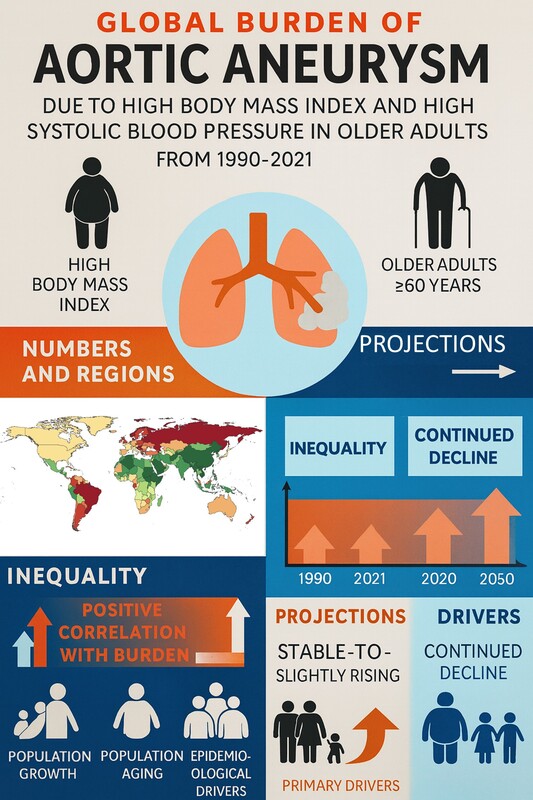
Introduction
Aortic aneurysm is a potentially fatal vascular disorder characterised by progressive aortic dilatation and risk of rupture [1]. Although often clinically silent before catastrophic presentation, it contributes substantially to mortality, disability, and health-care burden, particularly in ageing populations [2].
The burden of aortic aneurysm is increasingly concentrated in older adults. This pattern reflects not only population ageing, but also the cumulative effects of long-term exposure to cardiovascular risk factors over the life course, superimposed on age-related arterial stiffening and degenerative changes in the aortic wall [3, 4]. Among these factors, high body mass index (BMI) and high systolic blood pressure (SBP) are especially important, because they are potentially modifiable and highly prevalent in later life [5, 6]. Elevated BMI may contribute through metabolic and inflammatory vascular remodelling, whereas elevated SBP increases chronic haemodynamic stress on the aortic wall, promoting aneurysm formation, expansion, and rupture [6, 7].
However, the burden of aortic aneurysm attributable to these risk factors in older adults has not been comprehensively characterised across countries and regions [8]. Using data from the Global Burden of Disease 2021 study [8], we quantified the mortality and disability burden of aortic aneurysm attributable to high BMI and high SBP among adults aged 60 years and older from 1990 to 2021, with projections to 2050. We further examined age-sex patterns, socioeconomic inequalities, and the drivers of temporal change. To our knowledge, this study provides the first comprehensive global assessment focused specifically on these two modifiable risk factors in older adults.
Material and methods
Study design and data sources
This global secondary analysis used publicly available estimates from the GBD 2021 study to quantify deaths and disability-adjusted life years (DALYs) from aortic aneurysm attributable to high BMI and high SBP among adults aged 60 years and older, across 204 countries and territories, from 1990 to 2021 [9–12]. The analysis followed the standard GBD 2021 analytical framework, and the reporting of health estimates was revised with reference to the Guidelines for Accurate and Transparent Health Estimates Reporting (GATHER) statement.
In GBD 2021, cause-specific mortality was estimated using the Cause of Death Ensemble model (CODEm), non-fatal outcomes were modelled with DisMod-MR 2.1, and attributable burden was quantified using the comparative risk assessment framework, which derives population attributable fractions by comparing observed exposure distributions with theoretical minimum risk exposure levels [9–11]. The underlying GBD estimates were informed by multiple data sources, including vital registration systems, verbal autopsy, censuses, surveys, surveillance systems, registries, and hospital data [9–11]. We extracted age-specific and sex-specific estimates for deaths, DALYs, age-standardised death rates (ASDRs), and age-standardised DALY rates from the GBD Results Tool.
Aortic aneurysm was defined according to the GBD cause hierarchy and mapped to ICD-10 codes I71.0-I71.9 and ICD-9 code 441.x, excluding congenital and infectious causes, consistent with the GBD cause list [10, 11]. Age-standardised rates were calculated using the GBD world standard population [11, 12]. Because this study used publicly available, de-identified, and aggregated data only, institutional review board approval and informed consent were not required.
Socio-demographic index and inequality
The SDI is a composite indicator of development based on the geometric mean of three rescaled components: lag-distributed income per capita, mean years of schooling among individuals aged 15 years and older, and the total fertility rate in those younger than 25 years [12]. SDI ranges from 0 to 1, with higher values indicating higher levels of socio-demographic development. Countries and territories were grouped into five SDI quintiles: low, low-middle, middle, high-middle, and high.
We assessed cross-sectional and temporal inequalities by relating ASDRs and age-standardised DALY rates to SDI at global, super-regional, regional, and national levels. Absolute inequality was quantified using the slope index of inequality (SII), estimated from ridit-score regression across the full SDI distribution, and relative inequality was quantified using the concentration index (CIX), derived from concentration curves. To characterise non-linear SDI–burden relationships, we additionally fitted locally weighted scatterplot smoothing (LOESS) curves and calculated Spearman correlation coefficients. These analyses were performed annually from 1990 to 2021, overall and stratified by sex.
Decomposition analysis
To examine the drivers of temporal change in deaths and DALYs between 1990 and 2021, we applied the Das Gupta stepwise replacement decomposition method [13]. This approach partitions the observed change in counts into three additive components: population growth, population ageing, and epidemiological change, the latter reflecting changes in age-specific rates. Effects were averaged across all possible replacement orders to ensure order-invariant decomposition and exact summation to the total observed change.
Bayesian age-period-cohort model
To characterise temporal patterns and project future burden to 2050, we fitted Bayesian age-period-cohort (BAPC) models to age-specific death rates and DALY rates in adults aged 60 years and older, overall and for burden attributable to high BMI and high SBP, separately by sex and location [14]. We modelled log-rates with population offsets and imposed second-order random-walk priors on age, period, and cohort effects, with sum-to-zero constraints and weakly informative hyperpriors [14].
Posterior predictive distributions were used to generate forecasts for 2022–2050. Predicted rates were converted to absolute counts using GBD-aligned population projections consistent with the GBD 2021 forecasting framework. To improve continuity between observed and projected series, forecasts were anchored to the most recent observed period.
Statistical analysis
We quantified aortic aneurysm burden using deaths, DALYs, ASDRs, and age-standardised DALY rates per 100,000 population, reported overall and attributable to high BMI and high SBP. Age-standardised rates (ASRs) were calculated by direct standardisation to the GBD world standard population [11, 12], as follows:
Where ai is the age-specific rate in the ith age group, wi is the corresponding standard-population weight in age group i, and N is the total number of age groups.
Long-term temporal trends from 1990 to 2021 were summarised using the average annual percentage change (AAPC), derived from segmented log-linear regression of age-standardised rates [15]. The AAPC was calculated as a weighted average of segment-specific annual percentage changes, with weights proportional to segment length. A trend was considered statistically significant if the 95% confidence interval excluded zero.
Uncertainty for GBD-derived estimates was expressed as 95% uncertainty intervals (UIs) based on posterior draws from the GBD modelling framework [9–11]. All analyses were conducted at global, regional, and national levels, with stratification by sex and age group, using R software version 4.2.2.
Results
Global burden in 2021
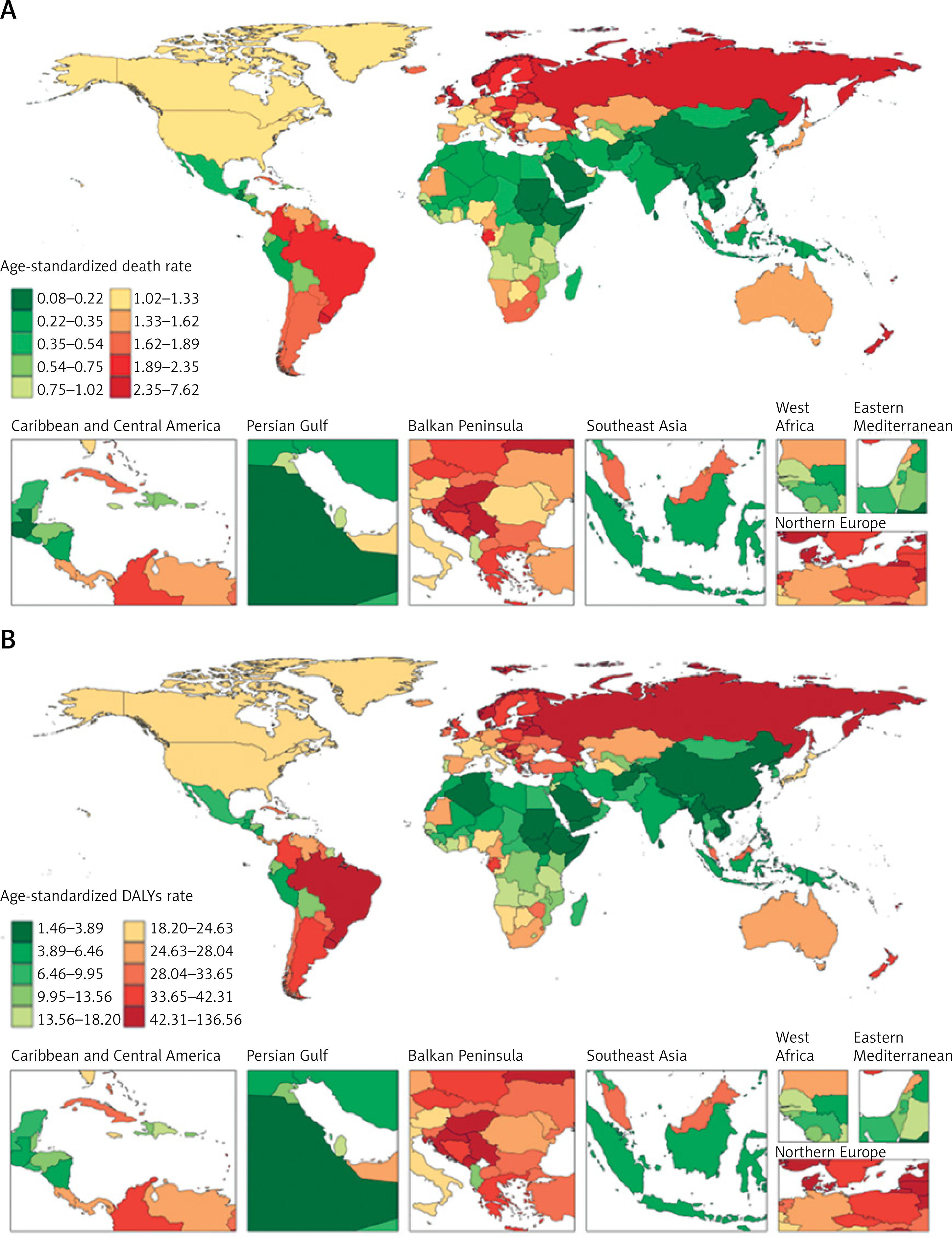
In 2021, high SBP and high BMI contributed substantially to the global burden of aortic aneurysm among adults aged 60 years and older (Table I; Supplementary Tables SI–SV). The burden attributable to high SBP was consistently greater than that attributable to high BMI, accounting for 23,131 deaths (95% UI: 16,746–30,145) versus 9,476 deaths (4,908–16,032), with DALYs showing a similar pattern. Eastern Europe had the highest regional burden for both risk factors, whereas East Asia had the lowest. At the national level, Montenegro and Armenia showed the highest age-standardised rates for both exposures, while Japan recorded the largest absolute number of deaths attributable to high SBP. Several microstates and island settings also showed disproportionately high age-standardised rates despite small population sizes, highlighting marked geographic variation in attributable burden (Figure 1, Supplementary Figure S1, Supplementary Table SII and SV).
Table I
Number of deaths and age-standardized death rate (ASDR) of aortic aneurysm caused attributable to high body mass index (BMI) in adults aged ≥ 60 years, 1990 and 2021, with temporal trends in global and 21 GBD regions from 1990 to 2021
Temporal trends, 1990–2021
Across the full GBD 2021 observation period from 1990 to 2021, the age-standardised burden of aortic aneurysm attributable to both risk factors declined globally, although the reduction was steeper for high SBP than for high BMI (Supplementary Figures S2, S3; Supplementary Tables SI–SV). For deaths, the global AAPC was –1.67 (95% CI: –1.80 to –1.54) for high SBP and –1.10 (–1.19 to –1.01) for high BMI. However, these overall declines masked substantial regional heterogeneity. South Asia showed the fastest increase in high BMI-attributable burden, whereas Central Asia showed the largest increase in high SBP-attributable burden. By contrast, several high-income regions, particularly Australasia, showed pronounced declines for both exposures. At the national level, the most rapid increases and decreases were concentrated in different development settings, indicating marked divergence in the epidemiological transition of attributable burden across countries.
Age-specific and sex-specific patterns
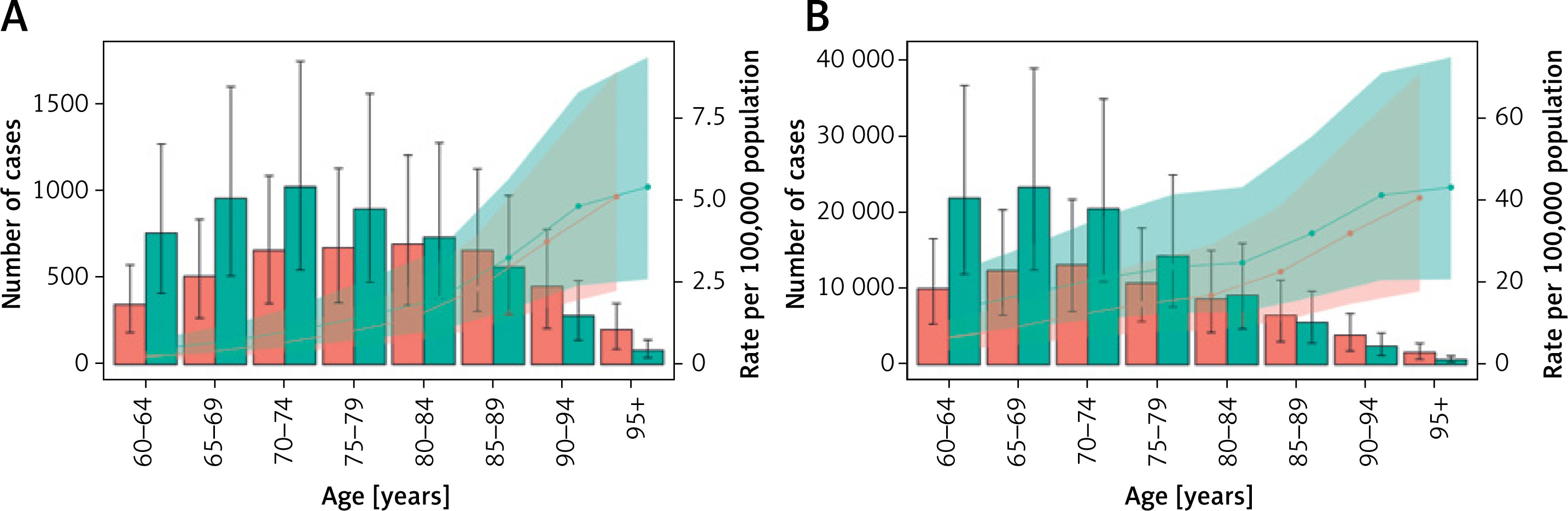
In 2021, men had consistently higher aortic aneurysm burden than women for both risk factors across older age groups (Figure 2, Supplementary Figures S4–S6). For high BMI, the global ASDR was 1.16 per 100,000 in men and 0.71 per 100,000 in women; for high SBP, the corresponding rates were 2.93 and 1.68 per 100,000. The male-to-female gap was present across the age spectrum and widened with advancing age in relative terms. For both risk factors, absolute deaths peaked earlier in men than in women, whereas DALY rates were consistently higher in men across age groups. Overall, high SBP remained the dominant contributor to attributable burden in both sexes, but the age and sex patterns were broadly similar for high BMI and high SBP.
Socio-demographic inequality
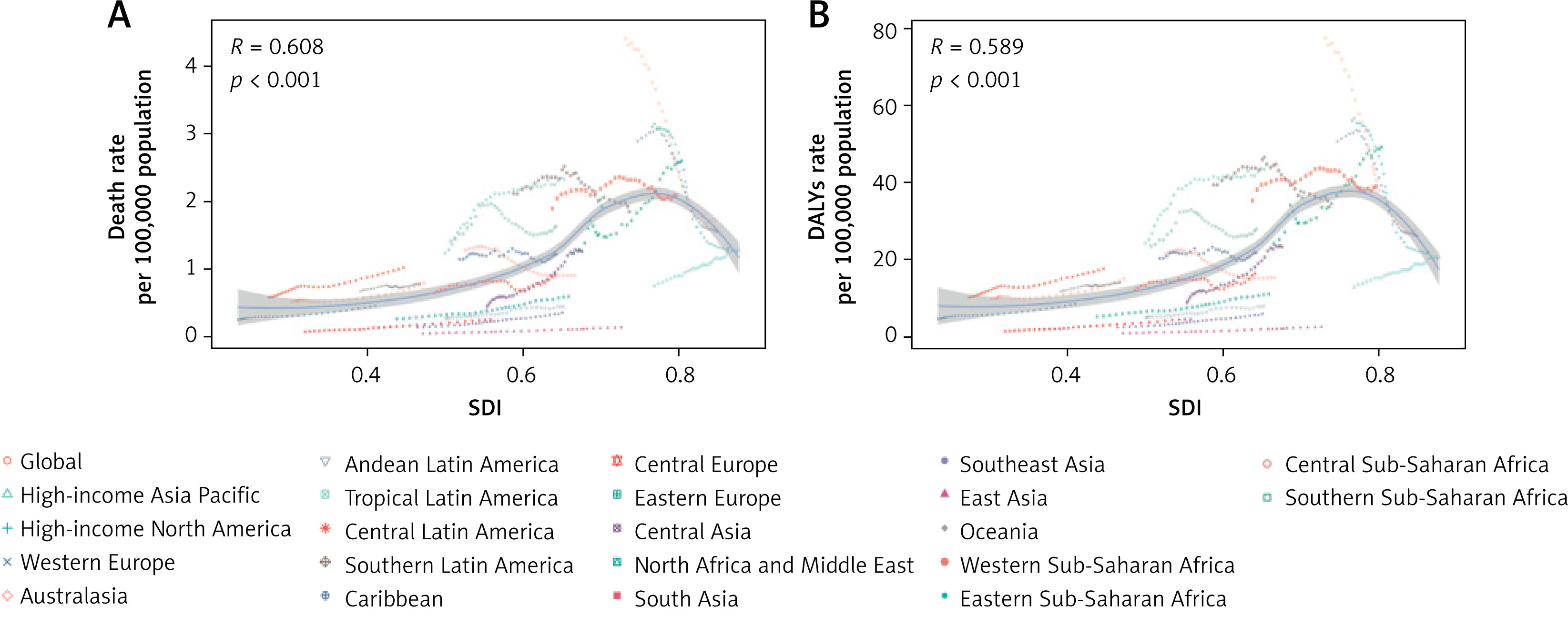
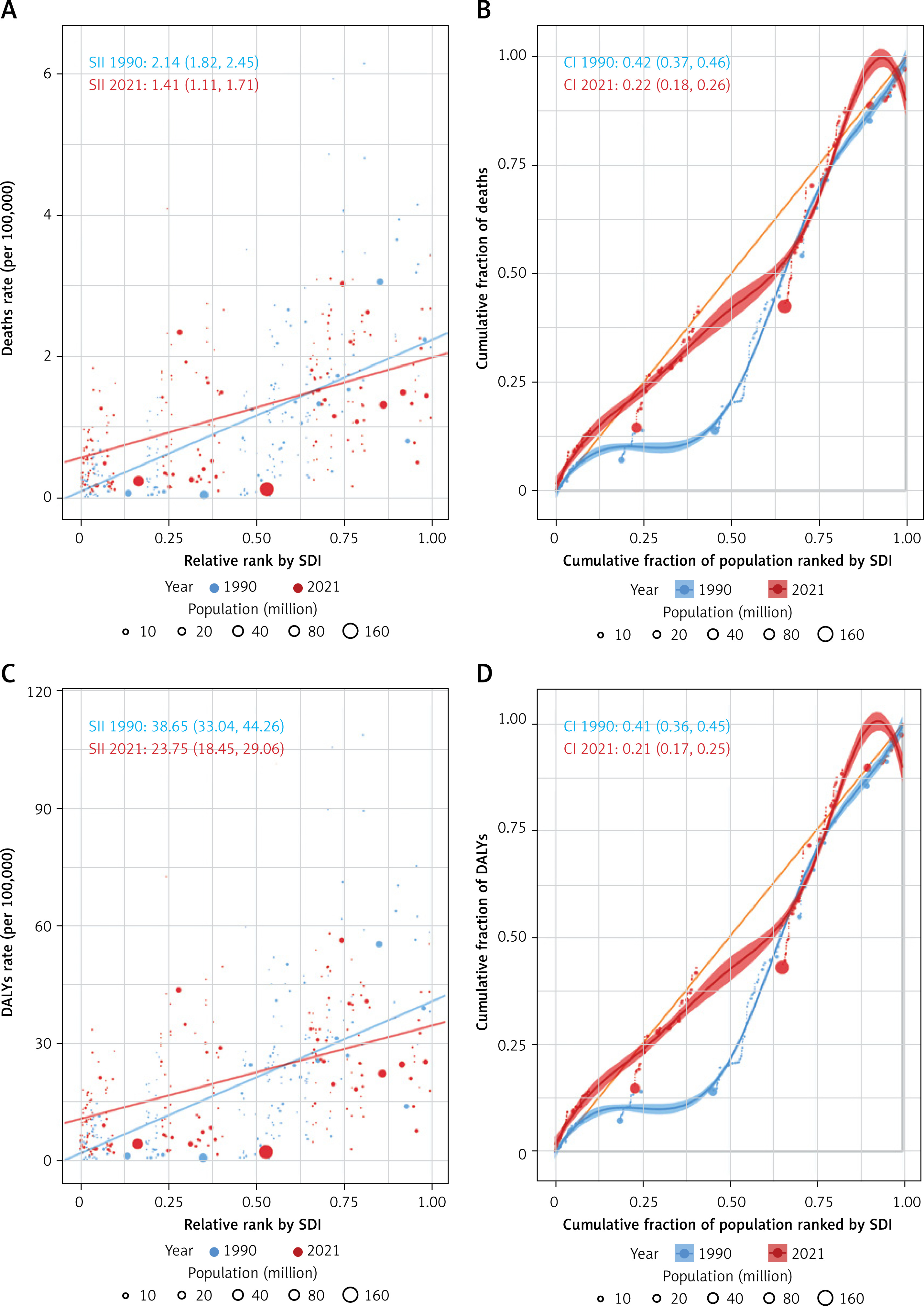
Substantial socio-demographic inequality was observed in the burden attributable to both risk factors, particularly for high BMI (Figures 3, 4; Supplementary Figures S7–S10). For high BMI, age-standardised death and DALY rates were positively correlated with SDI at both regional and national levels, with stronger associations at the regional level. For high SBP, the same positive pattern was observed, although the correlations were weaker. From 1990 to 2021, both the slope index of inequality and the concentration index declined for deaths and DALYs, indicating a narrowing of global inequality over time. Nevertheless, the burden remained unequally distributed, with higher rates still concentrated in more socio-demographically developed settings, especially for high BMI-attributable disease.
Decomposition of changes in burden
Decomposition analysis showed that increases in absolute burden between 1990 and 2021 were driven mainly by population growth and population ageing, whereas epidemiological change generally offset part of this increase (Supplementary Figures S11, S12; Supplementary Tables SVI, SVII). For high BMI, the global increase in deaths was driven primarily by population growth, with a similar pattern observed for DALYs. For high SBP, population growth remained the largest contributor, with additional contributions from ageing, while epidemiological improvements offset part of the increase. Across SDI groups, high-SDI regions generally showed negative epidemiological contributions, consistent with declining age-specific rates, whereas lower-SDI regions showed rising counts driven by demographic expansion and less favourable epidemiological change.
Projections to 2050
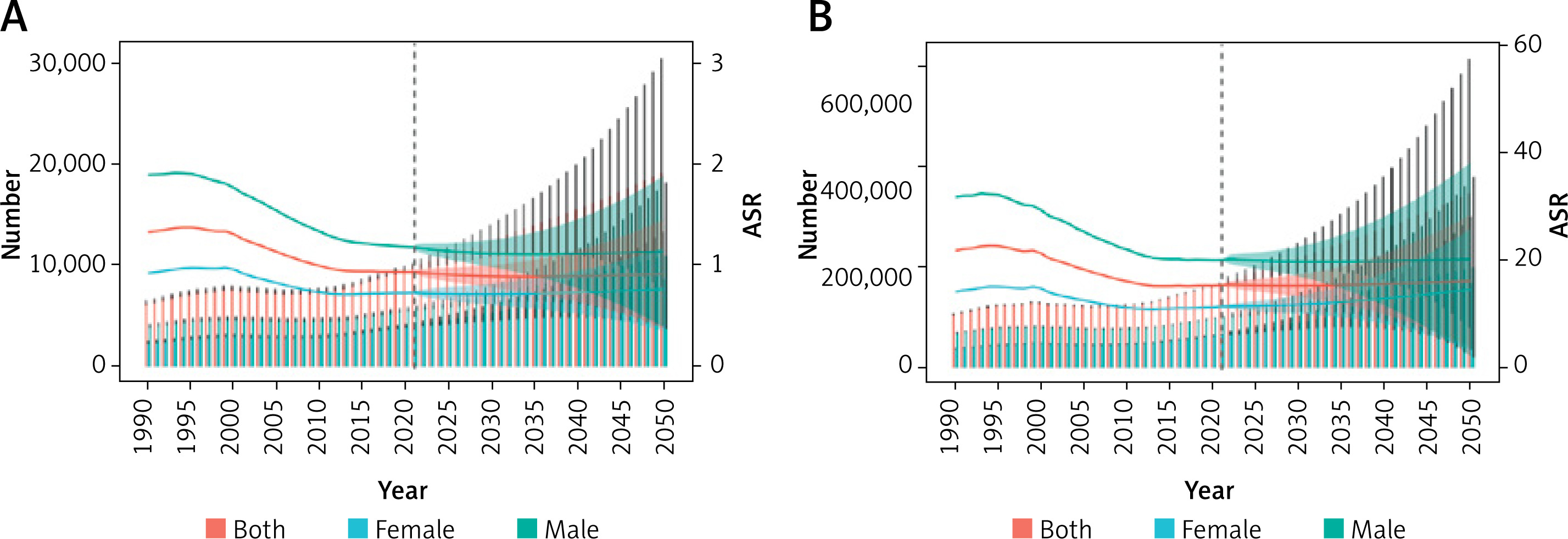
BAPC projections suggested that the absolute burden of aortic aneurysm attributable to both high BMI and high SBP will continue to increase through 2050 despite stable or declining age-standardised rates (Figure 5; Supplementary Figure S13). For high BMI, the global ASDR was projected to remain broadly stable, while deaths were projected to nearly double from 10,185 in 2021 to 19,180 in 2050. The age-standardised DALY rate was projected to increase modestly, with absolute DALYs more than doubling over the same period. For high SBP, age-standardised death and DALY rates were projected to decline, but absolute deaths were still expected to rise from 24,977 to 36,793 and absolute DALYs from 409,866 to 613,919. Sex disparities were projected to persist throughout the forecast period, with men maintaining higher burden levels than women for both exposures.
Discussion
This study provides, to our knowledge, the first comprehensive assessment of the global, regional, and national burden of aortic aneurysm attributable to high BMI and high SBP in adults aged 60 years and older, integrating three decades of GBD 2021 estimates with projections to 2050. Several findings merit emphasis. First, high SBP contributed a substantially greater burden than high BMI across most settings. Second, marked geographical and sociodemographic disparities were evident, with the highest age-standardised burden concentrated in parts of Europe and the lowest burden in East Asia. Third, although age-standardised rates generally declined from 1990 to 2021, absolute deaths and DALYs are projected to increase further by 2050, largely because of population growth and ageing. Together, these findings indicate that progress in risk-factor control and vascular care has been uneven and, in many settings, insufficient to offset demographic pressure.
The predominance of high-SBP-attributable burden is consistent with previous studies showing that blood-pressure-related vascular damage remains a major determinant of aneurysm formation, progression, and rupture in older adults [6, 7]. Our findings also extend earlier global burden analyses by showing that, although high BMI contributes a smaller burden than high SBP at present, its contribution is non-trivial and may become increasingly important in ageing populations with rising obesity prevalence [5, 8]. The strong regional heterogeneity observed in 2021 is also broadly consistent with previous epidemiological studies reporting higher aneurysm prevalence and mortality in European populations and lower rates in East Asian settings [3, 8]. However, these differences are unlikely to reflect biology alone. Rather, they probably arise from a combination of cardiometabolic risk exposure, population age structure, smoking patterns, diagnostic intensity, and the availability of screening and vascular care.
The comparatively low burden observed in East Asia may partly reflect historically lower obesity prevalence and, in some settings, more effective hypertension control than in high-burden regions [16, 17]. Nevertheless, these advantages should not be assumed to be durable. Rapid urbanisation, dietary westernisation, and increasing cardiometabolic risk may shift vascular risk upwards over time, including in regions that have traditionally had lower aneurysm burden. This interpretation is supported by broader cardiovascular evidence showing increasing coexistence of obesity-related and blood-pressure-related risk factors in many middle-income settings [16–18]. By contrast, the elevated burden in Eastern and Central Europe, parts of High-income Asia Pacific, and selected Latin American regions probably reflects the cumulative effect of longstanding hypertension and obesity exposure, older population structures, and incomplete coverage of preventive cardiovascular programmes. Late-stage detection is also likely to contribute, particularly where organised aneurysm screening remains limited and rupture continues to be a frequent first presentation [2, 19].
From a pathophysiological perspective, high BMI and high SBP may act through partly overlapping but distinct mechanisms. Elevated BMI may promote metabolic dysfunction, chronic low-grade inflammation, and adverse vascular remodelling, whereas sustained high SBP may accelerate medial degeneration, elastin fragmentation, and haemodynamic stress on the aortic wall, thereby facilitating aneurysm formation and progression [6, 7]. Although these mechanisms were not directly examined in the present GBD-based analysis, they provide a biologically plausible context for the observed attributable burden. In addition, smoking – although not quantified in this study – remains an important co-factor and may amplify the vascular effects of obesity and hypertension, particularly in men and in high-prevalence regions [20, 21]. This broader interaction of cardiometabolic and behavioural risk exposures may help explain the persistently high burden observed in some European and Oceanian populations [16, 17, 20, 21].
The overall decline in age-standardised mortality and DALY rates from 1990 to 2021 suggests that meaningful progress has been made in prevention and management. This pattern is consistent with previous reports linking reductions in aneurysm mortality to declining smoking prevalence, improved screening uptake, advances in elective repair, and better surveillance and management in high-income settings [19, 21–23]. The most pronounced reductions were seen in high-SDI settings, where structured screening policies, stronger primary cardiovascular prevention, and improved management of ruptured aneurysm are more widely implemented [19, 22–24]. However, this progress has not been uniform. The rising or stagnating burden in South Asia, Central Asia, and parts of sub-Saharan Africa points to a less favourable epidemiological transition, characterised by rapid population ageing, increasing obesity, delayed hypertension detection, and persistent limitations in diagnostic and surgical capacity [16, 17, 24, 25]. Similar divergence has been documented in other vascular diseases, where gains in high-income countries have outpaced those in settings with more limited health system resources [24, 25].
The persistent male predominance in burden is also consistent with previous literature. Biological differences in vascular structure, cumulative behavioural exposures, and sex-specific patterns of presentation and management probably all contribute [26, 27]. Men tend to have greater lifetime exposure to smoking and other vascular risk factors, and aneurysm tends to present earlier and more frequently in men than in women [20, 21, 27]. Yet women remain underrepresented in many screening programmes and might therefore be diagnosed later or at more advanced stages [19, 22, 28]. These sex-specific patterns have practical implications. Risk-based screening strategies should continue to prioritise older men with clustered vascular risk factors, but the possibility of under-recognition in high-risk women also deserves greater attention [28]. In addition, structured postoperative surveillance remains important for both sexes, particularly in older patients with multimorbidity [29–31].
The positive association between burden and SDI is noteworthy. At first glance, higher burden in high-SDI settings might appear paradoxical, given their greater health system capacity. However, this pattern probably reflects the combined effects of older population age structures, decades of exposure to obesogenic and hypertensive environments, and greater diagnostic intensity, leading to higher likelihood of aneurysm detection and attribution [16, 17, 24]. The apparent narrowing of inequality indices over time should therefore be interpreted cautiously. It is unlikely to indicate true convergence in vascular health. Rather, it may reflect a relative rise in burden in low- and middle-SDI regions, where demographic ageing and cardiometabolic transition are progressing rapidly but preventive and surgical capacity remain limited [24, 25]. In these settings, limited diagnostic capacity, anaesthesia support, shortages of vascular specialists, and delays in referral pathways may increase the proportion of undiagnosed or untreated aneurysm, especially after rupture [25, 32–34].
Our decomposition analysis further reinforces the importance of demographic change. Population growth and ageing were the main drivers of rising absolute burden, even where age-specific rates declined. In high-SDI regions, negative epidemiological contributions suggest genuine gains in prevention and treatment, but these gains were offset by expansion of the oldest age groups. In lower-SDI settings, by contrast, worsening underlying risk profiles probably contributed to rising counts, especially where obesity is increasing faster than blood-pressure control can improve [16, 17].
The projected increase in absolute burden by 2050 has clear implications for prevention and service planning [35]. Because the burden attributable to high SBP remained greater than that attributable to high BMI, the largest short-term gains will probably come from intensified hypertension detection, treatment, and sustained control in older adults, especially in high-burden regions [36, 37]. At the same time, the persistent contribution of high BMI and the projected increase in absolute burden underscore the need for long-term strategies to address obesity in later life, including healthier food environments, physical activity promotion, and policies that reduce obesogenic exposures [38]. More broadly, reducing future aneurysm burden will require a dual strategy: stronger population-level control of modifiable vascular risk factors and improved access to early diagnosis, surveillance, referral, and vascular surgical care. Further reductions in smoking prevalence could provide additional benefit, as shown by historical declines in smoking-related aneurysm mortality following sustained tobacco-control efforts [39].
This study used the standardised GBD 2021 framework to compare aortic aneurysm burden attributable to high BMI and high SBP across 204 countries and territories over three decades. The integration of BAPC modelling and decomposition analysis strengthened the assessment of future burden and its demographic and epidemiological drivers. Analyses stratified by age, sex, and SDI further improved the policy relevance of the findings. However, several limitations should be considered. First, the analysis was based on secondary GBD estimates rather than individual-level clinical data. Second, variation in data availability, diagnostic capacity, and death registration across settings may have affected comparability and may have led to underestimation in low-resource regions. Third, attributable burden estimates are model-based and depend on assumptions regarding exposure distributions and relative risks. Finally, projections to 2050 should be interpreted as model-based estimates rather than precise forecasts.
In conclusion, the burden of aortic aneurysm in older adults reflects the combined effects of population ageing and cardiometabolic risk transitions. High SBP remains the dominant attributable risk factor, while high BMI is an increasingly important contributor. Although age-standardised rates have generally declined, absolute deaths and DALYs are likely to continue rising through 2050. These findings support stronger blood pressure control, sustained obesity prevention, and improved access to diagnosis, surveillance, screening, and vascular care, particularly in older adults, older men, and populations in high-burden or resource-constrained settings.