Current issue
Archive
Manuscripts accepted
About the Journal
Editorial office
Editorial board
Section Editors
Abstracting and indexing
Subscription
Contact
Ethical standards and procedures
Most read articles
Instructions for authors
Article Processing Charge (APC)
Regulations of paying article processing charge (APC)


CLINICAL RESEARCH
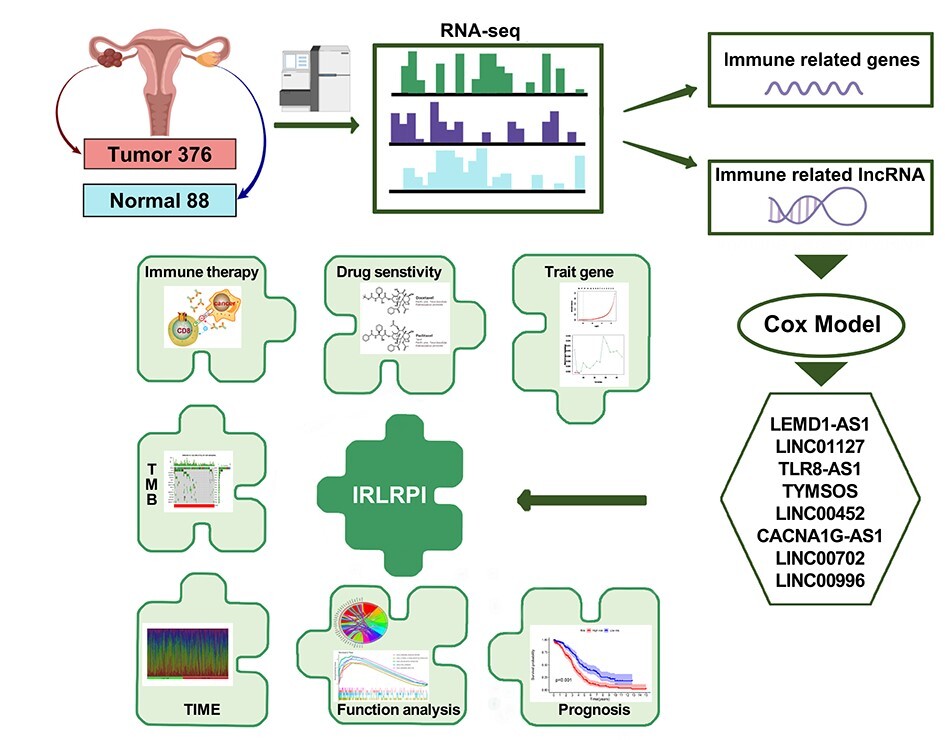
Prognostic index of immune-related lncRNAs for immunotherapy responsiveness and chemotherapy sensitivity in ovarian cancer patients
1
Department of Gynecology, Shanghai Tenth People’s Hospital, Tongji University School of Medicine, Shanghai, China
2
School of Medicine, Tongji University, Shanghai, China
3
Department of Gynecology, Shanghai Key Laboratory of Maternal Fetal Medicine, Shanghai Institute of Maternal-Fetal Medicine and Gynecologic Oncology, Shanghai First Maternity and Infant Hospital, School of Medicine, School of Life Science and Technology, Tongji University, Shanghai, China
Submission date: 2025-08-22
Final revision date: 2025-11-18
Acceptance date: 2025-11-19
Online publication date: 2026-01-15
Corresponding author
Chen Zhang
School of Medicine Tongji University No. 1239, Siping Road Yangpu District Shanghai 200092, China
School of Medicine Tongji University No. 1239, Siping Road Yangpu District Shanghai 200092, China
Lingfei Han
Department of Gynecology Shanghai Tenth People’s Hospital Tongji University School of Medicine No. 301, Yanchang Middle Road Shanghai 200000, China Department of Gynecology Shanghai Key Laboratory of Maternal Fetal Medicine Shanghai Institute of Maternal-Fetal Medicine and Gynecologic Oncology Shanghai First Maternity and Infant Hospital School of Medicine School of Life Science and Technology Tongji University No. 2699, Gaoke West Road Pudong New Area Shanghai 200092, China
Department of Gynecology Shanghai Tenth People’s Hospital Tongji University School of Medicine No. 301, Yanchang Middle Road Shanghai 200000, China Department of Gynecology Shanghai Key Laboratory of Maternal Fetal Medicine Shanghai Institute of Maternal-Fetal Medicine and Gynecologic Oncology Shanghai First Maternity and Infant Hospital School of Medicine School of Life Science and Technology Tongji University No. 2699, Gaoke West Road Pudong New Area Shanghai 200092, China
KEYWORDS
TOPICS
ABSTRACT
Introduction:
Ovarian cancer (OV), ranking among the most lethal gynecologic malignancies, is characterized by elevated mortality rates primarily attributable to immature diagnostic tools and the insensitivity of chemotherapy. Despite the impressive success of immune checkpoint inhibitor (ICI) therapy in the treatment of several solid tumors, OV patients only partially benefit from immune checkpoint blockade. Therefore, a biomarker is necessary to predict the responsiveness of OV patients to immunotherapy. This study sought to identify an immune-associated lncRNA-based prognostic signature to predict immunotherapy efficacy and chemosensitivity in OV patients.
Material and methods:
We used ovarian cancer transcriptional profiles of patients from TCGA and GTEx databases with immune-related signature genes to screen immune-related lncRNAs. Furthermore, we integrated the GEO database to evaluate an immune-related lncRNA prognostic score (IRLRPI), and then verified the model in all aspects to distinguish biomarkers of IRLRPI subtypes.
Results:
Our findings demonstrated that patients with elevated IRLRPI scores had a poorer prognosis and tended to be more immunosuppressed; in terms of treatment, these patients may exhibit resistance to immunotherapy and be less sensitive to several chemotherapeutic agents. Finally, the biomarkers KIF26B and VSTM2L were found to distinguish IRLRPI type.
Conclusions:
The IRLRPI model we developed can predict immunotherapy responsiveness and chemotherapy sensitivity in ovarian cancer patients and demonstrates potential for clinical application.
Ovarian cancer (OV), ranking among the most lethal gynecologic malignancies, is characterized by elevated mortality rates primarily attributable to immature diagnostic tools and the insensitivity of chemotherapy. Despite the impressive success of immune checkpoint inhibitor (ICI) therapy in the treatment of several solid tumors, OV patients only partially benefit from immune checkpoint blockade. Therefore, a biomarker is necessary to predict the responsiveness of OV patients to immunotherapy. This study sought to identify an immune-associated lncRNA-based prognostic signature to predict immunotherapy efficacy and chemosensitivity in OV patients.
Material and methods:
We used ovarian cancer transcriptional profiles of patients from TCGA and GTEx databases with immune-related signature genes to screen immune-related lncRNAs. Furthermore, we integrated the GEO database to evaluate an immune-related lncRNA prognostic score (IRLRPI), and then verified the model in all aspects to distinguish biomarkers of IRLRPI subtypes.
Results:
Our findings demonstrated that patients with elevated IRLRPI scores had a poorer prognosis and tended to be more immunosuppressed; in terms of treatment, these patients may exhibit resistance to immunotherapy and be less sensitive to several chemotherapeutic agents. Finally, the biomarkers KIF26B and VSTM2L were found to distinguish IRLRPI type.
Conclusions:
The IRLRPI model we developed can predict immunotherapy responsiveness and chemotherapy sensitivity in ovarian cancer patients and demonstrates potential for clinical application.
REFERENCES (69)
1.
Momenimovahed Z, Tiznobaik A, Taheri S, Salehiniya H. Ovarian cancer in the world: epidemiology and risk factors. Int J Womens Health 2019; 11: 287-99.
2.
Siegel RL, Miller KD, Fuchs HE, Jemal A. Cancer statistics, 2022. CA Cancer J Clin 2022; 72: 7-33.
3.
Ott PA, Bang YJ, Piha-Paul SA, et al. T-cell-inflamed gene-expression profile, programmed death ligand 1 expression, and tumor mutational burden predict efficacy in patients treated with pembrolizumab across 20 cancers: KEYNOTE-028. J Clin Oncol 2019; 37: 318-27.
4.
Barber E, Matei D. Immunotherapy in ovarian cancer: we are not there yet. Lancet Oncol 2021; 22: 903-5.
6.
Chen Y, Li ZY, Zhou GQ, Sun Y. An immune-related gene prognostic index for head and neck squamous cell carcinoma. Clin Cancer Res 2021; 27: 330-41.
7.
Dai Y, Qiang W, Lin K, Gui Y, Lan X, Wang D. An immune-related gene signature for predicting survival and immunotherapy efficacy in hepatocellular carcinoma. Cancer Immunol Immunother 2021; 70: 967-79.
8.
Ji Q, Cai Y, Shrestha SM, Shen D, Zhao W, Shi R. Construction and validation of an immune-related gene prognostic index for esophageal squamous cell carcinoma. Biomed Res Int 2021; 2021: 7430315.
9.
Sahu A, Singhal U, Chinnaiyan AM. Long noncoding RNAs in cancer: from function to translation. Trends Cancer 2015; 1: 93-109.
10.
Huang X, Xiao R, Pan S, et al. Uncovering the roles of long non-coding RNAs in cancer stem cells. J Hematol Oncol 2017; 10: 62.
11.
Slack FJ, Chinnaiyan AM. The role of non-coding RNAs in ocology. Cell 2019; 179: 1033-55.
12.
Qi P, Zhou XY, Du X. Circulating long non-coding RNAs in cancer: current status and future perspectives. Mol Cancer 2016; 15: 39.
13.
Arun G, Diermeier SD, Spector DL. Therapeutic targeting of long non-coding RNAs in cancer. Trends Mol Med 2018; 24: 257-77.
14.
Eptaminitaki GC, Stellas D, Bonavida B, Baritaki S. Long non-coding RNAs (lncRNAs) signaling in cancer chemoresistance: from prediction to druggability. Drug Resist Update 2022; 65: 100866.
15.
Zhang L, Xu X, Su X. Noncoding RNAs in cancer immunity: functions, regulatory mechanisms, and clinical application. Mol Cancer 2020; 19: 48.
16.
Atianand MK, Caffrey DR, Fitzgerald KA. Immunobiology of long noncoding RNAs. Annu Rev Immunol 2017; 35: 177-98.
17.
Zhang Y, Mao Q, Xia Q, et al. Noncoding RNAs link metabolic reprogramming to immune microenvironment in cancers. J Hematol Oncol 2021; 14: 169.
18.
Xu J, Shi A, Long Z, et al. Capturing functional long non-coding RNAs through integrating large-scale causal relations from gene perturbation experiments. EBioMedicine 2018; 35: 369-80.
19.
Wu J, Li J, Zhu G, et al. Clinical features of maintenance hemodialysis patients with 2019 novel coronavirus-infected pneumonia in Wuhan, China. Clin J Am Soc Nephrol 2020; 15: 1139-45.
20.
Liu J, Mei J, Wang Y, et al. Development of a novel immune-related lncRNA signature as a prognostic classifier for endometrial carcinoma. Int J Biol Sci 2021; 17: 448-59.
21.
Yu W, Ma Y, Hou W, et al. Identification of immune-related lncRNA prognostic signature and molecular subtypes for glioblastoma. Front Immunol 2021; 12: 706936.
22.
Sun X, Li S, Lv X, et al. Immune-related long non-coding RNA constructs a prognostic signature of ovarian cancer. Biol Proced Online 2021; 23: 24.
23.
Peng Y, Wang H, Huang Q, Wu J, Zhang M. A prognostic model based on immune-related long noncoding RNAs for patients with epithelial ovarian cancer. J Ovarian Res 2022; 15: 8.
24.
Charoentong P, Finotello F, Angelova M, et al. Pan-cancer immunogenomic analyses reveal genotype-immunophenotype relationships and predictors of response to checkpoint blockade. Cell Rep 2017; 18: 248-62.
25.
Necchi A, Joseph RW, Loriot Y, et al. Atezolizumab in platinum-treated locally advanced or metastatic urothelial carcinoma: post-progression outcomes from the phase II IMvigor210 study. Ann Oncol 2017; 28: 3044-50.
26.
Mariathasan S, Turley SJ, Nickles D, et al. TGFbeta attenuates tumour response to PD-L1 blockade by contributing to exclusion of T cells. Nature 2018; 554: 544-8.
27.
Mayakonda A, Lin DC, Assenov Y, Plass C, Koeffler HP. Maftools: efficient and comprehensive analysis of somatic variants in cancer. Genome Res 2018; 28: 1747-56.
28.
Geeleher P, Cox N, Huang RS. pRRophetic: an R package for prediction of clinical chemotherapeutic response from tumor gene expression levels. PLoS One 2014; 9: e107468.
29.
Wilkerson MD, Hayes DN. ConsensusClusterPlus: a class discovery tool with confidence assessments and item tracking. Bioinformatics 2010; 26: 1572-3.
30.
Tibshirani R. The lasso method for variable selection in the Cox model. Stat Med 1997; 16: 385-95.
31.
Sanz H, Valim C, Vegas E, Oller JM, Reverter F. SVM-RFE: selection and visualization of the most relevant features through non-linear kernels. BMC Bioinformatics 2018; 19: 432.
32.
Tang Z, Li C, Kang B, Gao G, Li C, Zhang Z. GEPIA: a web server for cancer and normal gene expression profiling and interactive analyses. Nucleic Acids Res 2017; 45: W98-102.
33.
Lanczky A, Gyorffy B. Web-based survival analysis tool tailored for medical research (KMplot): development and implementation. J Med Internet Res 2021; 23: e27633.
34.
Uhlen M, Fagerberg L, Hallstrom BM, et al. Proteomics. Tissue-based map of the human proteome. Science 2015; 347: 1260419.
35.
Chan TA, Yarchoan M, Jaffee E, et al. Development of tumor mutation burden as an immunotherapy biomarker: utility for the oncology clinic. Ann Oncol 2019; 30: 44-56.
36.
Liu L, Bai X, Wang J, et al. Combination of TMB and CNA stratifies prognostic and predictive responses to immunotherapy across metastatic cancer. Clin Cancer Res 2019; 25: 7413-23.
37.
Polastro L, Closset C, Kerger J. Immunotherapy in gynecological cancers: where are we? Curr Opin Oncol 2020; 32: 459-70.
38.
Mauricio D, Zeybek B, Tymon-Rosario J, Harold J, Santin AD. Immunotherapy in cervical cancer. Curr Oncol Rep 2021; 23: 61.
39.
Li Y, Huo FF, Wen YY, Jiang M. Screening and identification of an immune-associated lncRNA prognostic signature in ovarian carcinoma: evidence from bioinformatic analysis. Biomed Res Int 2021; 2021: 6680036.
40.
Pan X, Bi F. A potential immune-related long non-coding RNA prognostic signature for ovarian cancer. Front Genet 2021; 12: 694009.
41.
Yang X, Zhou S, Li C, et al. Downregulation of LEMD1-AS1 and its influences on the diagnosis, prognosis, and immune infiltrates of epithelial ovarian cancer. Dis Markers 2022; 2022: 6408879.
42.
Jing L, Gong M, Lu X, Jiang Y, Li H, Cheng W. LINC01127 promotes the development of ovarian tumors by regulating the cell cycle. Am J Transl Res 2019; 11: 406-17.
43.
Xu Q, Lin YB, Li L, Liu J. LncRNA TLR8-AS1 promotes metastasis and chemoresistance of ovarian cancer through enhancing TLR8 mRNA stability. Biochem Biophys Res Commun 2020; 526: 857-64.
44.
Yang J, Wang WG, Zhang KQ. LINC00452 promotes ovarian carcinogenesis through increasing ROCK1 by sponging miR-501-3p and suppressing ubiquitin-mediated degradation. Aging 2020; 12: 21129-46.
45.
Wang L, Ye TY, Wu H, Chen SY, Weng JR, Xi XW. LINC00702 accelerates the progression of ovarian cancer through interacting with EZH2 to inhibit the transcription of KLF2. Eur Rev Med Pharmacol Sci 2019; 23: 201-8.
46.
Nowak M, Klink M. The role of tumor-associated macrophages in the progression and chemoresistance of ovarian cancer. Cells 2020; 9: 1299.
47.
Napoletano C, Ruscito I, Bellati F, et al. Bevacizumab-based chemotherapy triggers immunological effects in responding multi-treated recurrent ovarian cancer patients by favoring the recruitment of effector T cell subsets. J Clin Med 2019; 8: 380.
48.
Hornburg M, Desbois M, Lu S, et al. Single-cell dissection of cellular components and interactions shaping the tumor immune phenotypes in ovarian cancer. Cancer Cell 2021; 39: 928-44 e6.
49.
Cai D, Li J, Liu D, et al. Tumor-expressed B7-H3 mediates the inhibition of antitumor T-cell functions in ovarian cancer insensitive to PD-1 blockade therapy, Cell Mol Immunol 2020; 17: 227-36.
50.
Leung CS, Yeung TL, Yip KP, et al. Cancer-associated fibroblasts regulate endothelial adhesion protein LPP to promote ovarian cancer chemoresistance. J Clin Invest 2018; 128: 589-606.
51.
Zhang M, Chen Z, Wang Y, Zhao H, Du Y. The role of cancer-associated fibroblasts in ovarian cancer. Cancers 2022; 14: 2637.
52.
Duong E, Fessenden TB, Lutz E, et al. Type I interferon activates MHC class I-dressed CD11b(+) conventional dendritic cells to promote protective anti-tumor CD8(+) T cell immunity. Immunity 2022; 55: 308-23 e9.
53.
Yu R, Zhu B, Chen D. Type I interferon-mediated tumor immunity and its role in immunotherapy. Cell Mol Life Sci 2022; 79: 191.
54.
Zitvogel L, Galluzzi L, Kepp O, Smyth MJ, Kroemer G. Type I interferons in anticancer immunity. Nat Rev Immunol 2015; 15: 405-14.
55.
Zagorulya M, Yim L, Morgan DM, et al. Tissue-specific abundance of interferon-gamma drives regulatory T cells to restrain DC1-mediated priming of cytotoxic T cells against lung cancer. Immunity 2023; 56: 386-405.
56.
Cha JH, Chan LC, Li CW, Hsu JL, Hung MC. Mechanisms controlling PD-L1 expression in cancer. Mol Cell 2019; 76: 359-70.
57.
Matulonis UA, Shapira R, Santin A, et al. Final results from the KEYNOTE-100 trial of pembrolizumab in patients with advanced recurrent ovarian cancer. J Clin Oncol 2020; 38: 6005.
58.
Moore KN, Bookman M, Sehouli J, et al. Atezolizumab, bevacizumab, and chemotherapy for newly diagnosed stage III or IV ovarian cancer: placebo-controlled randomized phase III trial (IMagyn050/GOG 3015/ENGOT-OV39). J Clin Oncol 2021; 39: 1842-55.
59.
Pujade-Lauraine E, Fujiwara K, Ledermann JA, et al. Avelumab alone or in combination with chemotherapy versus chemotherapy alone in platinum-resistant or platinum-refractory ovarian cancer (JAVELIN Ovarian 200): an open-label, three-arm, randomised, phase 3 study. Lancet Oncol 2021; 22: 1034-46.
60.
Guo JN, Chen D, Deng SH, et al. Identification and quantification of immune infiltration landscape on therapy and prognosis in left- and right-sided colon cancer. Cancer Immunol Immunother 2022; 71: 1313-30.
61.
Song P, Li W, Guo L, Ying J, Gao S, He J. Identification and validation of a novel signature based on NK cell marker genes to predict prognosis and immunotherapy response in lung adenocarcinoma by integrated analysis of single-cell and bulk RNA-sequencing. Front Immunol 2022; 13: 850745.
62.
Zheng M, Hu Y, Gou R, et al. Development of a seven-gene tumor immune microenvironment prognostic signature for high-risk grade III endometrial cancer. Mol Ther Oncolytics 2021; 22: 294-306.
63.
Jardim DL, Goodman A, de Melo Gagliato D, Kurzrock R. The challenges of tumor mutational burden as an immunotherapy biomarker. Cancer Cell 2021; 39: 154-73.
64.
du Bois A, Floquet A, Kim JW, et al. Incorporation of pazopanib in maintenance therapy of ovarian cancer. J Clin Oncol 2014; 32: 3374-82.
65.
Mirza MR, Coleman RL, Gonzalez-Martin A, et al. The forefront of ovarian cancer therapy: update on PARP inhibitors. Ann Oncol 2020; 31: 1148-59.
66.
Zhang S, Xiong H, Yang J, Yuan X. Pan-cancer analysis reveals the multidimensional expression and prognostic and immunologic roles of VSTM2L in cancer. Front Mol Biosci 2021; 8: 792154.
67.
Yuan H, Yu Q, Pang J, Chen Y, Sheng M, Tang W. The value of the stemness index in ovarian cancer prognosis. Genes (Basel) 2022; 13: 993.
68.
Sun F, Lian Y, Wang J, Hu L, Luo J, Yu J. KIF26B in the prognosis and immune biomarking of various cancers: a pan-cancer study. J Oncol 2022; 2022: 4829697.
69.
Yang X, Zhang L, Xie L. Upregulation of KIF26B, cell migration and proliferation of human ovarian cancer cell lines in vitro, and patient outcomes from human bioinformatic analysis. Med Sci Monit 2018; 24: 3863-72.
Share
RELATED ARTICLE
| eISSN: | 1896-9151 |
| ISSN: | 1734-1922 |

We process personal data collected when visiting the website. The function of obtaining information about users and their behavior is carried out by voluntarily entered information in forms and saving cookies in end devices. Data, including cookies, are used to provide services, improve the user experience and to analyze the traffic in accordance with the Privacy policy. Data are also collected and processed by Google Analytics tool (more).
You can change cookies settings in your browser. Restricted use of cookies in the browser configuration may affect some functionalities of the website.
You can change cookies settings in your browser. Restricted use of cookies in the browser configuration may affect some functionalities of the website.