Introduction
Stroke, a serious cerebrovascular disease, is ranked as one of the leading causes of death and disability worldwide [1]. Balance impairment, affecting up to 80% of stroke survivors [2], is a complex motor deficit with significant consequences. It can manifest as abnormal gait patterns characterized by reduced speed, shorter stride length, and spatial-temporal asymmetry [3, 4], thereby substantially increasing fall risk [5]. This limitation in mobility frequently restricts participation in daily activities and diminishes overall quality of life [6, 7]. Enhancing balance and gait is therefore a cornerstone of neurorehabilitation [8, 9]. Tai chi (TC), an ancient Chinese mind-body exercise involving slow, continuous, and controlled movements, emphasizes weight shifting, postural alignment, and coordinated breathing. Its practice has been associated with improvements in balance, flexibility, muscle strength, and sensory integration for postural control [10–14], which are all crucial for fall prevention. Furthermore, TC may promote more cautious and stable movement patterns.
A prior overview of systematic reviews by our team preliminarily indicated the potential benefits of TC for balance in stroke survivors [15]. However, that overview identified critical limitations in existing evidence syntheses, including methodological flaws in prior reviews, outdated literature searches, and a lack of rigorous assessment of evidence certainty [15]. To address these gaps and provide an updated, methodologically rigorous synthesis, we conducted this meta-analysis of randomized controlled trials (RCTs). Our primary objective was to quantitatively evaluate the effects of TC, as an adjunct to or in comparison with conventional rehabilitation therapy (CRT), on balance function in stroke survivors. Secondary objectives included assessing the risk of bias in the included trials and grading the overall certainty of the evidence using the GRADE framework.
Methods
Protocol and registration
This review protocol was registered on the PROSPERO platform (CRD42022332790). The conduct and reporting of this review followed the Cochrane Handbook [16] and the Preferred Reporting Items for Systematic Reviews and Meta-Analyses (PRISMA) statement [17].
Criteria for inclusion and exclusion
The inclusion criteria were as follows: (I) study design: published RCTs in English or Chinese; (II) participants: adults diagnosed with stroke (according to WHO criteria [18] or imaging confirmation), regardless of race, gender, or age; (III) intervention: TC, either as a standalone therapy or combined with CRT; (IV) comparison: CRT alone; (V) outcomes: At least one standardized balance-related outcome measure (e.g., Berg Balance Scale [BBS], Fugl-Meyer Assessment [FMA] scale, Timed Up-and-Go test [TUG], Functional Reach Test [FRT], Dynamic Gait Index [DGI], Modified Fall Efficacy Scale [MFES], Fall Risk Index [FRI]).
Studies where TC was combined with other traditional Chinese medicine treatment techniques within the intervention arm were excluded.
Search strategy
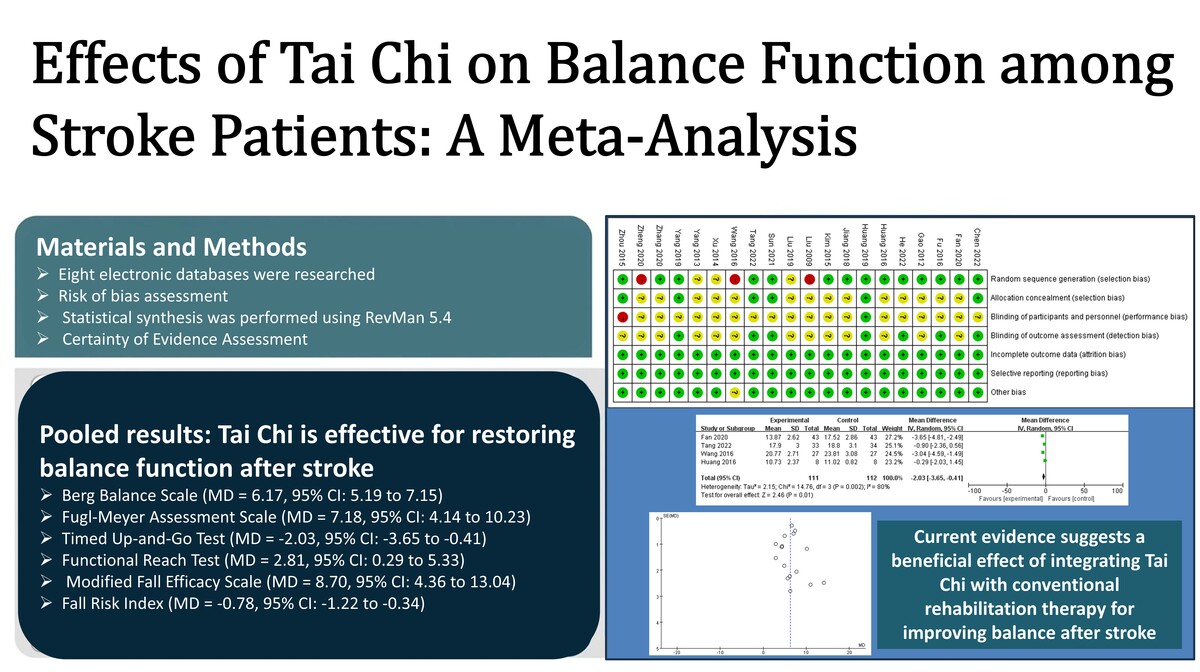
A systematic search was performed across eight electronic databases (PubMed, EMBASE, Web of Science, Cochrane Library, China National Knowledge Infrastructure, SinoMed, Chongqing VIP, and Wanfang Data) from their inception until May 13, 2025. The search strategy combined terms related to “stroke”, “balance”, “tai chi”, and “randomized controlled trial”. The detailed search strategy for each database is provided in Supplementary File 1.
Study selection and data extraction
Search results were imported into EndNote for duplicate removal. Two reviewers independently screened titles and abstracts, followed by full-text assessment of potentially eligible studies. Disagreements were resolved by consensus or by consulting a third reviewer. Using a pre-designed data extraction form, two reviewers independently extracted the following information: first author, publication year, country, sample size, patient characteristics (e.g., age, time since stroke onset, stroke type), details of the intervention and control protocols, outcome measures, and results. Discrepancies were resolved through discussion or by a third reviewer.
Quality assessment
The methodological quality of included RCTs was independently assessed by two reviewers using the Cochrane Risk of Bias tool [16]. The following domains were evaluated: random sequence generation, allocation concealment, blinding of participants and personnel, blinding of outcome assessment, incomplete outcome data, selective reporting, and other potential biases. Each domain was judged as having a “low”, “high”, or “unclear” risk of bias. An overall judgment was made for each study.
Data synthesis
For continuous outcomes, the mean difference (MD) with 95% confidence interval (CI) was calculated. Statistical heterogeneity was assessed using the I2 statistic [19]. An I2 value < 50% indicated low heterogeneity, and a fixed-effects model was used; an I2 value ≥ 50% indicated substantial heterogeneity, and a random-effects model was applied [20, 21]. Pre-specified subgroup analyses were planned if sufficient data were available. Publication bias was explored using funnel plots when at least 10 studies were pooled for a given outcome [22, 23]. All statistical analyses were performed using RevMan software (version 5.4).
Certainty of evidence assessment
The overall certainty of evidence for each primary outcome was evaluated using the Grading of Recommendations Assessment, Development and Evaluation (GRADE) framework [15]. Two reviewers independently rated the evidence across five domains: risk of bias, inconsistency, indirectness, imprecision, and publication bias. The certainty was categorized as high, moderate, low, or very low. Results were generated using GRADEpro GDT software (https://gradepro.org).
Results
Literature search
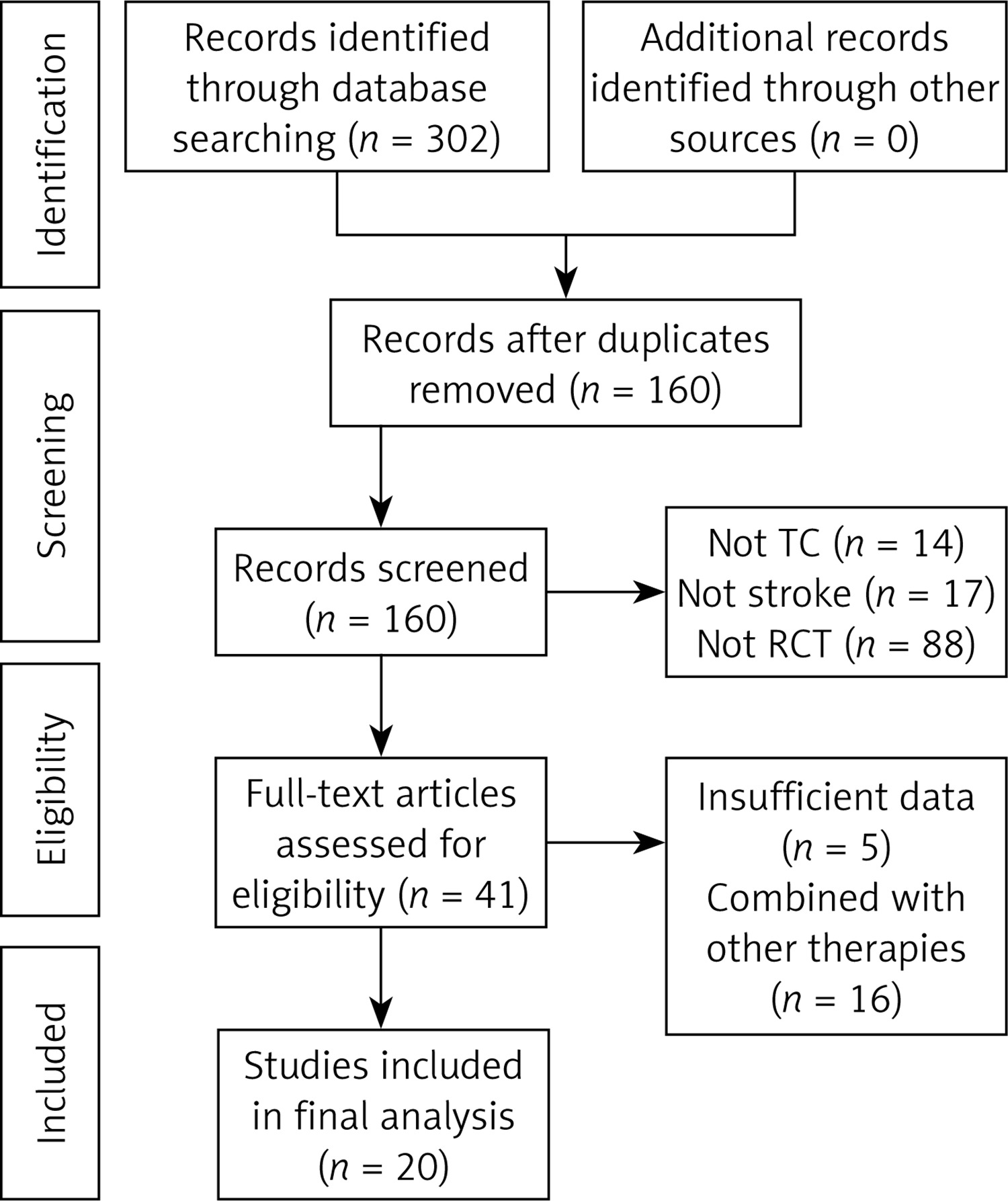
The initial database search yielded 302 records. After removing duplicates and screening titles and abstracts, 160 full-text articles were assessed for eligibility. Ultimately, 20 RCTs [24–43] met the inclusion criteria and were included in the quantitative synthesis. The study selection process is detailed in the PRISMA flow diagram (Figure 1).
Characteristics of included trials
The 20 included RCTs involved a total of 1296 participants (Table I). All studies were published between 2009 and 2022, with one study conducted in Korea [39] and the remaining 19 in China. The intervention duration ranged from 3 weeks to 6 months. All trials reported comparable baseline characteristics between groups. The primary outcome measures were the BBS, FMA, TUG, FRT, DGI, MFES, and FRI.
Table I
Characteristics of included studies
| Study | No. of patients | Age | Time post-onset | Stroke type (Isc/Hae) | Hemiparesis side (L/R) | Therapy duration | Outcomes | |||||
|---|---|---|---|---|---|---|---|---|---|---|---|---|
| I | C | I | C | I | C | I | C | I | C | |||
| Tang [24], 2022 | 33 | 34 | 54.9 ±13.1 | 56.5 ±11.2 | 36.9 ±12.2 d | 38.4 ±10.8 d | 24/9 | 22/12 | 17/16 | 19/15 | 30 min/t, 1t/d, 5d/w, 8 w | ①, ④, ⑤, ⑥ |
| He [25], 2022 | 29 | 26 | 62.96 ±8.98 | 62.50 ±10.73 | N/A | N/A | 27/2 | 20/6 | 17/12 | 16/10 | 40 min/t, 4t/w, 4 w | ①→, ⑥ |
| Chen [26], 2022 | 46 | 46 | 53.12 ±3.97 | 52.48 ±4.57 | N/A | N/A | N/A | N/A | N/A | N/A | 20 min/t, 3t/w, 3w | ⑥ |
| Sun [27], 2021 | 60 | 60 | 59.72 ±9.59 | 59.25 ±9.23 | 43.94 ±37.30 d | 48.37 ±38.21 d | 60/0 | 60/0 | 19/31 | 19/19 | 60 min/t, 1t/d, 5d/w, 4 w®€ | ①→, ⑥ |
| Zheng [28], 2020 | 37 | 37 | 47.52 ±13.83 | 45.49 ±12.15 | 13.58 ±5.13 d | 12.37 ±5.85 d | 29/8 | 28/9 | N/A | N/A | 60 min/t, 2t/w, 12w | ①→, ⑥ |
| Zhang [29], 2020 | 30 | 30 | 68.5 ±9.4 | 65.5 ±10.1 | 80.3 ±30.4 d | 76.6 ±31.9 d | N/A | N/A | N/A | N/A | 20 min/t, >2t/d, 4w | ①→, ④, ⑥ |
| Fan [30], 2020 | 43 | 43 | 63.4 ±5.0 | 63.8 ±5.3 | 15.11 ±4.28 m | 15.32 ±4.30 m | 26/17 | 27/16 | 24/23 | 19/20 | 90 min/t, 3t/w, 12w | ①→, ④, ⑥ |
| Yang [31], 2019 | 40 | 21 | 59.18 ±9.18 | 60.38 ±7.61 | 45.08 ±38.27 d | 42.43 ±32.88 d | 40/0 | 21/0 | 15/25 | 10/11 | 60 min/t, 1t/d, 5d/w, 4 w | ①→, ⑥ |
| Liu [32], 2019 | 43 | 44 | N/A | N/A | N/A | N/A | 20/0 | 20/0 | N/A | N/A | 1m | ①→, ⑥ |
| Huang [33], 2019 | 14 | 14 | 62.21 ±9.74 | 59.93 ±9.96 | 11.36 ±4.91 m | 10.50 ±4.24 m | 5/9 | 6/8 | 5/9 | 7/7 | in/t, 1t/w, 12 w | ①→, ⑥, ⑦ |
| Jiangsu [34], 2018 | 30 | 30 | 58.80 ±11.70 | 56.46 ±12.81 | 3.60 ±1.97 m | 3.30 ±1.82 m | N/A | N/A | N/A | N/A | 30 min/t, 1t/d, 5d/w, 2 m | ⑥ |
| Wang [35], 2016 | 25 | 25 | 60.48 ±8.29 | 60.92 ±10.07 | 5.50 ±2.09 m | 5.08 ±1.56 m | 22/3 | 20/5 | N/A | N/A | 30 min/t, 5t/w, 8 w | ①→, ④ |
| Huang [36], 2016 | 8 | 8 | 65.00 ±6.16 | 63.63 ±7.37 | 15.13 ±7.30 m | 18.63 ±31.47 m | 7/1 | 6/2 | 6/2 | 5/3 | in/t, 2t/w, 24 w | ①→, ④ |
| Fu [37], 2016 | 30 | 30 | 59.7 ±7.6 | 60.3 ±8.4 | N/A | N/A | 17/13 | 20/10 | 14/16 | 13/17 | 40 min/t, 1t/d, 6d/w, 8 w | |
| Zhou [38], 2015 | 11 | 11 | 35~70 | 35~70 | < 6 m | < 6 m | 11/0 | 11/0 | N/A | N/A | 60 min/t, 5t/w, 1m | ①→, ⑥ |
| Kim [39], 2015 | 11 | 11 | 53.45 ±11.54 | 55.18 ±10.20 | N/A | N/A | N/A | N/A | N/A | N/A | in/t, 3~4t/w, 6 w | ①→, ③, ④ |
| Xu [40], 2014 | 40 | 40 | 60.14 ±10.25 | 48.23 ±12.32 | 47.34 ±22.56 d | 45.21 ±25.42 d | 26/14 | 22/18 | N/A | N/A | 20 min/t, 2t/d, 12 w | |
| Yang [41], 2013 | 50 | 50 | 54.3 ±13.8 | 55.2 ±14.6 | 44.7 ±18.4 d | 42.6 ±16.7 d | 50/0 | 50/0 | N/A | N/A | 45 min/t, 1t/d, 6d/w, 1 m | |
| Gao [42], 2012 | 30 | 30 | 65.3 ±12.2 | 63.5 ±11.3 | N/A | N/A | N/A | N/A | N/A | N/A | in/t, 2t/d, 4 w | ①→, ⑥ |
| Liu [43], 2009 | 24 | 24 | 52.13 ±14.13 | 53.51 ±12.63 | 17.65 ±5.34 d | 18.73 ±8.78 d | 15/9 | 16/8 | 16/8 | 9/15 | 30 min/t, 1t/d, 3 m | ① |
[i] C – control group, I – intervention group, L – left, R – right, Hae – hemorrhagic stroke, Isc – ischemic stroke, N/A – not applicable. ① Berg Balance Scale. ② Functional Reach Test. ③ Dynamic Gait Index. ④ Timed Up-And-Go test. ⑤ Modified Fall Efficacy Scale. ⑥ Fugl-Meyer Assessment scale. ⑦ Fall Risk Index.
Risk of bias assessment
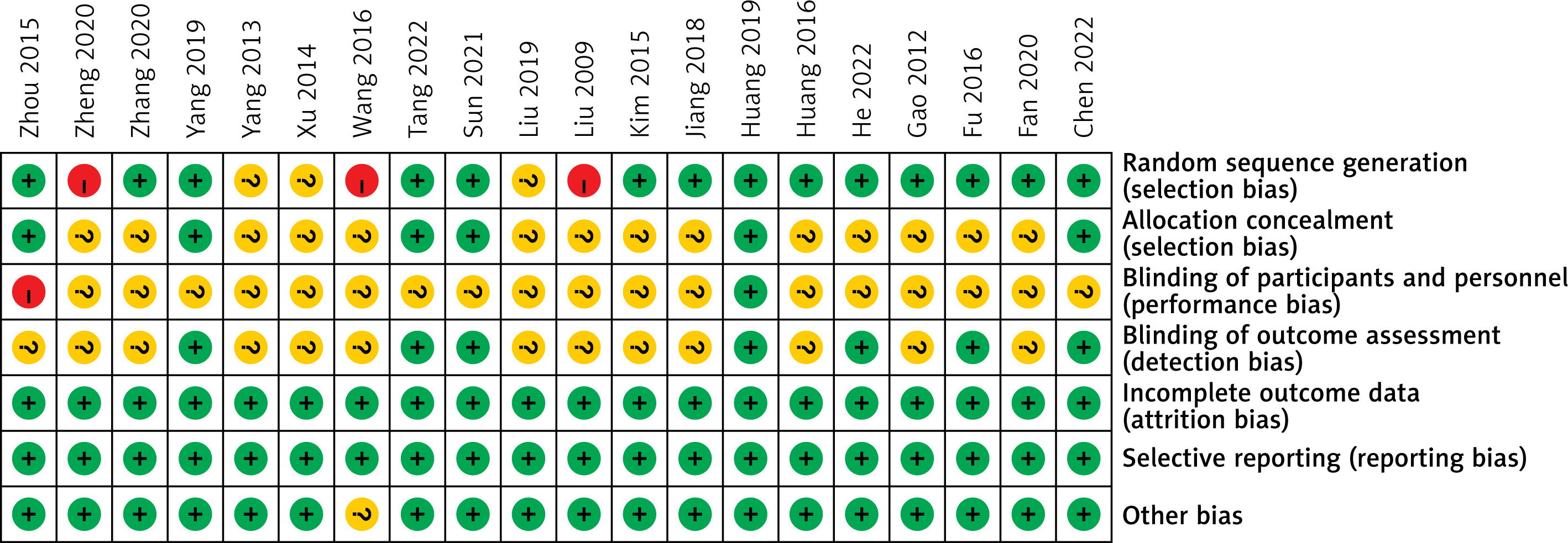
The summary of the risk of bias assessment is presented in Figure 2. The primary sources of bias stemmed from inadequate reporting or implementation of random sequence generation, allocation concealment, and blinding of participants, personnel, and outcome assessors. Based on the overall judgment, 12 of the 20 RCTs were rated as having a low overall risk of bias, while the remaining 8 were rated as having a high overall risk of bias.
Outcome measurements
Berg Balance Scale (BBS)
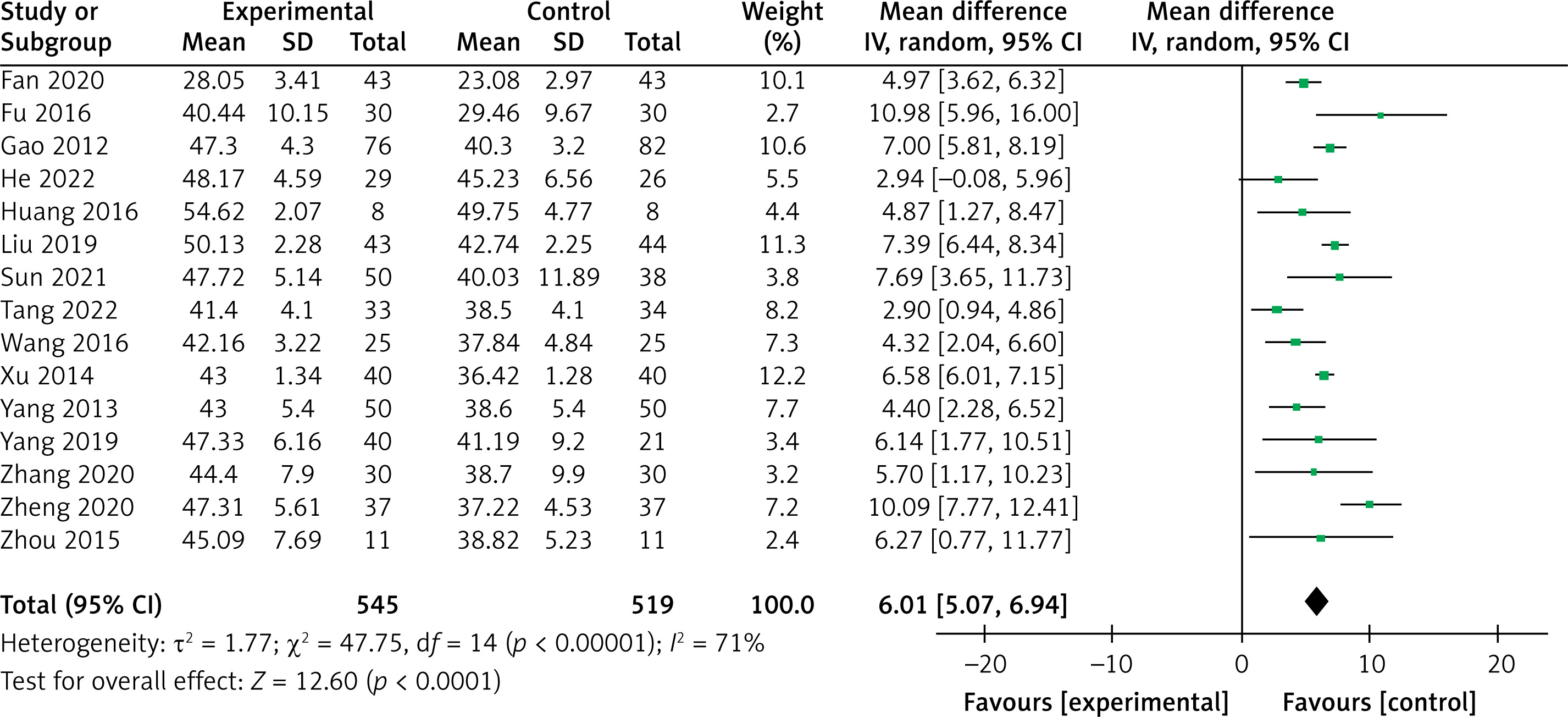
Seventeen trials (1154 participants) reported data on the BBS. Due to significant heterogeneity (I2 = 75%), a random-effects model was used. The meta-analysis showed that TC combined with CRT significantly improved BBS scores compared to CRT alone (MD = 6.17, 95% CI: 5.19 to 7.15; Figure 3). Visual inspection of the funnel plot suggested potential publication bias (Supplementary Figure S1).
Fugl-Meyer Assessment scale (FMA)
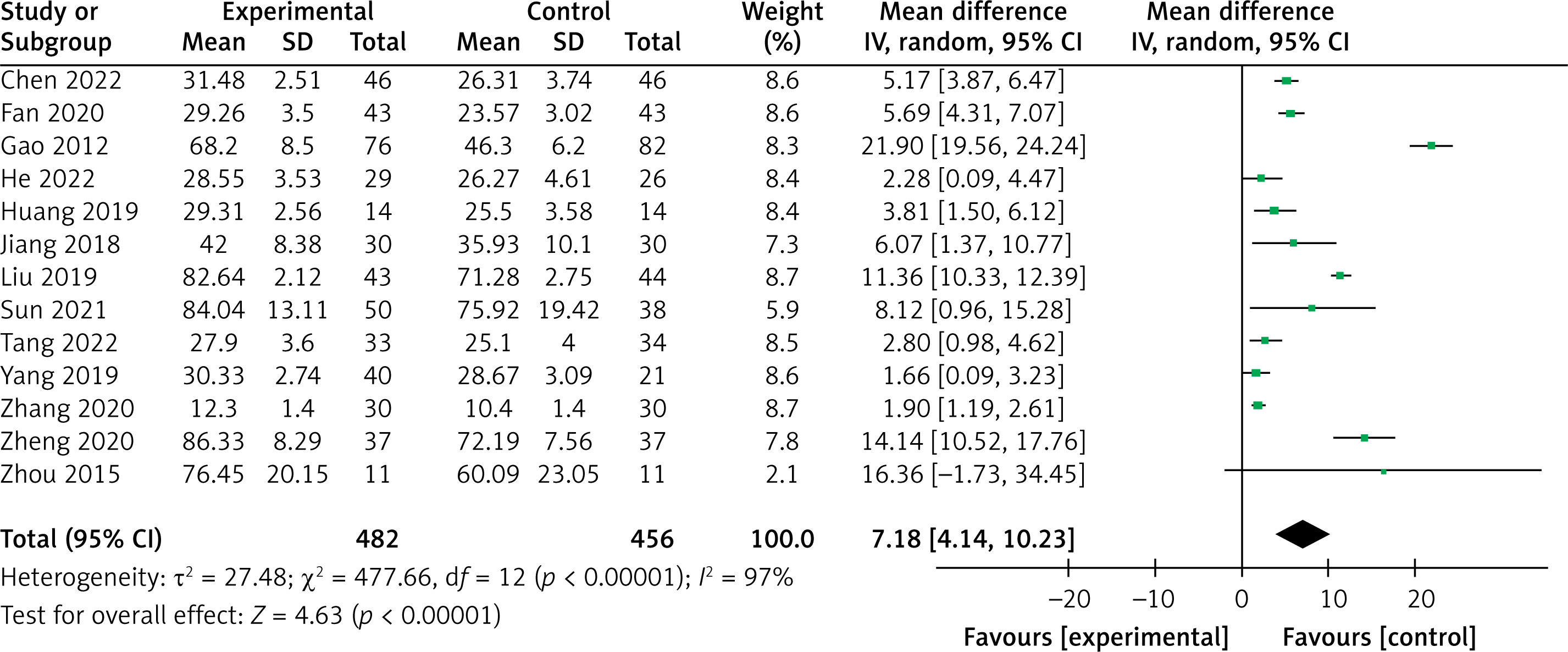
Thirteen trials (938 participants) assessed balance using the FMA. Substantial heterogeneity was observed (I2 = 97%), and a random-effects model was applied. The pooled analysis indicated a statistically significant greater improvement in the TC group (MD = 7.18, 95% CI: 4.14 to 10.23; Figure 4). The funnel plot indicated potential publication bias (Supplementary Figure S2).
Timed Up-and-Go test (TUG)
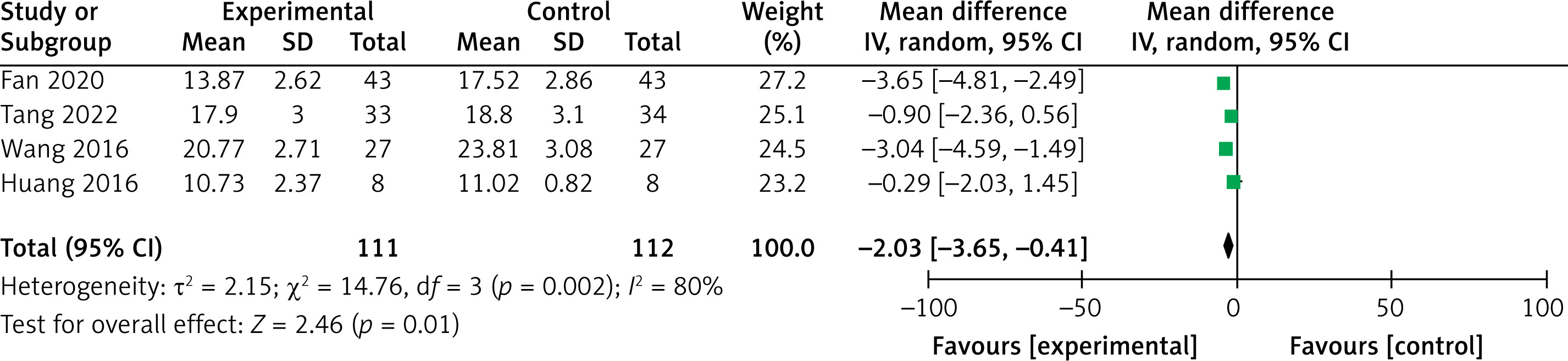
Four trials (223 participants) reported TUG results. A random-effects model was used due to high heterogeneity (I2 = 80%). The TC group showed a significantly greater reduction in TUG time compared to the control group (MD = –2.03, 95% CI: –3.65 to –0.41; Figure 5).
Other balance measures
Single trials reported outcomes for FRT, DGI, MFES, and FRI. While TC showed positive effects on FRT (MD = 2.81, 95% CI: 0.29 to 5.33; Supplementary Figure S3), MFES (MD = 8.70, 95% CI: 4.36 to 13.04; Supplementary Figure S4), and FRI (MD = –0.78, 95% CI: –1.22 to –0.34; Supplementary Figure S5), no significant difference was found for the DGI (MD = 1.45, 95% CI: –0.08 to 2.98; Supplementary Figure S6).
Certainty of the evidence
The GRADE assessment of the evidence quality is summarized in Table II. The certainty was downgraded for most outcomes due to concerns regarding risk of bias, inconsistency (substantial heterogeneity), imprecision (wide confidence intervals or single-study results), and potential publication bias. Consequently, the evidence was rated as moderate for TUG, MFES, and FRI, and low for BBS, FMA, FRT, and DGI.
Table II
Level of evidence quality
[i] BBS – Berg Balance Scale, FRT – Functional Reach Test, DGI – Dynamic Gait Index, TUG – Timed Up-And-Go test, MFES – Modified Fall Efficacy Scale, FMA – Fugl-Meyer Assessment scale, FRI – Fall Risk Index. ① The experimental design had a large bias in random, distributive findings or was blinded. ② The confidence interval overlapped less, the p-value of the heterogeneity test was very small, and the I2 was larger. ③ The confidence interval was not narrow enough, or the simple size was small. ④ Funnel graph asymmetry.
Discussion
Summary of main results. In this study, 20 trials involving 1296 patients were included for meta-analysis. The pooled results indicate that, compared to CRT alone, the combination of TC with CRT yields significantly greater improvements in balance function as measured by BBS, FMA, and TUG. Outcomes assessed by single trials – namely FRT, MFES, and FRI – also showed positive trends, though these must be interpreted as preliminary findings requiring validation in larger studies. The DGI did not demonstrate a significant between-group difference.
However, the certainty of this evidence, as evaluated by the GRADE framework, is generally moderate to low. This limitation, coupled with the substantial statistical heterogeneity observed in key analyses (e.g., BBS: I2 = 75%; FMA: I2 = 97%), necessitates a cautious interpretation of the findings. The heterogeneity likely stems from considerable clinical and methodological diversity among the included trials. Primary sources include variations in TC intervention protocols (style, session duration, frequency, and program length), patient characteristics (time since stroke onset and baseline impairment severity), and the specific components of the comparator CRT. While the random-effects model provides an average effect estimate across this spectrum, it underscores that the pooled results represent a generalized benefit across diverse contexts rather than a uniform effect. Consequently, there is a critical need for future trials to adopt more standardized intervention protocols and to report participant and intervention characteristics in greater detail to enable more precise synthesis and meaningful subgroup analysis. In summary, despite the methodological limitations of the primary studies, this review provides an updated and quantitative synthesis suggesting a beneficial role for TC as an adjunctive therapy in post-stroke balance rehabilitation.
Agreements and disagreements with other studies or reviews. Our findings align with the conclusions of previous systematic reviews, which have generally suggested that TC may improve balance in stroke survivors [15]. This updated analysis includes a larger number of trials and a greater total sample size than some prior syntheses. For instance, while one earlier review included 21 trials, only a subset specifically assessed balance outcomes [44]. By incorporating newer studies and adhering to contemporary methodological standards, including a rigorous assessment of evidence certainty (GRADE), this study offers a more current and comprehensive evaluation [45–48].
Implications for practice. To translate these promising findings into robust clinical guidelines, future practice and research must focus on the standardization of TC interventions. First, there is an urgent need to develop and validate a core set of standardized TC protocols specifically tailored for stroke rehabilitation. These protocols should clearly define key parameters such as the specific forms or movements selected (e.g., weight-shifting, controlled steps), session duration, frequency, total program length, intensity (e.g., heart rate, perceived exertion), and progression criteria. The creation of such manuals will ensure treatment fidelity across different settings and enable precise replication in future trials. Second, alongside standardization, research should investigate the “dose-response” relationship – identifying the minimum effective dose and the optimal dosage for maximizing balance outcomes in different stroke populations (e.g., acute vs. chronic). Third, to enhance the credibility and applicability of the evidence, clinicians and researchers should prioritize implementing TC within a rigorous methodological framework. This includes adequately powered trials, allocation concealment, blinding of outcome assessors, and the use of patient-centered outcome measures at multiple follow-up points to capture long-term efficacy.
Limitations should be acknowledged. First, the geographical concentration of included trials – almost exclusively conducted in China – may limit the generalizability of the findings to other cultural and healthcare contexts. The potential for cultural affinity and positive expectations toward TC in Chinese populations could influence outcomes, underscoring the need for multinational replication. Second, the presence of significant statistical heterogeneity and indications of publication bias for some outcomes suggest that the pooled effect estimates should be interpreted with caution. Third, while the inclusion of various TC styles reflects real-world practice and enhances comprehensiveness, it also introduces clinical heterogeneity. Future efforts should balance the flexibility needed for patient-centered care with the development of core standardized elements to improve the consistency and comparability of research evidence.
In conclusion, current evidence suggests a potential benefit of integrating TC with CRT for post-stroke balance. However, due to methodological limitations and the level of evidence in current trials, these findings must be interpreted with caution. Therefore, more rigorous and diverse studies are urgently needed before definitive recommendations can be made.