Introduction
Ovarian cancer is the eighth most common cancer among women [1] but ranks fifth among the most common causes of cancer-related death in women [2]. It also has the poorest prognosis among cancers of the female reproductive system [3, 4]. Since the 1990s, a global annual decrease in mortality from this cancer has been observed, ranging from approximately 1% to 2.4%. However, considering the incidence of ovarian cancer on a regional scale, it should be noted that in well-developed countries and those that have undergone economic transformation, an increase in the incidence of this cancer is observed (e.g., Eastern and Southern Europe, Japan), which may be due to a decrease in the number of pregnancies and shorter breastfeeding durations [3–6].
Since the vast majority of ovarian cancers originate from epithelial cells, it has been divided into five types: high-grade serous carcinoma (70%), low-grade serous carcinoma (3%), endometrioid carcinoma (12%), clear cell carcinoma (12%), and mucinous carcinoma (3%) [7, 8]. The above-mentioned frequency of occurrence of each type of ovarian cancer is similar worldwide, except for Asian countries, where clear cell carcinoma and endometrioid carcinoma are more common, while serous carcinoma is less common [5]. The symptoms of ovarian cancer are nonspecific, and there is no screening test that can unambiguously detect this cancer, resulting in an unfavorable prognosis in the majority of cases at the time of diagnosis [6, 9, 10]. Among the clearly proven risk factors for ovarian cancer are greater height and BMI [11], older age [12], mutations in the BRCA1 and BRCA2 genes [13], nulliparity [14], tobacco smoking [15], endometriosis [11], and diabetes [11]. Studies suggests a diverse effect of hormone replacement therapy (HRT) on ovarian cancer risk [11, 16, 17]. Whereas a meta-analysis by Xiang et al. showed that the risk of ovarian cancer associated with HRT has been decreasing over time [18], previous meta-analyses have reported conflicting findings [19, 20]. Factors that may have a preventive effect include pregnancy [21], breastfeeding [22] and combined oral contraceptive pills use that may act as chemoprevention through the impact on the epigenome of the cells of origin of ovarian cancer [23].
Hypertension is one of the most common causes of death worldwide, affecting about 45% of the American population, while in other regions of the world, its prevalence is increasing year by year (e.g., about 22% of all people in European Union countries) [24, 25]. Hypertension plays a significant role in the development of numerous cancers and also affects their prognosis [24, 26]. Mechanisms through which this disease may contribute to the development of cancers include extracellular matrix remodeling [27], regulation of vascular endothelial growth factor (VEGF) secretion [28], reactive oxygen species (ROS) [24], the functioning of the renin–angiotensin–aldosterone (RAA) system [29, 30] and the functioning of matrix metalloproteinases (MMPs) [31].
Although many scientific studies have attempted to investigate the relationship between hypertension and ovarian cancer, the findings have been inconsistent and inconclusive. Therefore, we conducted a systematic review and meta-analysis to address this question.
Material and methods
This meta-analysis strictly followed the requirements of the Preferred Reporting Items for Systematic Reviews and Meta-analysis guidelines (Supplementary Table SI) [32], and was designed according to the Meta-analysis of Observational Studies in Epidemiology (MOOSE) guidelines to identify observational studies examining the effect of hypertension on ovarian cancer. The protocol was preregistered with the PROSPERO platform with ID: CRD42024565574.
Search strategy and selection criteria
The comprehensive literature search was conducted on July 21th, 2024 using the bibliographic databases MEDLINE, Embase, and the Cochrane Library to identify articles examining the association between hypertension and ovarian cancer. The medical database search was limited to English papers and was conducted from inception until July 20th, 2024. In the computer search, we used the following keywords in various combinations: “hypertension” OR “blood pressure” OR “high blood pressure” AND “ovarian cancer” OR “ovarian carcinoma” OR “ovarian neoplasm” OR “ovarian tumor” OR “ovarian malignancy” OR “ovarian dysplasia.”
Eligibility criteria
Eligibility focused on patients with ovarian cancer. We included in our meta-analysis only original studies published in English up to July 2024, assessing the risk of ovarian cancer in relation to hypertension and matching the following criteria: i) prospective and retrospective cohort and case-control studies; ii) provided risk estimates (relative risks, odds ratios, hazard ratios) and 95% confidence intervals; iii) contained the following data: number of women with hypertension who developed ovarian cancer, number of women with hypertension who did not develop ovarian cancer, number of patients without hypertension who developed ovarian cancer, and number of patients without hypertension who did not develop ovarian cancer.
Data extraction
Two researchers extracted the basic data of the included literature and characteristics of the studied populations. Data extraction from the included studies was performed independently by the lead author (AD) and co-author (WK). Next, data were reviewed by the co-authors for accuracy (MM and UR). Disagreements between reviewers were resolved through discussions after an additional publications review.
Study quality assessment
The Newcastle–Ottawa Scale (NOS) [33] was used to assess risk of bias of the studies. We evaluated the methodological quality of cohort studies based on the following issues: study design, data comparability, and outcome assessment [33]. In the methodological evaluation process, scores from 0 to 3, from 4 to 6, and from 7 to 9 were given for low, medium, and high quality, respectively.
Assessing the case-control studies, the NOS includes the following aspects: selection, comparability, and exposure. The comparability category can receive a maximum of 2 stars, while each point in the selection and exposure categories can receive up to 1 star. A maximum of 9 stars (or points) can be awarded to determine the risk of studies bias. We considered a study to be of high quality when the total score was ≥ 7 points.
Data synthesis and statistical analyses
All statistical analyses were performed using Statistica 13.3 (StatSoft, Kraków, Poland, https://www.statsoft.pl/), employing the Medical Package module. For each study, we created separate two-by-two crosstabs. A similar approach was taken to analyze subgroups for selected variables. The risk ratios (RRs) and the 95% confidence intervals (CIs) were assessed as effective measures for the risk based on the reported data. A DerSimonian-Laird random-effects model was used to pool the RRs from various studies [34]. We employed I2 and Cochrane Q to evaluate heterogeneity, using the following criteria: high heterogeneity, I2 > 75%; moderate heterogeneity, I2 = 50% to 75%; and low heterogeneity, I2 < 50% [35, 36]. The risk of publication bias was assessed by applying Egger’s linear regression test [37] and Begg’s rank correlation test [38]. We assessed publication bias using funnel plots. In the absence of bias, the plots resemble a symmetrical funnel and were tested using Egger’s test and Begg’s test [39].
Subgroup analysis
We performed subgroup analyses by study design (case–control; cohort), and study quality NOS score (≥ 7; < 7 stars). Additionally, for our exploratory analyses, subgroups were created based on categorical variables of interest collected from studies herein. Additional stratified analysis was performed according to parity (gave birth vs. nulliparous), diabetes (yes vs. no), menopausal status (premenopausal vs. postmenopausal), body mass index (≥ 25 vs. < 25), and cigarette smoking (yes vs. no).
Results
We identified 2047 references through the medical databases Embase, Medline, and the Cochrane Library up to July 2024. In accordance with the inclusion criteria, 1699 articles were excluded by title or abstract, and the 312 duplicate studies were removed. As a result, a total of 36 articles were identified for full text review. Subsequently, the comprehensive evaluation of publications resulted in the exclusion of 27 articles. Finally, 10 studies (9 articles) were considered for inclusion in this meta-analysis [40–48]. These consisted of 6 case-control studies and 4 cohort studies. One publication provided results from two cohorts [44]. All other publications were rejected due to lack of raw data (adjusted data were available), or there was no access to the control group data (no information on hypertension or ovarian cancer), or the articles were unrelated to the topic (the outcome was mortality, taking antihypertensive drugs, prognosis for ovarian cancer). A flowchart of the selection procedure for the included studies is provided in Figure 1.
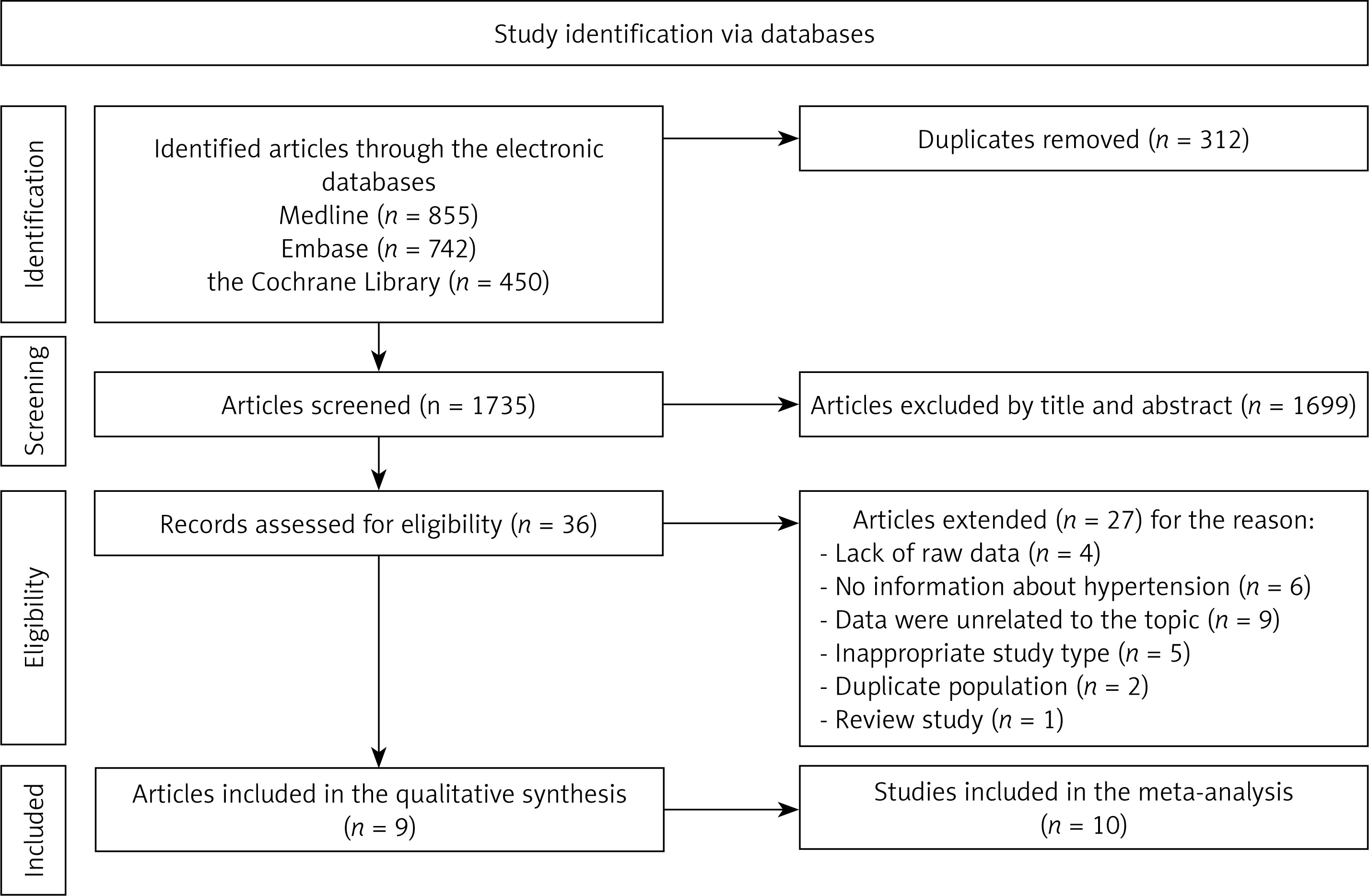
Table I presents an overview of the study characteristics. All the included patients in this meta-analysis were females over 20 years.
Table I
Characteristics of studies included in the meta-analysis
| Study ID | Location | Study design | Years of study | Age [years] | Ovarian cancer vs. controls | Definition of hypertension | NOS |
|---|---|---|---|---|---|---|---|
| Parazzini et al. 1997 [40] | Italy | Case–control | 1983–1991 | 22–74 | 971/2758 | Not available | 7 |
| Soler et al. 1999 [41] | Italy | Case–control | 1983–1996 | Median: 54 | 970/3054 | Not available | 6 |
| Brinton et al. 2007 [42] | Denmark | Cohort | 1978–1998 | Mean: 44 | 2491/99,421 | Not available | 7 |
| Chia et al. 2013 [43] | United States | Cohort | 1998–2002 | ≥ 66 | 5087/5087 | Not available | 8 |
| Huang et al. 2016 [44] | United States | Cohort | NHS* 1988–2012 | 30–50 | 687/1,479,857a | BP ≥ 140/90 mm Hg | 7 |
| Huang et al. 2016 [44] | United States | Cohort | NHS* II 1989-2011 | 25–42 | 261/2,210,479a | BP ≥ 140/90 mm Hg | |
| Chen et al. 2017 [45] | China | Case–control | 2010–2015 | Mean: 52 | 573/1146 | BP ≥ 140/90 mm Hg | 8 |
| Michels et al. 2019 [46] | United States** SEER- Medicare | Case–control | 1994–2013 | 68–89 | 16,850/281,878 | Not available | 7 |
| Staples et al. 2020 [47] | Multicenter*** AACES | Case–control | 2010–2015 | 20–79 | 593/732 | Not available | 8 |
| Alrobaiq et al. 2023 [48] | Saudi Arabia | Case–control | 2016–2019 | Mean: 57 | 133/137 | SBP > 130 mm Hg, and/or DBP > 80mm Hg | 6 |
Four studies (included in three publications) were conducted in the USA [43, 44, 46], three in European countries [40–42], one in the People’s Republic of China [45], one in Saudi Arabia [48], and one was a multicenter study [47]. All studies were observational studies – case-control or cohort in design with ovarian cancer case sizes ranging from 133 to 16,850. The NOS quality rating was between 6 and 8 stars, and the average NOS score was 7.1 for the included studies (Supplementary Tables SII and SIII).
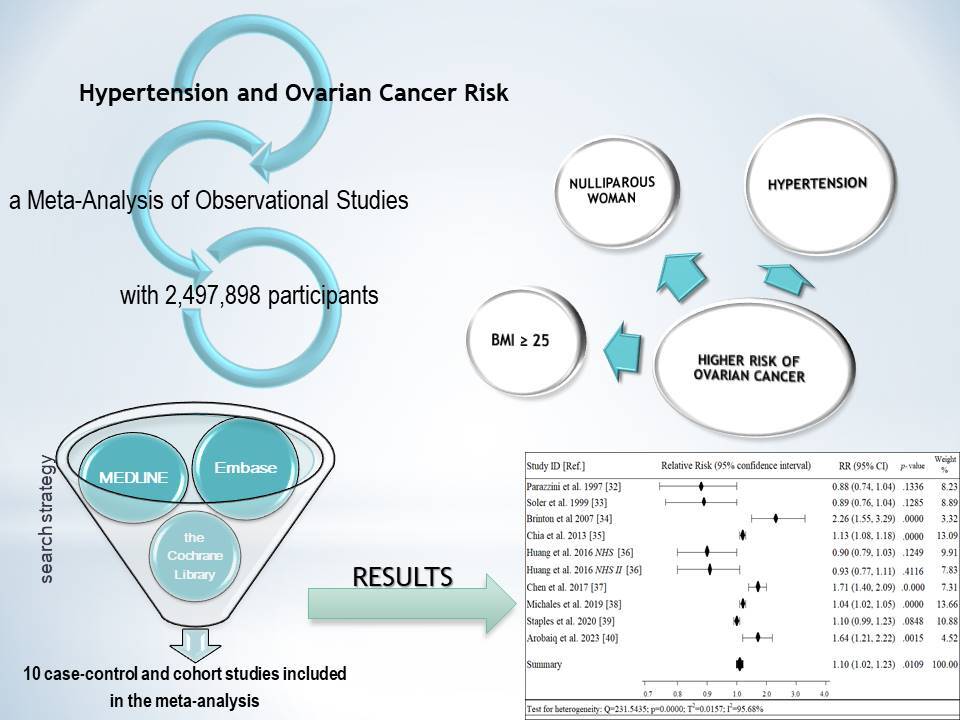
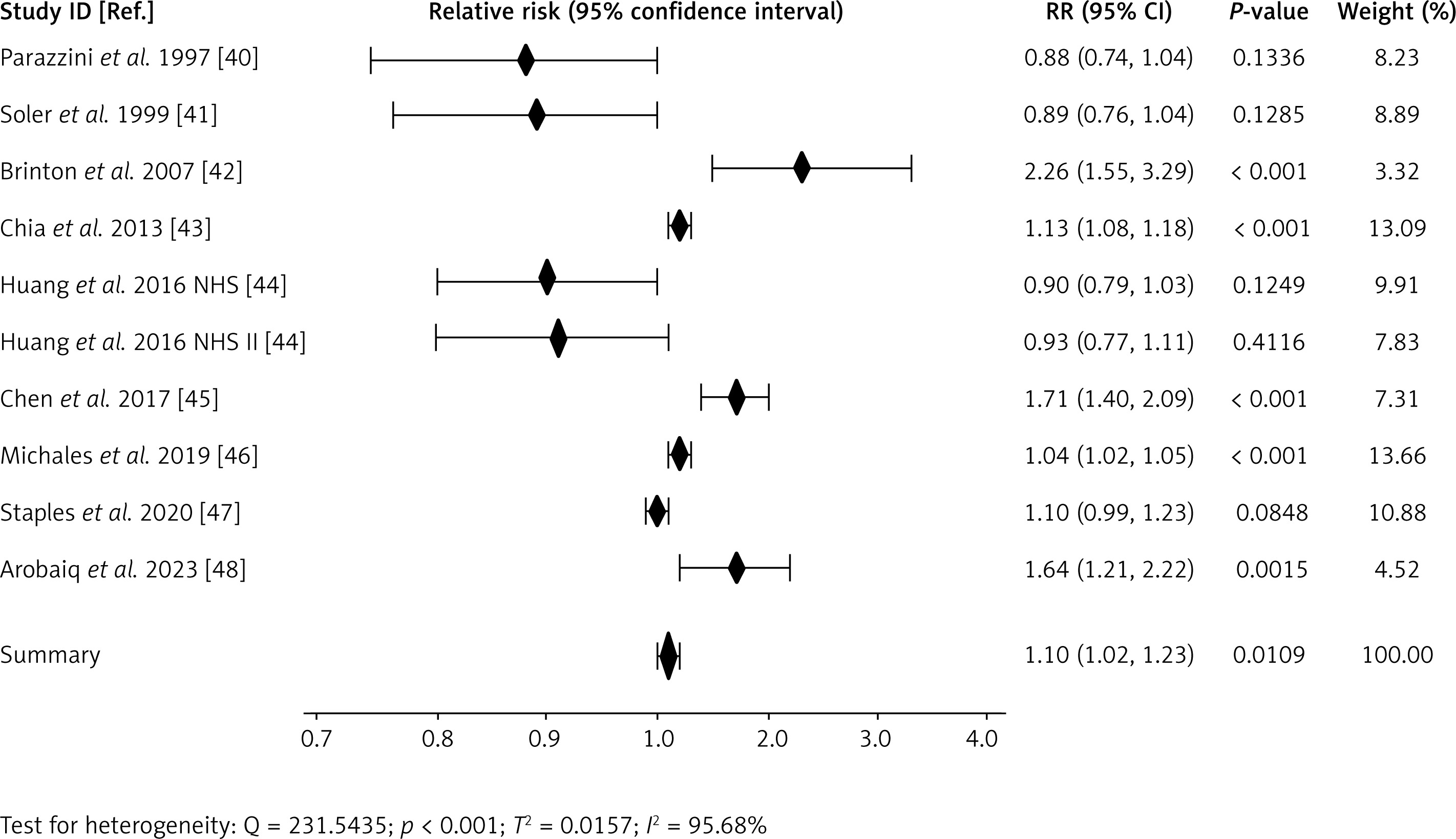
The results of a meta-analysis of observational studies comparing the risk of ovarian cancer in patients diagnosed with hypertension to the risk of ovarian cancer in patients without hypertension are shown in Figure 2. Accordingly, the risk of ovarian cancer in patients with hypertension is significantly higher (RR = 1.10, 95% CI: 1.02–1.23, p < 0.011). The I2 value was 95.68%, which indicates high heterogeneity of studies, while Egger’s test indicated no publication bias (b0 = 0.181, 95% CI: –3.651–4.014, t = 0.107, p = 0.095).
The overall heterogeneity of the pooled result was considered high, and therefore additional subgroup analysis was performed (Table II). Subgroup analysis indicated that study design and NOS score had no clear impact on the heterogeneity based on high variability of I2 within the subgroup. On the other hand, the risk of developing ovarian cancer was 1.12 times higher in patients with BMI ≥ 25 kg/m2 than in those with BMI ≤ 25 kg/m2 (95% CI: 1.07, 1.18, p < 0.0001), and 1.43 times higher among women who had never given birth (95% CI: 1.05, 1.96, p < 0.0025). Conversely, diabetes, menopausal status, and cigarette smoking were not significantly associated with the risk of ovarian cancer (Table II).
Table II
Subgroup analysis
Discussion
The relationship between hypertension and ovarian cancer has been explored in numerous scientific studies [40–48], but they have not allowed for a definitive determination of the relationship between these conditions. Based on a pooled analysis regarding the risk of developing ovarian cancer in people with hypertension, we found that this condition significantly increases the risk of this cancer (RR = 1.10, 95% CI: 1.02–1.23, p < 0.011), but this result is characterized by statistically significant heterogeneity (p < 0.0001, I2 = 95.68%). Since this is the first meta-analysis on this topic, it is not possible to compare its results with previous studies. The study also verified the impact of other risk factors for ovarian cancer: parity (RR = 1.43, p < 0.0025), diabetes (RR = 1.27, p < 0.1155), menopausal status (RR = 1.20, p < 0.2242), BMI (RR = 0.89, p < 0.0001), and cigarette smoking (RR = 2.20, p < 0.2791).
Recently, there has been a growing number of publications considering the significance of antihypertensive drugs in cancer therapy [49]. Their role in treatment is directly related to the hypotensive effect or results from a pleiotropic effect (e.g., β-blockers and calcium channel blockers [CCBs]) [50–52].
Hypertension is a proven risk factor for numerous cancers [24]. A strong correlation is observed between hypertension and kidney cancer, renal cell carcinoma (RCC), breast cancer, colorectal cancer, endometrial cancer, and bladder cancer [52–66]. This list may be expanded in the coming years, as the relationship between hypertension and many cancers has not yet been well studied, opening a broad field for further research. Numerous scientific studies have also shown that hypertension worsens the prognosis for various cancers [67–76]. The literature indicates several mechanisms by which hypertension may contribute to the development of cancer, which are discussed in this paper [24, 27, 29–31].
Remodeling of the extracellular matrix is caused by the inflammation associated with hypertension [24]. The remodeling of the blood vessel wall resulting from hypertension leads to stiffening of the ECM, which disrupts the production of adhesive molecules that regulate cell-cell interactions, resulting in faster tumor growth [27, 77].
VEGF is an important factor in the process of physiological and pathological angiogenesis, facilitating it by increasing blood vessel permeability and regulating endothelial cell proliferation [28]. It has been reported that people with hypertension have higher levels of VEGF, which translates into faster tumor progression and poorer prognosis [78].
Metabolic syndrome components (including hypertension) lead to cancer development primarily by increasing the formation of ROS, estrogen, IGF-1 and adipokines in the body [24]. Hypertension has been linked to insulin resistance, and thus increased IGF-1 production in the body, indicating its possible involvement in carcinogenesis through this mechanism [79]. Hypertension is also associated with excessive activity of the RAA system. Indeed, some studies have shown an association between mutations in genes encoding the angiotensin II receptor and the development of certain cancers [29, 55, 64].
MMPs are enzymes that degrade the collagen present in the ECM. One of the best-studied enzymes in this group is MMP-2, which can exhibit both pro- and anti-inflammatory effects [80]. MMPs are responsible for changes in the structure of blood vessels typical of hypertension; however, hypertension itself, through mechanisms that remain unclear, leads to increased activation of MMP-2 [81]. This phenomenon, among other factors, disrupts the structure of cadherin, one of the adhesive molecules, which may impact cancer development [81]. Increased MMP activity is also observed in many cancers, suggesting a need for further research into the link between hypertension and carcinogenesis through the mechanism of MMP activity modification, as this relationship is not yet fully understood [24].
We are aware that drawing final conclusions from the results of our meta-analysis requires caution given the number of limitations such as risk measures and high heterogeneity, as well as the population differences. It should be noted that we limited the search to English-language literature. The number of studies that could be included is limited, and most of them were case-control studies, which are more susceptible to biases such as recall and selection. Additionally, it should be noted that the study did not account for the presence and type of antihypertensive treatment. It is also worth remembering that in this study, all types of ovarian cancer are considered together, while the risk factors for ovarian cancer seem to depend on the histological type, so the impact of hypertension on the development and course of the disease may vary for different types [82, 83].
In conclusion, this meta-analysis demonstrated a positive association between hypertension and the development of ovarian cancer. Future studies should focus on elucidating the pathophysiological mechanisms connecting hypertension with ovarian cancer, and on deepening the analysis by distinguishing between different types of ovarian cancer, as well as conducting subgroup analyses by geographical regions of the world.