Introduction
Headache disorders are a serious public health problem, affecting a high proportion of the world population, and they cause considerable economic burden due to lost productivity and health care expenditure [1]. The epidemiology of headache disorders has been reported as a variety of diseases affecting different population groups. Previous studies have reported that headache disorders have a complicated pathogenesis with possible genetic, environmental, and psychosocial factors involved. Although advances have been made in the understanding of headache disorders, there is still a large gap between these advances and effective interventions for the underlying causes of headache disorders and treatment options for the people affected [2]. The current treatment strategies of headache disorders include lifestyle changes, over-the-counter medications, and prescription drugs. However, most patients reported that these treatments are ineffective and they are still troubled by their diseases [3–5]. The Frailty Index (FI) serves as a valid and all-encompassing multidimensional instrument for evaluating the health condition and vulnerability of individuals within the aging context [6–8]. Currently, there is increasing interest in the possible association between frailty and the prevalence of headache disorders. It has been reported that frail individuals may be associated with an increased risk for chronic pain conditions, including headaches, which motivates us to further investigate the frailty-headache relationship. This association is of great significance in identifying vulnerable populations and preventing and treating these susceptible individuals.
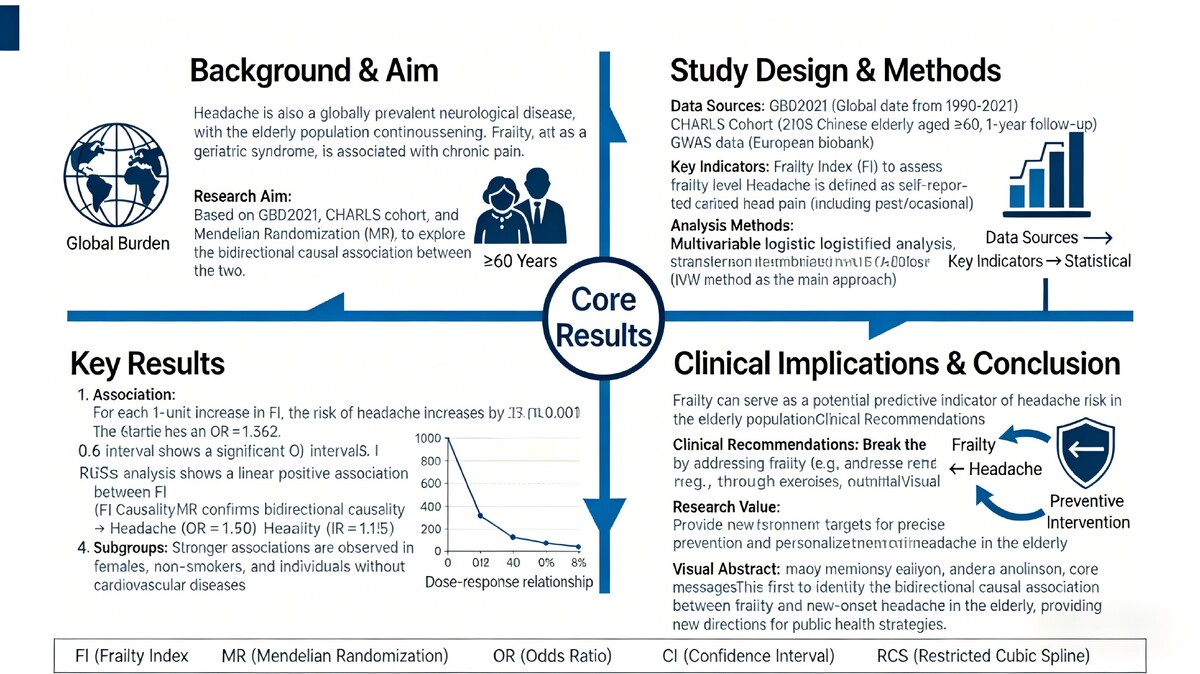
Considering the above background, we attempt to explore the relationship between frailty and headache occurrence among older adults. We use an integrated epidemiological method in our study, which is based on the Global Burden of Disease database and the China Health and Retirement Longitudinal Study (CHARLS). This method helps us analyse population-based data and detect trends in both the incidence and prevalence of headache [9].
We use multivariate logistic regression analysis to explore the bidirectional relationship between frailty and headache occurrence, ultimately contributing to a better understanding of these conditions and informing future interventions.
Methods
Study population and data sources
The Global Burden of Disease (GBD) 2021 database provides comprehensive estimates of incidence, prevalence, mortality, years of life lost (YLL), years lived with disability (YLD), and disability-adjusted life years (DALYs) for 371 diseases and injuries across 204 countries and territories from 1990 to 2021. Data at the population level is compiled and summarized at both the national and regional tiers. Epidemiological data were obtained from the Global Health Data Exchange online platform (https://vizhub.healthdata.org/gbd-results/). Headache diagnosis was based on self-reported symptoms and physician diagnosis using the International Classification of Diseases codes 346 (9th Revision) for migraine and G43-G44 (10th Revision) for headache disorders. Due to data anonymization protocols in the GBD study, the University of Washington’s Institutional Review Board approved a waiver of informed consent [10–13].
China health and retirement longitudinal study (CHARLS) Database
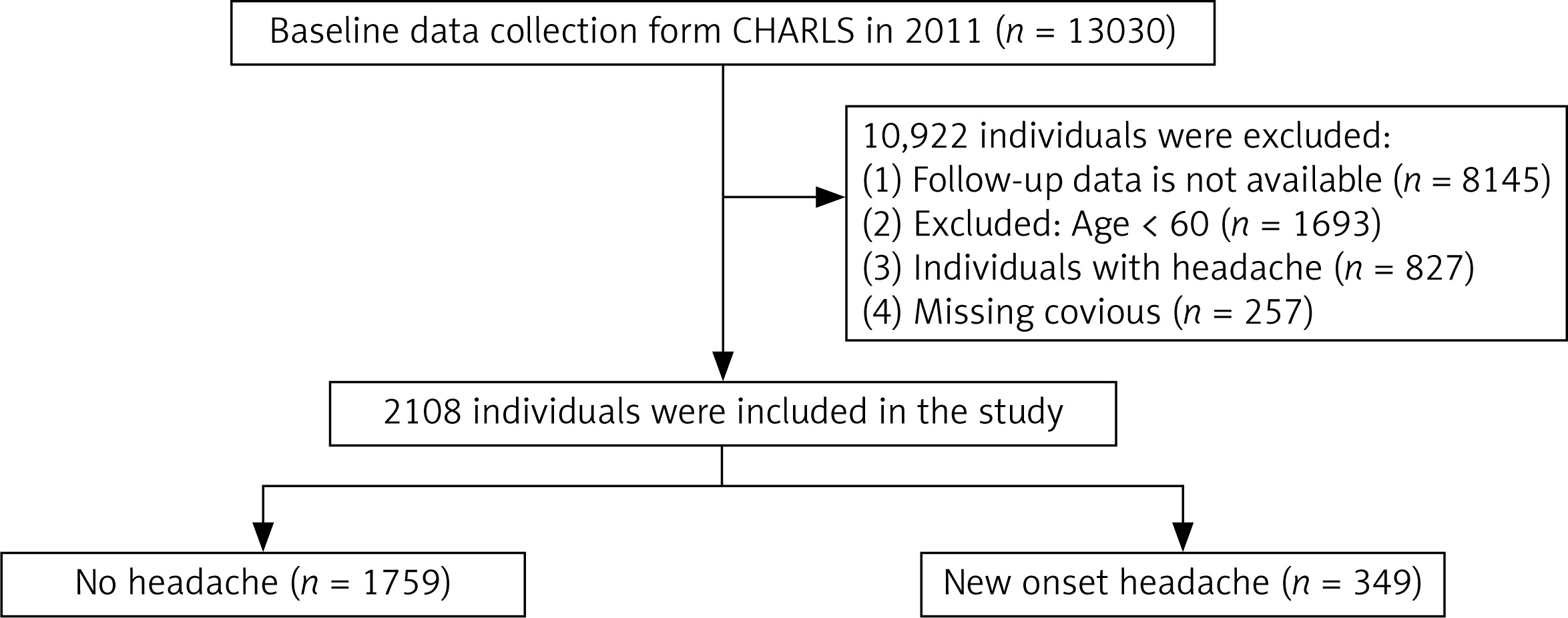
CHARLS constitutes a nationwide representative longitudinal survey targeting Chinese adults who are 45 years of age or older. The study encompasses 28 provincial-level regions (including autonomous regions and municipalities), 150 county-level units, and 450 community sites. The baseline survey was conducted between June 2011 and March 2012, with biennial follow-ups conducted through face-to-face computer-assisted interviews to collect comprehensive data on demographics, health status, psychological measures, and physical indicators [14–16]. Five waves of data collection have been completed (2011, 2013, 2015, 2018, and 2020). The CHARLS survey received approval from the Biomedical Ethics Committee of Peking University (IRB00001052-11015), and written informed consent was obtained from all participants. After 9 years of follow-up, participants who developed new-onset headache disorders by 2020 were identified and extracted for analysis. From the initial 2011 CHARLS baseline cohort of 13,030 participants from approximately 10,000 households, we applied inclusion and exclusion criteria to select eligible participants. Individuals younger than 60 years, those with pre-existing headache disorders at baseline, and participants with missing FI data or covariates were excluded. The final analytical sample comprised 2108 participants who were headache-free at baseline and had complete follow-up data. The detailed participant selection process is illustrated in the flowchart (Figure 1).
GWAS data sources and results
The Mendelian randomization (MR) assay made use of summary statistics from publicly accessible genome-wide association studies (GWAS). FI genetic data were obtained from the study by Tsai et al. [17] (GWAS ID: ebi-a-GCST90020053) based on Finnish population data. For the outcome variables, genetic data were retrieved from the UK Biobank (ukb-b-7467 for secondary headache diagnoses) and FinnGen database (Finngen_R12_G6_CLUSTHEADACHE_STRICT_INCL4V0 for cluster headache strict definition, and Finngen_R12_G6_CLUSTHEADACHE_1 for cluster headache broad definition). To minimize population stratification bias, all genetic data were restricted to individuals of European ancestry. For instrumental variable (IV) selection, we identified SNPs strongly associated with the FI that were independent of each other. SNPs were selected using genome-wide significance thresholds, with linkage disequilibrium (LD) clumping performed to ensure independence between instruments [18, 19]. Only SNPs with F-statistics > 10 were retained, to avoid weak instrument bias. The inverse variance-weighted (IVW) assay uncovered notable causal correlations between the FI and headache disorders. The analysis was done using 15 independent SNPs as instrumental variables, indicating a significant positive correlation with secondary headache diagnoses (OR = –0.0017, p = 0.002). In the case of cluster headache strict phenotype, 13 SNPs were utilized, and they showed a strong caus Negrole relationship (OR = 0.4309, p = 0.001). Likewise, in the wider cluster headache definition, 15 SNPs were statistically verified to contain a significant correlation (OR = 0.4743, p = 0.006), meaning that increased FI is a causal factor in precipitating a variety of headache disorders.
Variable description
The main outcome variable was headache status, which was measured as follows in the CHARLS questionnaire. The interviewees were first asked about their experience of pain, and those who reported experiencing pain were then further questioned about which body part experienced pain with the question: The following are just a few of the items in your body that you are experiencing pain in, please list them now. The questionnaire has 15 specific body parts to choose: head, neck, chest, shoulders, arms, wrists, fingers, abdomen, upper back, lower back, hips, legs, knees, ankles, and toes. Participants who reported specifically feeling pain in the head were defined as having headache disorders. The head and neck category specifically captured headache and cervical pain symptoms. This method enabled an overall assessment of the distribution pattern of pain in different body regions. The head was identified as one of the pain entities in the pain assessment framework. In this study, headache was defined and assessed based on the “general pain problem classified by body region”, without further differentiation between subtypes such as migraine and tension-type headache. Additionally, the assessment timeframe for headache includes both “recent” and “chronic” headache.
The primary exposure variable was frailty, which we assessed with the FI. The FI was computed as the ratio of the number of existing health deficits to the total count of potential age-related deficits evaluated. Health deficits included activities of daily living (ADL), instrumental activities of daily living (IADL), physical limitations, chronic diseases, and indicators of psychological health. The FI used binary coding where “0” represented no deficits and “1” represented presence of deficits. If the response was intermediate, it was coded as “0.5” to reflect partial impairment.
Covariates derived from the CHARLS database were as follow: demographic factors (age, sex, type of residence); socioeconomic status (education level, marital status); lifestyle factors (smoking, drinking, night); laboratory items (serum creatinine, uric acid, total cholesterol, LDL cholesterol, triglycerides); and chronic diseases (cardiovascular disease, hypertension, diabetes, dyslipidaemia, stroke, depression). All the covariates were collected through standardised questionnaires in household surveys. To protect data quality, the study evaluated missing data patterns comprehensively and applied multiple imputation methods in variables with a missing rate higher than 10%. Sensitivity analysis was employed to evaluate the robustness of the study results.
Statistical analysis
For the CHARLS cohort analysis, participant characteristics were summarised using descriptive statistics. Continuous variables following normal distribution were presented as means with standard deviations (SD), while non-normally distributed variables were expressed as medians with interquartile ranges (IQR). Frequencies and percentages were applied to depict categorical variables. To compare data across different groups, χ2 tests were utilised for categorical variables, while independent t-tests or Mann-Whitney U tests were employed for continuous variables, depending on the specific data characteristics. The association between FI and headache disorders was evaluated using univariate and multivariate logistic regression models. Frailty was analysed in multiple forms: as a categorical variable (0, 1, 2+ frailty components), as a continuous variable (FI score), per IQR increase, and by quartiles (Q1–Q4). Four progressive adjustment models were constructed: Crude model: unadjusted association between frailty and headache; Model 1: adjusted for demographic and socioeconomic factors (sex, age, marital status, residence place); Model 2: Model 1 + lifestyle factors (drinking, smoking) and laboratory parameters (creatinine, uric acid, total cholesterol, LDL cholesterol, triglycerides); and Model 3: Model 2 + chronic disease conditions (cardiovascular disease, hypertension, diabetes, stroke, depression, night). Results were presented as odds ratios (ORs) with 95% confidence intervals (CIs). Trend tests were performed across frailty categories and quartiles to test the dose-response relationship. Stratified analyses were performed among subgroups of sex, age groups, and residence types to evaluate the consistency of results among different populations. We used restricted cubic spline (RCS) regression with three knots (at the 10th, 50th, and 90th percentiles) to explore the dose-response relationship between FI and headache. The IVW method was used as the primary analytical approach in the MR analysis to test the causal relationship between FI and headache disorders. Other MR methods, including MR-Egger regression, weighted median, and weighted mode, were used to evaluate the robustness of results. F-statistics was used to evaluate the strength of instrumental variables, and F > 10 was considered to exclude the bias caused by weak instruments. Cochran’s Q statistic was used to evaluate heterogeneity in both IVW and MR-Egger methods. Horizontal pleiotropy was assessed through MR-Egger intercept tests and MR-PRESSO global tests. Leave-one-out sensitivity analysis was performed to identify potentially influential SNPs. A Bonferroni-corrected significance threshold of p < 0.017 was applied to account for multiple testing.
All statistical analyses were two-sided, with p < 0.05 considered statistically significant unless otherwise specified. Statistical analyses and visualisations were performed using R software (version 4.3.3) with relevant packages including ggplot2, dplyr, and Two Sample MR [20, 21].
Results
The global and regional disease burden of headache disorders
From 1990 to 2021, headache disorders demonstrated distinct epidemiological patterns globally, with substantial increases in absolute case numbers. The global age-standardised rates (ASRs) in 2021 were 10084.51 per 100,000 for incidence, 34,574.42 per 100,000 for prevalence, and 588.39 per 100,000 for DALYs, with minimal changes in age-standardised rates (estimated annual percentage changes, EAPCs) near zero but dramatic increases in absolute numbers – total DALYs grew by 67.1% from 533.8 million in 1990 to 892.3 million in 2021. Regional variations highlighted significant geographic disparities. Eastern Europe consistently exhibited the highest prevalence and DALYs burden globally, while Sub-Saharan African regions showed lower current rates but positive growth trends, suggesting future increases as these populations undergo epidemiological transition (Figure 2, Table I–III).
Figure 2
The incidence, prevalence, and disability-adjusted life years (DALYs) for male and female headache disorders globally from 1990 to 2021, along with their standardised rates. A – Number of patients and ASIR. B – Number of patients and ASPR. C – DALYs count and ASDR
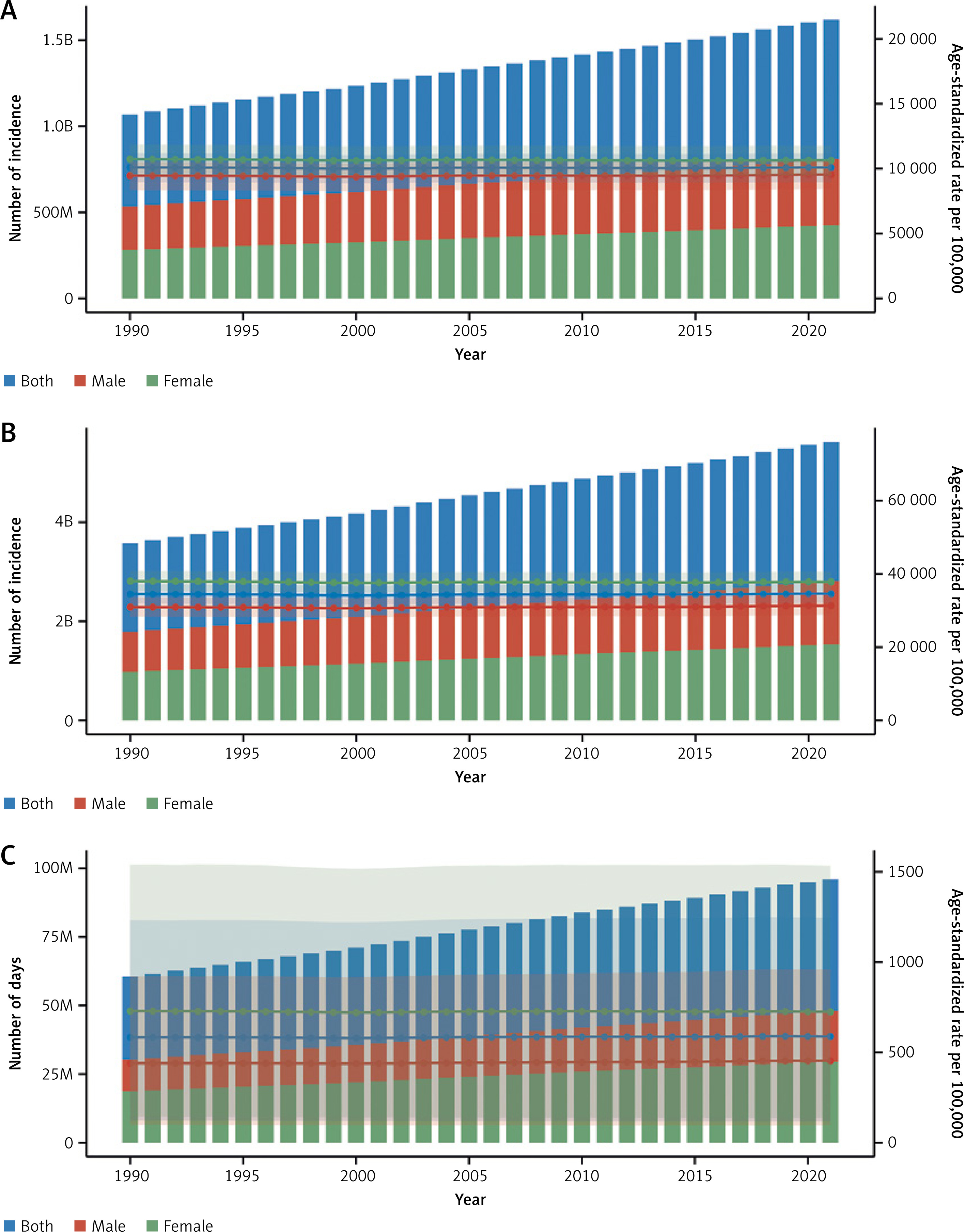
Table I
Incidence burden of headache disorders at global and regional levels, 1990–2021
Table II
Prevalence burden of headache disorders at global and regional levels, 1990–2021
Table III
DALYs burden of headache disorders at global and regional levels, 1990–2021
Global burden of headache by age and sex
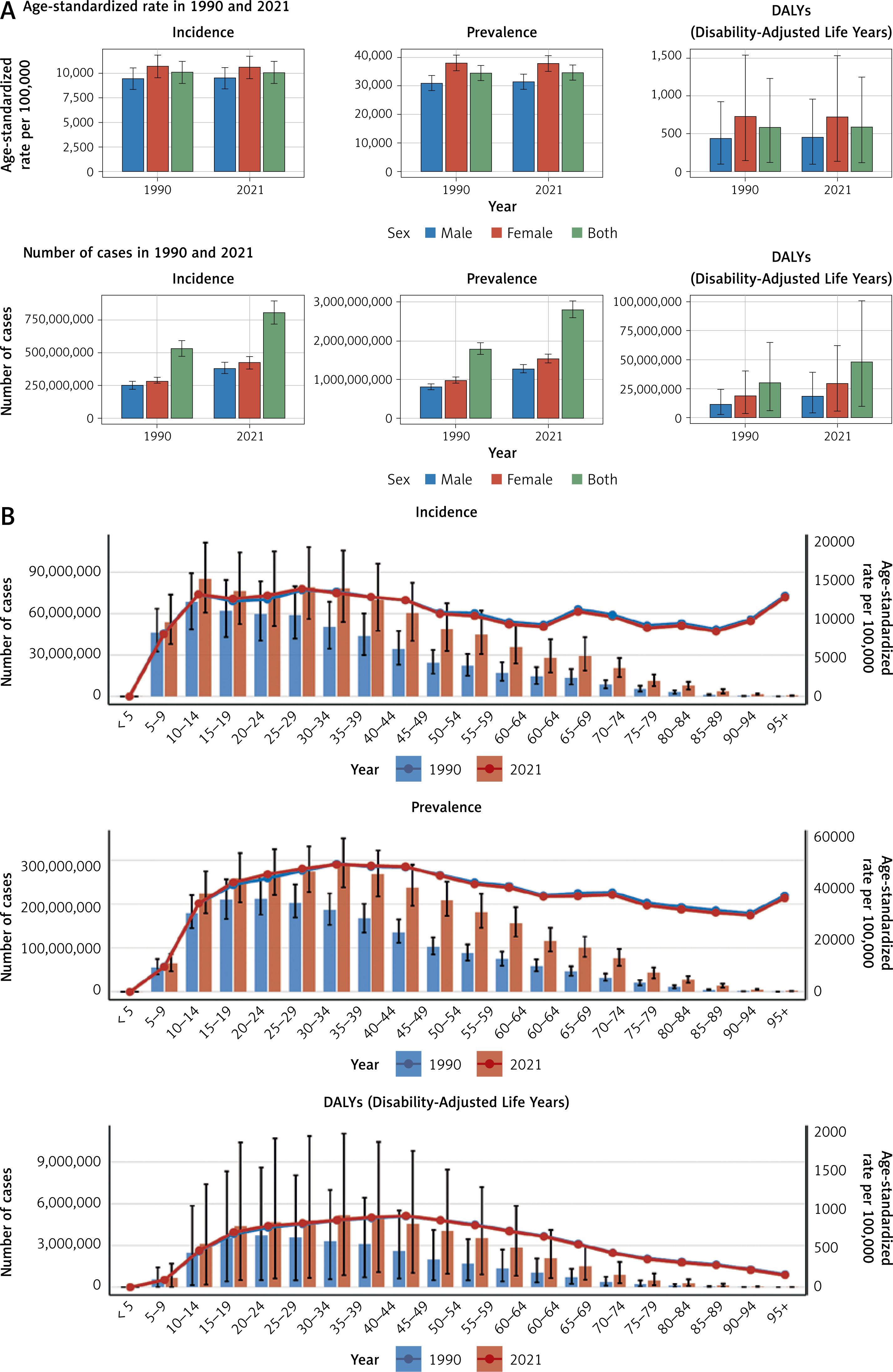
From 1990 to 2021, the global burden of headache consistently increased across all sexes and age groups, driven mainly by population growth and aging. Females consistently exhibited a higher disease burden than males across all indicators. In 2021, the female-to-male ratios were 1.60 : 1 for incidence, 1.21 : 1 for prevalence, and 1.12 : 1 for DALYs, underscoring the persistent predominance of headache disorders among women. The global burden was predominantly concentrated in individuals under 74 years of age, with incidence and prevalence rates peaking in young and middle adulthood (notably between 25 and 54 years). However, the ASRs were consistently highest in the 70–74- and 75–79-year-old age groups, and these older groups exhibited the fastest growth in headache burden over the past three decades. These trends suggest that while the absolute number of cases is greatest among young and middle-aged adults due to demographic size, the impact and incremental increases among older adults are becoming increasingly pronounced. The persistent and significant female predominance and the acceleration of burden in the elderly emphasize the importance of age- and sex-sensitive public health strategies targeting headache management worldwide (Figure 3).
Figure 3
Comparison of age-standardised incidence rate (ASIR), age-standardised prevalence rate (ASPR), and age-standardised DALYs rate (ASDR) of global headache disorders in 1990 and 2021, by sex and age. A – Comparison of the burden of global headache disorders by sex in 1990 and 2021. B – Comparison of the burden of global headache disorders by age in 1990 and 2021
Baseline characteristics in the CHARLS
Among all 2108 participants, 349 (16.56%) had headache disorders. The mean age of the survey population was 66.56 ±5.79 years, and 1006 (47.72%) were female. A total of 1306 (61.95%) participants lived in rural areas. Notably, participants with headache showed no significant age difference compared to those without (66.50 ±5.44 vs. 66.57 ±5.86 years, p = 0.83). Significant demographic and clinical associations with headache prevalence were identified. Female participants had a markedly higher prevalence of headache (62.18% vs. 37.82% in males, p < 0.0001), representing a 1.64 -fold risk. Rural residents were more likely to experience headache compared to urban dwellers (66.19% vs. 33.81%, p = 0.08). Educational disparities were evident, with higher headache prevalence among those with lower educational attainment (p < 0.0001). Frailty emerged as a critical factor associated with headache disorders. The mean FI was significantly higher in participants with headache (0.11 ±0.07 vs. 0.09 ±0.07, p < 0.0001). When categorised, 152 (43.55%) participants with headache had pre-frailty compared to 516 (29.33%) without headache, while 179 (51.29%) had robust status compared to 1199 (68.16%) without headache (p < 0.0001).
Laboratory parameters revealed distinct patterns. Participants with headache had significantly lower serum creatinine (0.78 ±0.19 vs. 0.81 ±0.19 mg/dl, p = 0.02) and uric acid levels (4.47 ±1.29 vs. 4.64 ±1.25 mg/dl, p = 0.03). Lifestyle factors showed statistical associations: participants with headache were less likely to report smoking (25.50% vs. 33.37%, p < 0.01) or alcohol consumption (23.50% vs. 34.45%, p < 0.0001). These associations ought not to be construed as causal protective impacts, as discussed in detail below. Moreover, the sleep duration of participants with headache are reduced (6.18 ±2.06 vs. 6.45 ±1.81, p = 0.02). Comorbidity burden was significantly higher in the headache group, including depression (42.12% vs. 24.28%, p < 0.0001), hypertension (36.68% vs. 28.65%, p < 0.01), and cardiovascular disease (21.20% vs. 12.79%, p < 0.0001) (Table IV).
Table IV
Baseline characteristics of the CHARLS cohort
Associations between frailty, Frailty Index (FI), and headache
Multivariable logistic regression analysis revealed a robust and consistent relationship between frailty status and headache occurrence. In the crude model, participants with pre-frailty (Category 1) had nearly twice the odds of experiencing headache compared to robust individuals (OR = 1.97, 95% CI: 1.55–2.51, p < 0.0001), while those with frailty (Category 2) showed even higher risk (OR = 2.74, 95% CI: 1.55–4.85, p < 0.001). These associations remained significant after adjustment for covariates in Model 3, with ORs of 1.39 (95% CI: 1.03–1.87, p = 0.03) for pre-frailty. When analysed as a continuous variable, each unit increase in FI was significantly associated with increased headache risk (crude model: OR = 1.52, 95% CI: 1.30–1.76, p < 0.0001; fully adjusted Model 3: OR = 1.12, 95% CI: 0.91–1.37, p = 0.29). Quartile-based analysis revealed a distinct dose-response correlation. In the crude model, compared to the lowest quartile (Q1), participants in Q2, Q3, and Q4 had ORs of 1.26 (95% CI: 0.86–1.84, p = 0.24), 2.08 (95% CI: 1.47–2.92, p < 0.0001), and 2.52 (95% CI: 1.75–3.63, p < 0.0001), respectively. After full covariate adjustment (Model 3), the associations persisted with ORs of 1.46 (95% CI: 0.99–2.15, p = 0.05) for Q3. Q2 and Q4 showed no strong statistical significance.
Restricted cubic spline (RCS) regression analysis further elucidated the nature of the frailty-headache relationship. All models demonstrated highly significant overall associations (p-overall < 0.001 for crude model and Models 1-2; p-overall = 0.1094 for Model 3). The crude model, Model 1, and Model 2 suggested potential non-linearity (p-non-linear = 0.0038, 0.0038, and 0.003), although this became non-significant after covariate full adjustment (p-non-linear = 0.0667 for Model 3), indicating a predominantly linear relationship. The RCS curves consistently showed increasing headache probability with higher FI scores, with the 95% confidence intervals excluding the null across most of the FI range (approximately 0.1–0.6) (Figure 4, Table V).
Figure 4
Analysis of different models for the relationship between FI and probability of headache occurrence. A – Comparison of estimates of the association between FI quartiles and headache across different models. B – Dose-response relationship between headache and FI
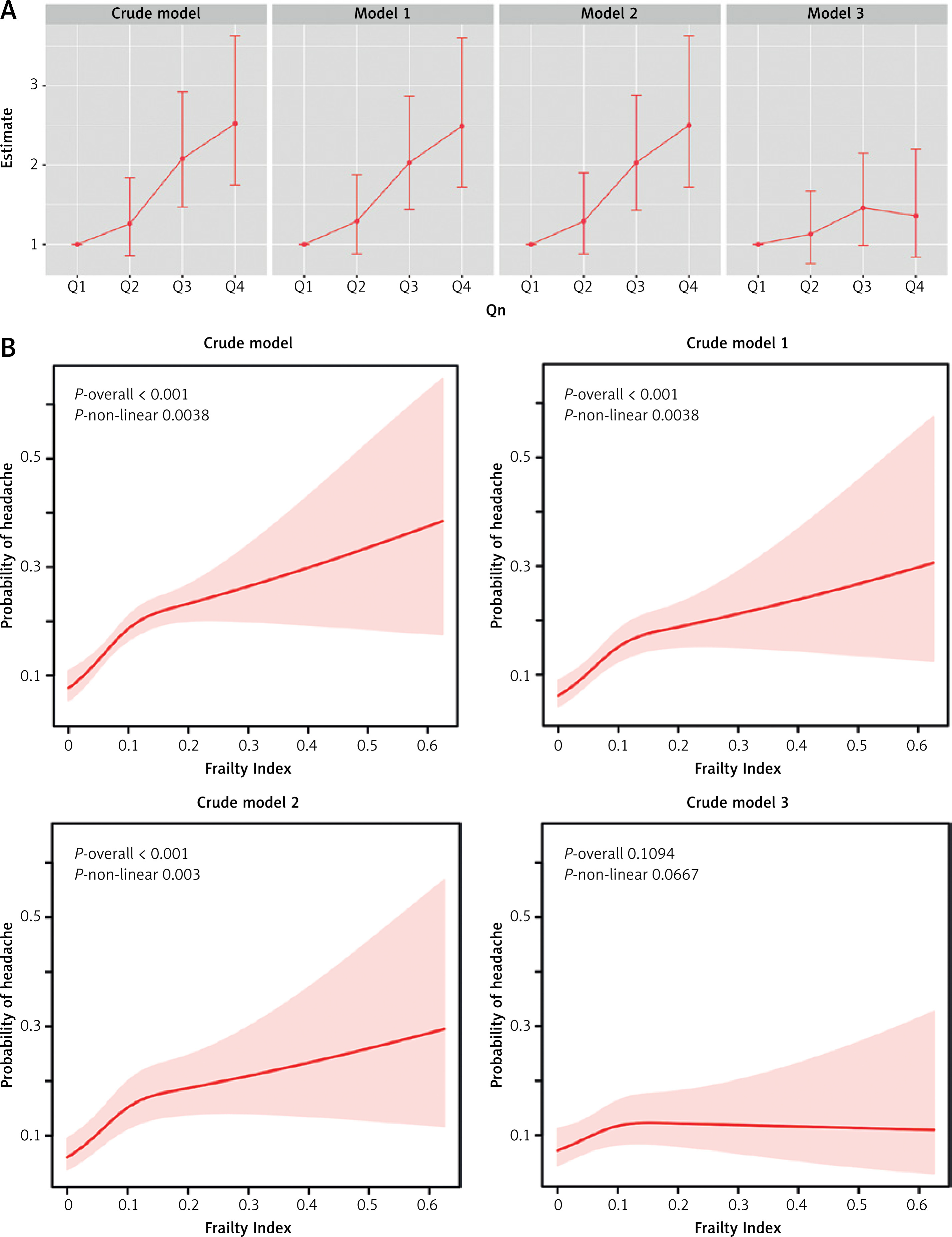
Table V
Multivariate logistic regression analyses revealed associations between frailty and new-onset headache
[i] Crude model: Frailty. Model 1: Frailty, sex, age, marital status, residence place. Model 2: Frailty, sex, age, marital status, residence place, Cr, uric, TC, LDL, TG, education, drinking, smoke. Model 3: Frailty, sex, age, marital status, residence place, Cr, uric, TC, LDL, TG, education, drinking, smoke, CVD, hypertension, diabetes, stroke, depression, night.
Subgroup analyses
Comprehensive stratified analyses across 11 demographic and clinical characteristics demonstrated that the association between frailty and headache occurrence was remarkably consistent across most subgroups, with few significant interactions observed. Table analysis revealed that nearly all subgroups maintained statistically significant positive associations. Among females, a strong dose-response relationship was evident across frailty quartiles (Q3: OR = 2.253, 95% CI: 1.436–3.620, p < 0.001; Q4: OR = 2.721, 95% CI: 1.683–4.487, p < 0.0001), with a highly significant trend (p < 0.0001). In contrast, males showed a more attenuated pattern, with Q2 demonstrating no significant association (OR = 1.063, 95% CI: 0.604–1.888, p = 0.832), although the interaction was not statistically significant (p = 0.835). Subgroup analysis of sex stratification across different frailty groups showed stronger associations in females (character = 2: OR = 2.060, 95% CI: 1.177–3.487) compared to males (character = 2: OR = 1.751, 95% CI: 0.707–3.750), both with p < 0.001. Lifestyle factors demonstrated notable patterns. Non-smokers exhibited stronger frailty-headache associations than smokers, with Q4 showing OR = 2.169 (95% CI: 1.425–3.340, p < 0.001) versus OR = 3.480 (95% CI: 1.714–7.362, p < 0.001), respectively. Similarly, non-drinkers showed more robust associations (Q4: OR = 2.373, 95% CI: 1.563–3.652, p < 0.0001) compared to drinkers (Q4: OR = 2.470 [1.178, 5.279], 95% CI: 1.178–5.279, p = 0.017), although interaction p-values remained non-significant (p = 0.736 for smoking, p = 0.993 for drinking). Comorbidity analyses showed that participants without cardiovascular disease, dyslipidaemia, or diabetes maintained stronger frailty-headache associations. For instance, the effect size was 2.514 (character = 2: 95% CI: 1.360–4.432, p = 0.002) in patients without CVD, versus 1.063 (character = 2: 95% CI: 0.472–2.268, p = 0.877) in patients with CVD. Age-stratified subgroup analysis demonstrated remarkable consistency across age groups. In the robust group, all showed p < 0.001 except for the 80+ group (robust: OR = 0.375 [95% CI: 0.054–3.164, p = 0.320]), probably due to the smaller sample size. The interaction p-value was 0.58. Additionally, individuals without depression showed a stronger association compared to those with depression (Q4: OR = 1.440 [95% CI: 0.850–2.388, p = 0.165 vs. OR = 1.816 (95% CI: 0.564–8.099, p = 0.363). The interaction was not statistically significant (p = 0.498) (Table VI).
Table VI
A – Subgroup analysis of the association between new-onset headache disorders and FI
B – Subgroup analysis of the association between new-onset headache disorders and different health statuses
C – Subgroup analysis of the association between new-onset headache disorders and FI quartiles
ROC prediction model
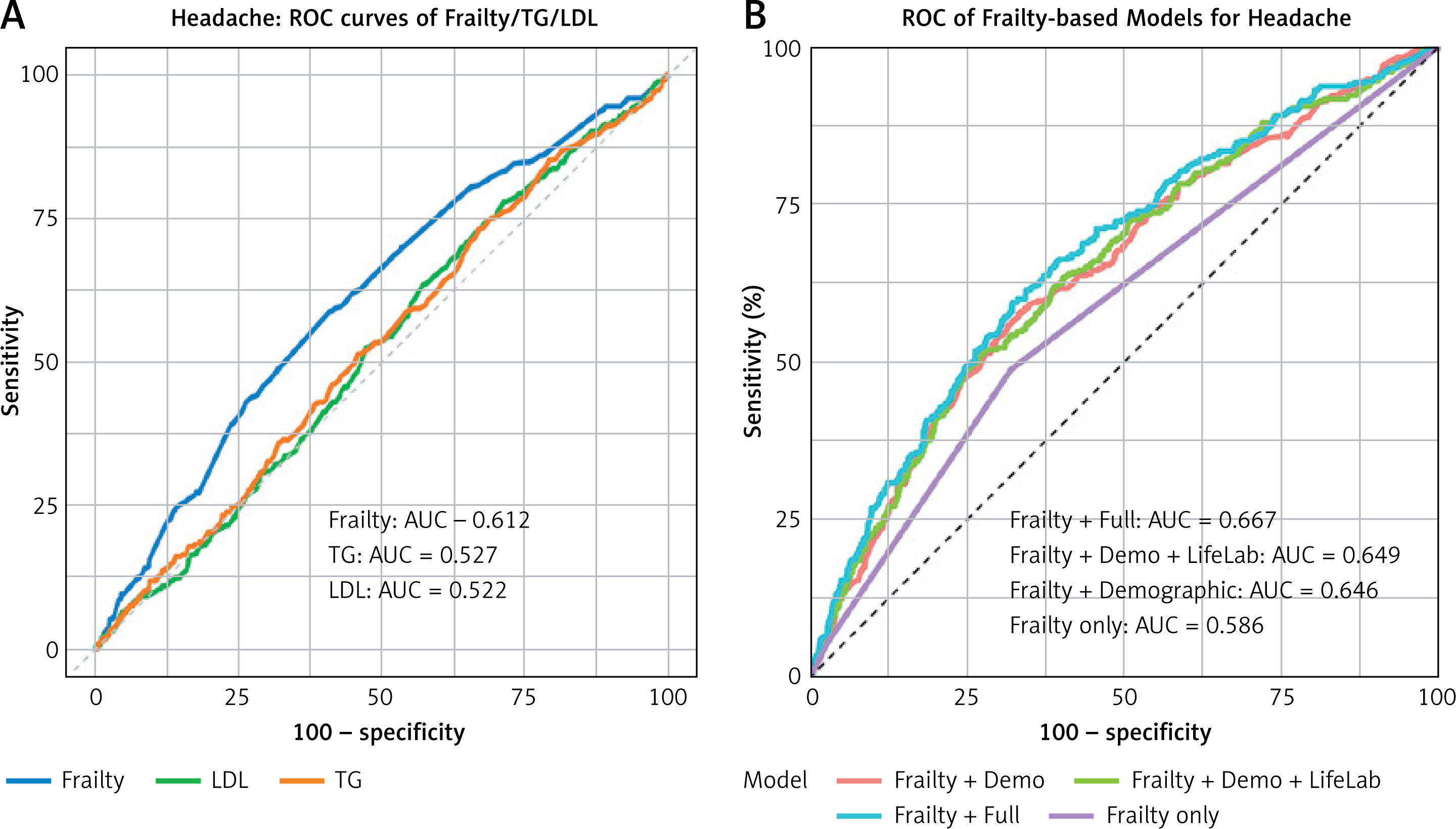
Individual variable performance assessment through ROC curve analysis revealed modest but clinically relevant discriminative abilities. In Figure 5 A, Frailty demonstrated the strongest predictive performance, with an AUC of 0.612, indicating fair discriminative ability. Lipid parameters showed weaker individual performance, with TG showing an AUC of 0.527 and LDL achieving an AUC of 0.522, both marginally above chance levels. In Figure B, the Frailty + Full Adjust model exhibits the strongest predictive performance, with an AUC of 0.667. This is followed by the Frailty + Demo + LifeLab and Frailty + Demographic models, which have AUC values of 0.649 and 0.646, respectively. The Frailty only model shows the weakest performance, with an AUC of just 0.586. The above analysis sufficiently demonstrates the important predictive role of frailty in headache (Figure 5).
Mendelian randomisation (MR) analysis
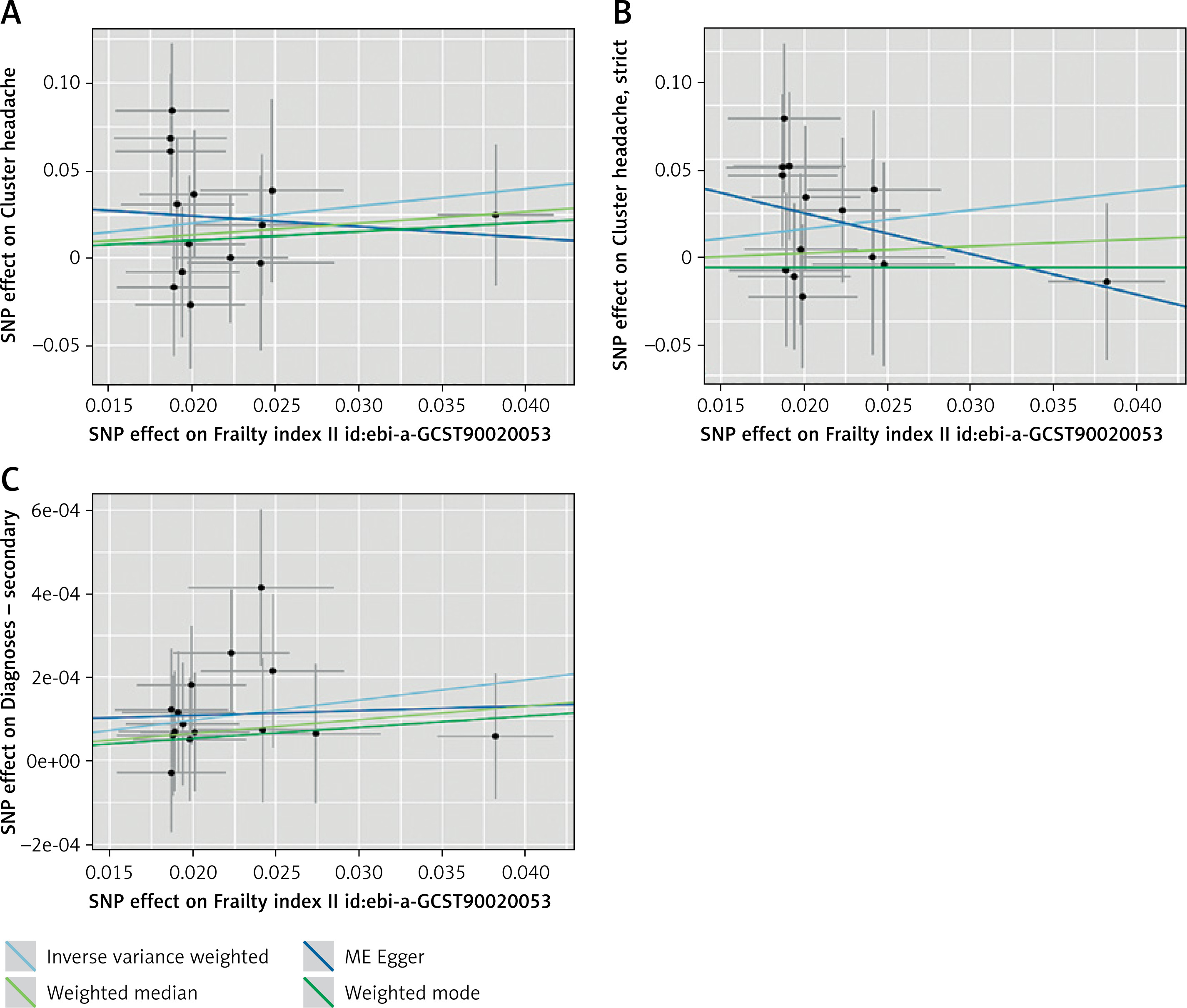
Bidirectional two-sample MR analysis yields strong evidence of causal associations between frailty and headache disorders. The research used multiple genetic instruments and validation cohorts to draw causal inferences about the associations between frailty and headache disorders after adjusting for confounding and reverse causation. Forward MR analysis: primary IVW analysis showed positive causal associations across multiple cohorts. For the main FI exposure (ebi-a-GCST90020053), the OR for headache was 1.90 (95% CI: 1.59–2.27, p = 4.75 × 10⁻¹¹), indicating that genetically predicted frailty significantly increases headache risk. Consistency was observed across different frailty genetic instruments, with ORs ranging from 1.41 to 1.90 across various exposure datasets, all achieving genome-wide significance (p < 5 × 10⁻⁸). The robustness of these findings was confirmed through multiple complementary MR methods. MR-Egger regression yielded consistent directional effects (OR = 1.15, 95% CI: 0.61–2.19, p = 0.66), while weighted median (OR = 1.50, 95% CI: 1.15–1.96, p = 0.003) and weighted mode (OR = 1.41, 95% CI: 0.93–2.14, p = 0.14) approaches supported the primary findings. The consistency across methods strengthens confidence in the causal inference. Reverse MR analysis: Bidirectional analysis revealed evidence for reverse causation, with headache also causally influencing frailty development. IVW analysis showed OR = 1.15 (95% CI: 1.05–1.25, p = 0.002) for the effect of genetically predicted headache on FI, suggesting a bidirectional causal relationship. This finding was supported by weighted median analysis (OR = 1.09, 95% CI: 0.96–1.23, p = 0.19) and weighted mode (OR = 1.06, 95% CI: 0.89–1.26, p = 0.55). Sensitivity analyses: Comprehensive sensitivity testing confirmed the validity of causal inferences. Cochran’s Q test indicated no significant heterogeneity across instrumental variables (p > 0.05 for all analyses), supporting the assumption of homogeneous causal effects. MR-Egger intercept tests showed no evidence of directional pleiotropy (intercept p > 0.05), validating the instrumental variable assumptions. Leave-one-out analysis demonstrated that no single SNP drove the overall causal estimates, with effect sizes remaining consistent after sequential removal of each genetic variant (all p < 0.001). Pleiotropy assessment: MR-PRESSO global test detected no significant horizontal pleiotropy (p > 0.05), and no outlier SNPs were identified that could bias the causal estimates. The symmetrical distribution of SNP effects in funnel plots further supported the absence of systematic bias. These findings strengthen confidence that the observed associations reflect true causal relationships rather than confounding through pleiotropic pathways (Figure 6).
Figure 6
MR analysis: investigation of the genetic causal association between FI and cluster headache as well as secondary diagnoses. A – Genetic causal association between FI and cluster headache. B – Genetic causal association between FI and strictly defined cluster headache. C – genetic causal association of FI with secondary diagnosis
Discussion
This is the first large, population-based study that systematically investigates the bidirectional relationship between frailty and new onset headache disorders, and we demonstrate strong associations with important clinical and public health relevance. Our multi-method approach confirms that frailty acts as a predictive risk factor for headache onset, while also providing evidence that headache may accelerate frailty progression, creating a pathophysiological feedback loop [22–25].
Against the backdrop of global aging, the high prevalence and significant adverse impacts of frailty underscore the crucial value of research and interventions targeting this condition [26–29]. Our results show that frailty represents a broad, previously unknown high-risk factor for developing new-onset headache disorders among individuals from different populations. Interestingly, the well-established dose-response relation exists across quartiles of FI (highest quartile almost 2-fold increased risk for new headache onset, OR = 1.36, 95% CI: 0.84–2.20), and this is consistent across different analytical models and populations, and suggests a biological relationship that puts predisposes frail individuals in a state of predisposition to onset of new headache, rather than being correlated to pre-existing headache conditions. Analysing the relationship between FI and new-onset headache using restricted cubic splines showing linear relationships between FI scores and new onset headache probability, we provide tools for preventive clinical practice. The predominantly consistent increase in risk for headache development from approximately 8–14% at lowest FI to 18–24% at highest levels, provide clear stratification of individuals at risk for onset of new headache, and the gradient effect suggests that even small improvements in frailty status could lead to a notable reduction in new-onset headache burden, thus being a potential target for focused primary prevention interventions [30]. Perhaps most importantly, our MR analysis provides evidence for causality in both directions between frailty and new-onset headache disorders. Strong forward causation (frailty ® new headache onset: OR = 1.90, 95% CI: 1.59–2.27) and weaker but significant reverse causation (new headache ® frailty progression: OR = 1.15, 95% CI: 1.05–1.25) suggest that there is a complex pathophysiological cycle where frailty predisposes to new headache onset, which in turn accelerates frailty progression.
Such a two-way relationship illuminates possible mechanistic processes underlying frailty as the cause of headache onset. Frailty, which is a chronic inflammatory, oxidative stress, mitochondrial dysfunction and dysregulated responses of stress may reveal a neuroinflammatory milieu that lowers the headache initiation threshold [31]. It is possible that the pathobiological substratum that causes emergent headache disorders is the inflammatory cascade triggered by frailty with up-regulation of such cytokines as IL-6 and TNF-K [32–35]. Cardiovascular diseases (CVDs) and frailty are tightly connected, but one of the most critical links is observed between CVDs and vascular endothelial dysfunction, because the latter causes impaired vascular regulatory capacity [36]. Cerebral blood perfusion is also impaired by the reduced vascular regulatory capacity. Aboriginal loss of vascular functionality in old age may trigger abnormal response to stress stimuli and thus lead to headache [37]. Oestrogen withdrawal is one of the leading causes of menstrual migraine. Load variations in oestrogen levels have a direct influence on the liberation of serotonin receptors and calcitonin gene-related alacrity (CGRP), and it contributes to frail older women [38].
These processes can be age-dependent. In addition, frailty-related changes in the vascular sclerosis and immunosenescence increases the role of inflammatory and vascular variables in the pathogenesis of headache, as seen among elderly individuals [39]. Moreover, our comprehensive subgroup analyses found significant differences in the risk of new-onset headache disorders between elderly individuals, so that personalised prevention plans can be used [40–42]. Additionally, frailty-related changes in the pathways of pain processing, as seen through central sensitisation and dampened descending inhibition, could be more likely to occur. Our findings are in line with the established gender differences, as far as susceptibility to pain and stress are concerned, where females have regular dose-response relationships in the occurrence of new headaches, across all the quartiles of frailty, compared to males, who have weakened effects when their frailty levels are high [43]. The large gender difference relates to the well-established sex differences as far as susceptibility to pain and stress is concerned. This requires sex-customised primary prevention strategies. The patterns of lifestyle interaction give insights into new-onset prevention.
The consistent frailty correlations across all population demographics to new-onset headache indicate the value of routine frailty screening as a population-wide screening measure of potential headache-prone, asymptomatic people needing preventive care [44–48]. The findings on bidirectional causality support preventive care models in which frailty is targeted prior to the onset of headache disorders. In other words, preventing the cycle of the frailty headache may result in better outcomes than the current status quo of treating headache disorders that have already developed [49–51]. From a population health standpoint, the large effect sizes observed here suggest that interventions targeting the prevention of frailty may yield important new-onset headache prevention benefits as well. Exercise programs, optimising nutrition, and comprehensive geriatric assessment represent well-established strategies for preventing frailty. These strategies may also serve as effective approaches to primary prevention of headache disorders with broad population impact.
Our results identify several important new research priorities concentrated on the prevention of new-onset headache. Longitudinal studies following frailty progression and development of new onset headache can inform about optimal opportunities for intervention to prevent new onset headache. Mechanistic studies investigating how frailty pathways of pathogenesis lead to new onset headache will identify opportunities to identify frailty pathways as targets for prevention of new-onset headache [52–54]. Clinical trials to prevent frailty will represent a high priority investigation [55]. Specifically, the efficacy of exercise programs, oral nutritional supplementation, and comprehensive geriatric assessment protocols to prevent new-onset headache should be evaluated. These studies will identify evidence-based recommendations for the development of integrated frailty headache prevention programs [56].
Despite these important findings, several limitations should be acknowledged. First, the measurement of headache did not distinguish between specific subtypes. However, the biological associations between frailty and different headache subtypes may be heterogeneous. For instance, migraine is often accompanied by neuroinflammatory responses, and its underlying mechanism of association with frailty may differ from that of nonspecific headache. Second, this study did not further differentiate between “recent acute headache” and “chronic headache”, and the strength of the association between headache and frailty may vary by disease duration. Third, although this study observed a stronger association between frailty and headache among non-smokers and non-drinkers, this does not imply a causal “protective” effect of smoking or alcohol consumption. Several non-causal explanations are plausible: (1) Some participants may have actively quit smoking or drinking due to headache symptoms, leading to a lower proportion of smokers/drinkers among individuals with headache. (2) Frail individuals who smoked or drank may have had a higher loss-to-follow-up rate due to other comorbidities (e.g., cardiovascular diseases), resulting in a reduced proportion of this subgroup in the follow-up sample. Fourth, this study has limitations related to trans-ethnic analysis: the CHARLS cohort focuses on middle-aged and older Chinese populations, while the MR analysis relies on GWAS data from individuals of European ancestry. Although the MR findings support a biological causal relationship between frailty and headache, differences in genetic backgrounds, environmental factors, and definitions of disease phenotypes across ethnic groups may exist, meaning that the strength of the causal association validated by MR may not be fully applicable to the Chinese population.
All the aforementioned limitations may introduce potential biases into the study results. By improving the diagnosis of headache subtypes, distinguishing the duration of headaches, and rehousing the practice of the MR analysis with the GWAS data of the subjects of East Asian ancestry, the generalisability of causal inferences to the Chinese and other populations of East Asians would be improved in future research. Such attempts will also support the validity and the permanence of the findings of this study.
In conclusion, this investigation demonstrates frailty as a major, bidirectionally causal risk factor for new-onset headache disorders, with important implications for preventive clinical practice and public health policy. The strong associations across different populations and genetic data supporting causality provide impetus to move toward integrated frailty assessment and headache prevention. The predictive modelling developed in this investigation offers practical clinical tools to identify individuals at risk before the occurrence of new-onset headache. Given the projected aging of populations worldwide, identifying and preventing frailty may be a viable approach to primary headache prevention, and it might prevent cycles of pain-related functional decline, with the potential to affect millions of individuals who are at risk of developing debilitating headache disorders.