Prolactinomas (> 50% of pituitary adenomas) impair fertility and gonadal function via hyperprolactinemia, mass effects, or both [1, 2]. Cabergoline is now a first-line pharmacological choice, also serving to manage restless legs syndrome and Parkinson’s disease, inhibit lactation after mid-trimester pregnancy loss, enhance fertility in polycystic ovary syndrome, and prevent ovarian hyperstimulation syndrome [3–6]. However, emerging reports have highlighted its serious side effects including impulse control disorders and manic episodes [7, 8]. The studies reported that the use of cabergoline in hyperprolactinemia significantly increased the risk of mild-to-moderate tricuspid regurgitation and aortic valve calcification compared to non-use [9, 10]. Based on Italian pharmacovigilance data, cabergoline was linked to pathological gambling, reinforcing its known impulse control disorder risk among dopamine agonists [11]. Cabergoline was also identified as a signal for tachyphylaxis, a rapid decrease in response to a drug, highlighting a potential, previously less-documented risk [12]. Given that clinical trials on cabergoline are often limited by small samples and short follow-up, a systematic real-world pharmacovigilance analysis is needed to fully evaluate its long-term safety. The FDA Adverse Event (AE) Reporting System (FAERS) is a global spontaneous reporting system on AEs [13].
This study leveraged standardized data from the FAERS to conduct a comprehensive pharmacovigilance analysis and characterize the safety signal profile of cabergoline in a real-world setting.
Methods
Data sources and extraction
This was a retrospective, descriptive pharmacovigilance study using the FAERS database. Disproportionality analysis was employed to detect and quantify adverse event signals associated with cabergoline. The FAERS database, updated quarterly, collects AE reports, medication errors, and product quality complaints from healthcare professionals, consumers, and manufacturers. We extracted cabergoline AE reports from Standardized MedDRA Queries files for Q1 2004 to Q3 2024. The FAERS database ASCII files were downloaded and extracted annually. Each file comprises seven sections linked via PRIMARYID. Following FDA deduplication guidelines, the latest FDA receipt date defined the primary case per CASE_ID, with PRIMARYID as a tie-breaker. Drug names were standardized using Medex_UIMA_1.3.8. Reports were then filtered to retain only those listing cabergoline as the primary suspect drug, excluding irrelevant or compound entries. Adverse events were classified according to MedDRA (v25.1) preferred terms (PTs) and system organ classes (SOCs).
Disproportionality analysis
Disproportionality analysis employs frequency-based and Bayesian methods to quantify signal strength via a 2×2 contingency table (Supplementary Table SI), with no current gold standard. Frequency-based approaches are sensitive but less specific, while Bayesian methods offer greater specificity and stability at the cost of sensitivity. In this study, we applied the reporting odds ratio (ROR) and proportional reporting ratio (PRR) as frequency-based methods, and the Bayesian confidence propagation neural network (BCPNN) and empirical Bayes geometric mean (EBGM) as Bayesian methods. Positive signals were defined as: ROR (95% CI lower limit > 1 and reports ≥ 3), PRR (PRR ≥ 2, χ2 ≥ 4, reports ≥ 3), EBGM (EBGM05 > 2), and BCPNN (IC025 > 0). Higher values indicate stronger drug–AE associations. A signal was considered confirmed only when detected by all four algorithms. The requirement for a signal to be detected by all four disproportionality algorithms was deliberately chosen to minimize false positives and ensure the highest level of robustness. Detailed formulas and thresholds are provided in Supplementary Table SII. All analyses were performed using R software version 4.4.1.
Classification and prioritization of relevant disproportionality signals
AEs significantly associated in all four disproportionality analyses (ROR, PRR, BCPNN, EBGM) were prioritized using a semiquantitative scoring system (Supplementary Table SIII). Total scores of 0–2, 3–5, and 6–8 corresponded to low, moderate, or high priority, respectively, based on clinical relevance [using the European Medicines Agency’s lists of Important Medical Events (IMEs) and Designated Medical Events (DMEs)], reporting rate, signal stability, and reported case fatality rate. Given the challenge of distinguishing drug-related mortality from disease progression in oncology, the highest score was assigned only when the fatality rate exceeded 50%. This study adhered to the SQUIRE [14] and TITAN [15] reporting guidelines, employing a rigorous methodology to ensure reliable and reproducible findings.
Statistical analysis
Demographic characteristics (age, sex, weight), administrative details (report source and country), time to onset (interval between therapy initiation and adverse event), and patient outcomes were extracted from each report. Data were processed and analyzed using R version 4.4.1.
Results
Characteristics of AE reports for cabergoline
Of the AE reports, 2,951 cited cabergoline as the primary suspect drug (Figures 1 A, B, Table I). Annual reports peaked in 2007 (n = 220) and reached a low in 2022 (n = 68). Most reports involved female patients (53.1%). Weight and age data were largely missing (77.2% and 35.4%, respectively), but among available data, most patients weighed 50–100 kg (17.8%) and were aged 18–64 years (47.8%). Physicians submitted the majority of reports (39.2%), and the United States contributed the most reports (17.6%). Regarding outcomes, 53.3% were classified as “other serious important medical events”, and 4.1% resulted in death. Time to onset varied widely: the highest number of cases occurred after > 360 days (n = 320), followed by the first 90 days (n = 156), with the lowest frequency (n = 12) observed between 151 and 180 days.
Figure 1
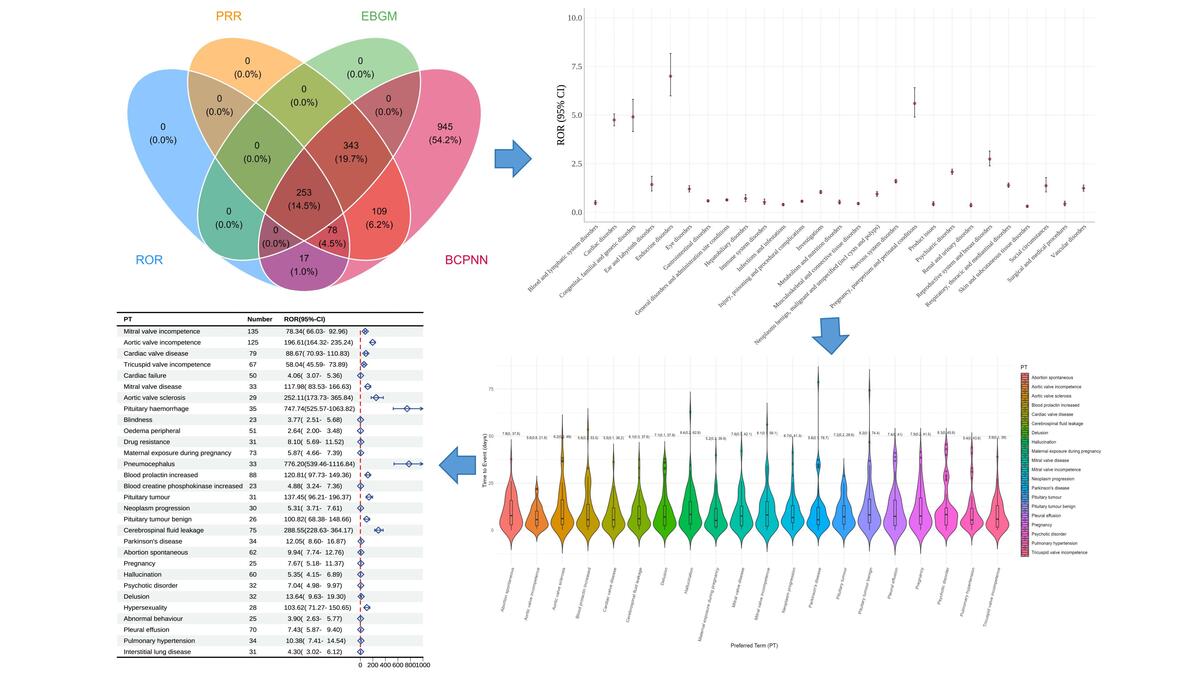
Number of reports in different years (A), time to onset of all adverse events (AEs) (B), signal strength of AE at the system organ class (SOC) level (C) Top 30 signal strength of AEs ranked by reporting odds ratio (ROR) at the preferred term (PT) level (D) And time to onset of the top 20 significant signal strengths of PTs ranked by ROR (E) associated with cabergoline
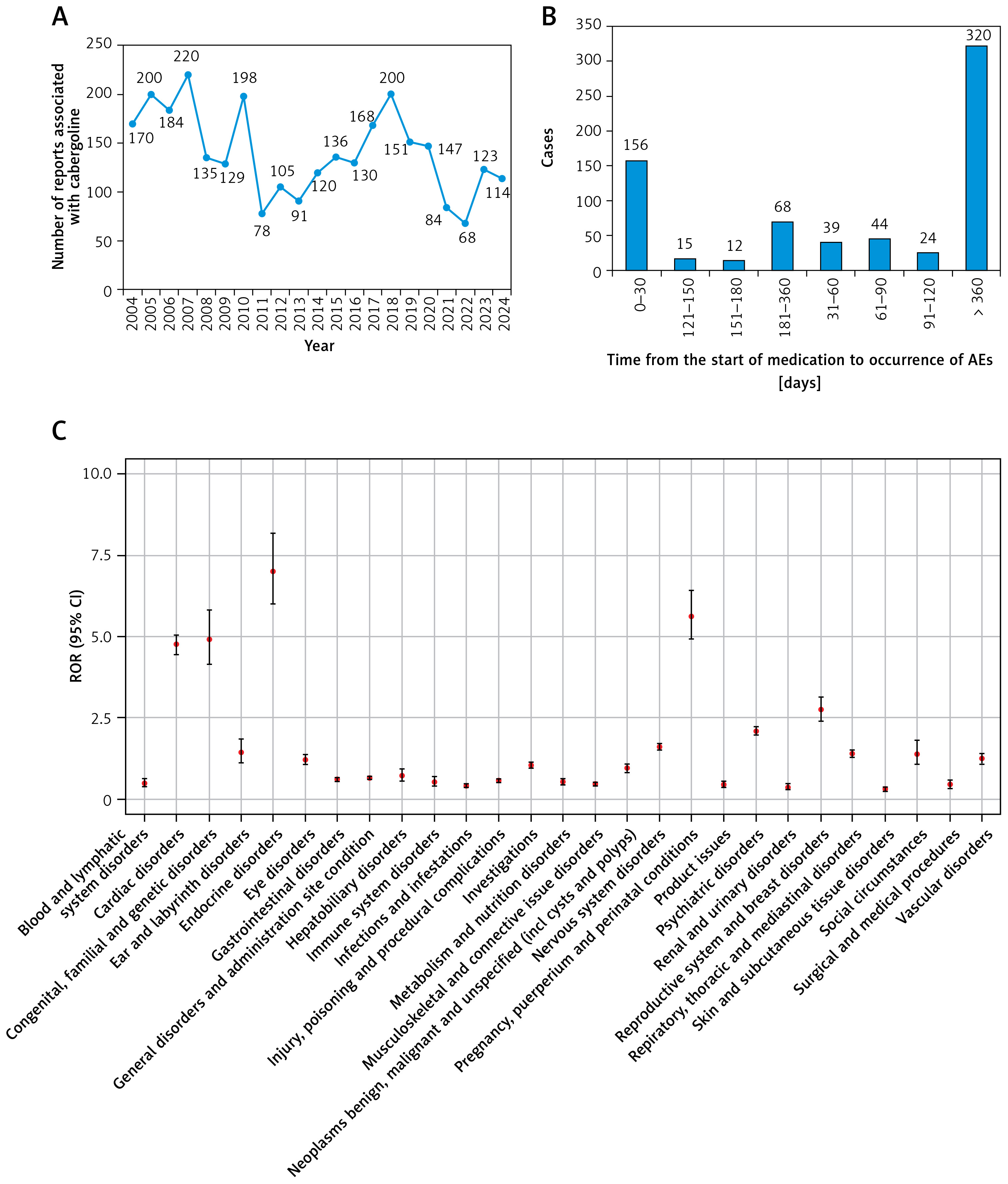
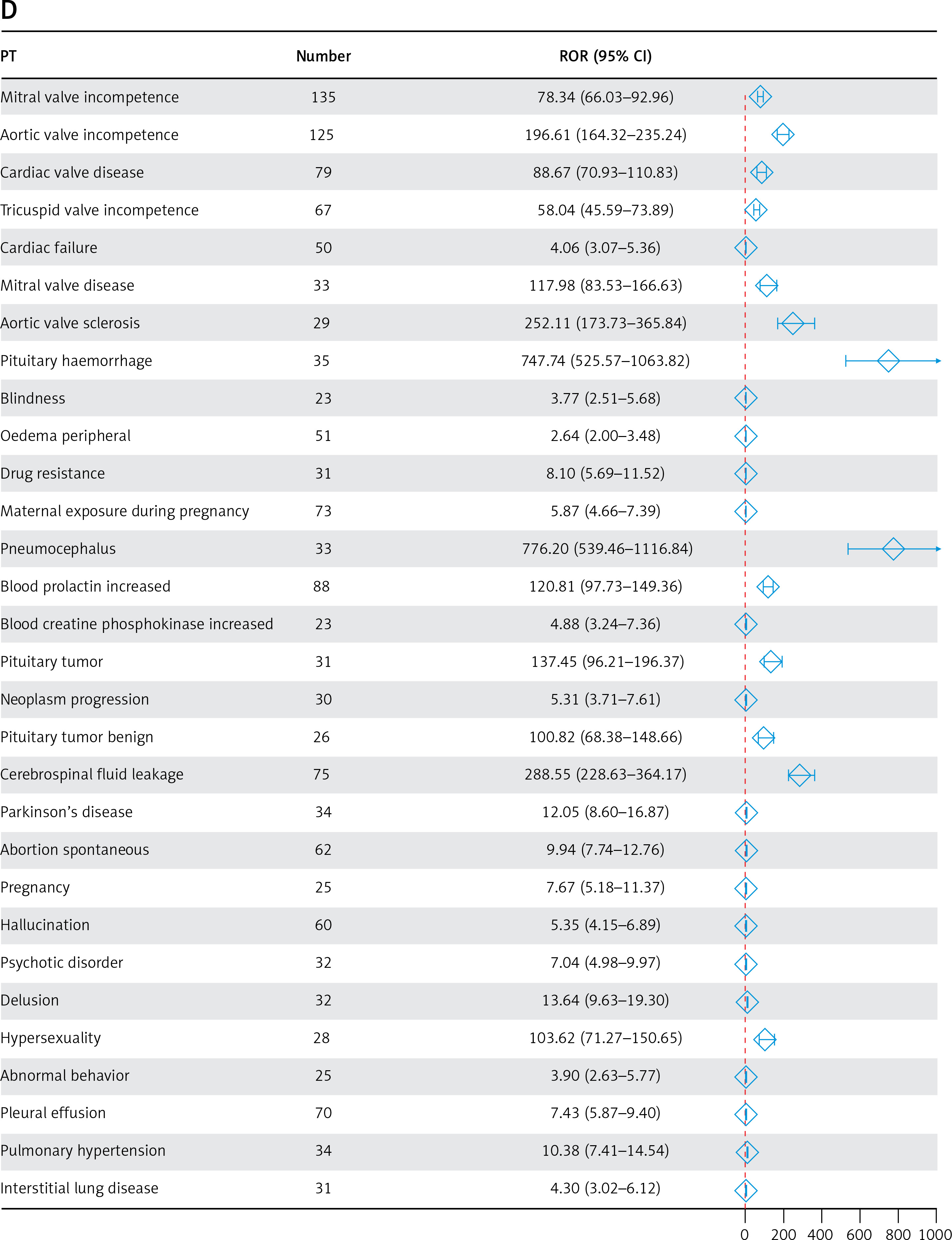
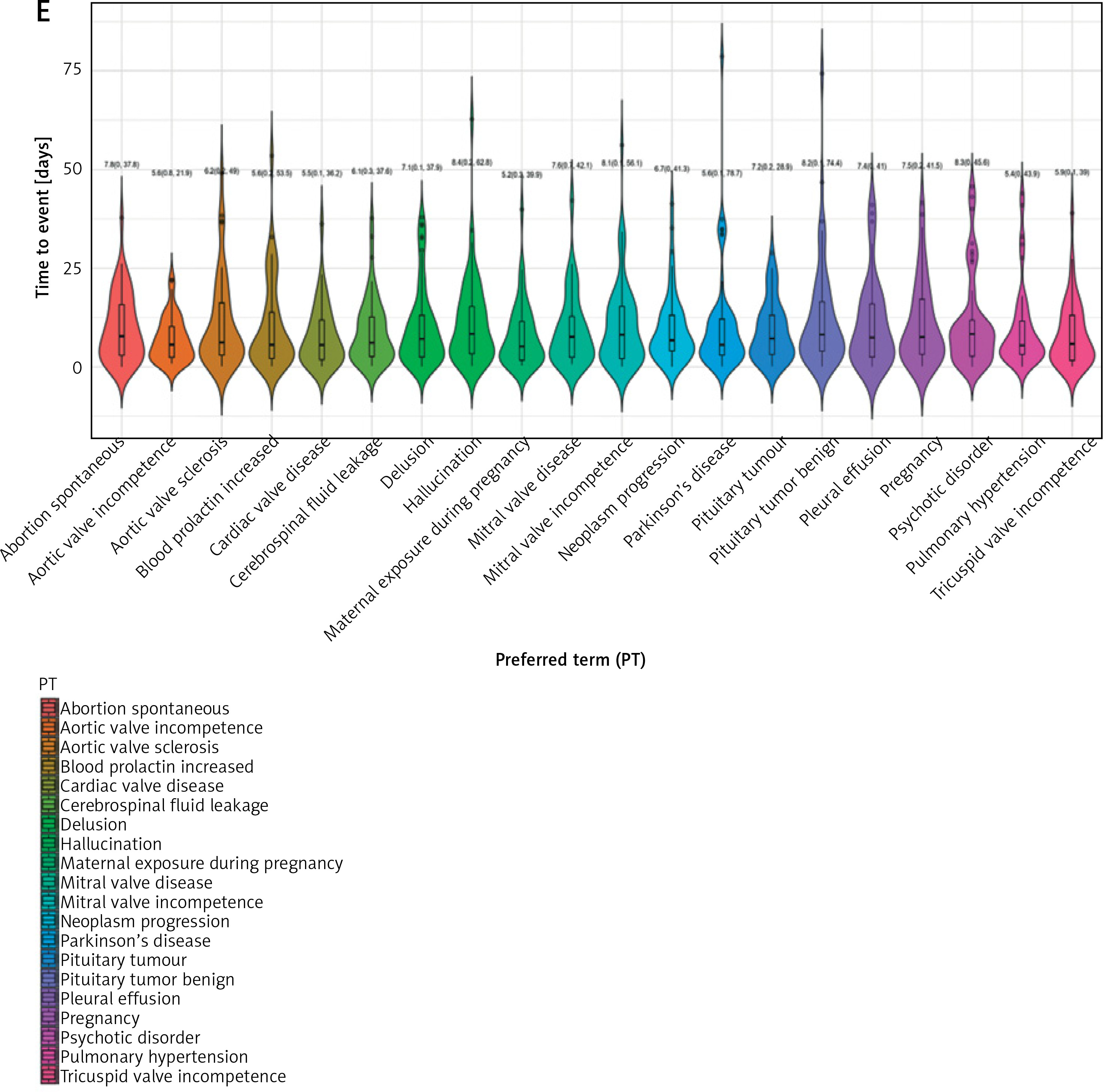
Table I
Characteristics of adverse event reports related to cabergoline from the FAERS database (N = 2951)
Signal detection at the SOC level for cabergoline
Disproportionality analysis identified significant safety signals for cabergoline across multiple organ systems (Figure 1 C, Supplementary Table SIV). Notably, strong associations were found in five key areas: Cardiac disorders (ROR = 4.75), pregnancy, puerperium and perinatal conditions (ROR = 5.60), endocrine disorders (ROR = 7.00), reproductive system and breast disorders (ROR = 2.74), congenital, familial, and genetic disorders (ROR = 4.91).
Signal detection at the PT level for cabergoline
At the PT level, 253 significant signals were identified. The top 30 AEs by ROR are shown in Figure 1 D and Supplementary Table SV. The top three AEs with the highest RORs were pneumocephalus (ROR = 776.2), pituitary hemorrhage (ROR = 747.74), and cerebrospinal fluid leak (ROR = 288.55). Notably, cardiac disorders were prominent, with aortic valve incompetence (ROR = 196.61) and mitral valve incompetence (ROR = 78.34). In endocrine disorders, pituitary hemorrhage and pituitary tumor signals indicated potential severe endocrine disruption. For pregnancy-related conditions, spontaneous abortion (ROR = 9.94) and maternal exposure during pregnancy (ROR = 5.87) highlighted teratogenic signals with cabergoline. Psychiatric AEs such as hallucination and psychotic disorder also featured prominently, pointing to possible psychiatric symptom exacerbation. Respiratory disorders including pleural effusion and pulmonary hypertension further suggested significant respiratory complications. Several AEs not currently on the drug label were identified, including the top three signals above, as well as aortic valve sclerosis (ROR = 252.11), pulmonary hypertension (ROR = 10.38), elevated creatine phosphokinase (ROR = 4.88), and blindness (ROR = 3.77).
Clinical prioritization evaluation
The complete list of AEs, including disproportionality analyses and overall scores, is provided in Supplementary Table SVI. Of these, 45.5% (115 cases) were rated as moderate clinical priority (total score 3–5) and 54.5% (138 cases) as low clinical priority (total score 2). Pulmonary fibrosis and intraventricular hemorrhage received the highest score of 5. Among clinically relevant events, 105 PTs (41.5%) were identified as IMEs, and four (1.5%) as DMEs: pulmonary fibrosis, pulmonary hypertension, blindness, and hemolytic anemia. The remaining 144 (56.9%) cases had no clinical relevance. Among rare AEs, pneumocephalus, elevated creatine phosphokinase, and aortic valve sclerosis were low priority, whereas pituitary hemorrhage, cerebrospinal fluid leak, pulmonary hypertension, and blindness were moderate priority.
In summary, the most clinically significant signals identified at the PT level can be categorized as follows: (i) DMEs of high clinical priority, including pulmonary fibrosis, pulmonary hypertension, blindness, and hemolytic anemia, all of which scored highest in our prioritization analysis and warrant particular vigilance; (ii) extremely strong disproportionality signals for rare but serious conditions directly related to the drug’s mechanism of action and indication, such as pneumocephalus, pituitary hemorrhage, and cerebrospinal fluid leak; and (iii) signals not previously documented in the product label, such as aortic valve sclerosis and elevated creatine phosphokinase, which suggest potential cardiotoxic and myotoxic effects requiring further investigation. These findings collectively underscore the need for heightened clinical awareness, particularly regarding fibrotic, hemorrhagic, and previously underrecognized events in patients receiving cabergoline.
Time-to-onset analysis
This study analyzed the timing of various cabergoline-associated AEs categorized by PTs (Figure 1 E). The AEs ranged from cardiovascular to neurological disorders, with onset times varying widely from 1 day to over 777 days. The median time to onset also differed significantly across AE types. For instance, pulmonary hypertension and interstitial lung disease typically developed gradually, whereas cerebrospinal fluid leakage and spontaneous abortion often occurred acutely. Some AEs, such as elevated prolactin levels and pituitary tumors, appeared within specific timeframes.
Univariate and multivariate regression analysis of AEs for cabergoline
Univariate analysis identified several factors significantly associated with AEs (Table II). Age was positively associated with AEs (OR = 1.06). Patients weighing 60–100 kg had lower odds of AEs versus those < 60 kg (OR = 0.26), whereas weight ≥ 100 kg was not significantly associated with AEs (OR = 1.56). Male sex (OR = 2.45) and reports by health professionals (OR = 2.88) were also associated with higher odds. Madopar (OR = 3.95) and levodopa (OR = 2.69) were both significantly associated with AEs in univariate analysis. After adjusting for confounders in multivariate analysis, age remained significant (OR = 1.06). The association for weight 60–100 kg was slightly attenuated but remained significant (OR = 0.27), while weight ≥ 100 kg remained non-significant. Previously significant associations for male sex and health professional reporters became non-significant, suggesting confounding by these variables. All concomitant drugs were non-significant in the adjusted model.
Table II
Univariate and multivariate regression analysis of adverse events for cabergoline. Footnote: multivariate logistic regression with any cabergoline-related AE as the outcome; all variables listed were entered simultaneously. Age was continuous (per year); sex and reporter type binary; weight categorized as <60 kg (ref.), 60–100 kg, ≥ 100 kg, or unknown; each concomitant drug coded present/absent. Missing data retained as “unknown” category; odds ratio (Ors) adjusted for all other covariates in the model
Discussion
This first large-scale study analyzed 2,951 cabergoline AE reports, identifying cardiac, endocrine, and neurological disorders as most frequent. Consistent with its endocrine-modulating effects, significant signals were also observed in pregnancy-related outcomes, such as spontaneous abortion, underscoring the need for careful consideration in women of childbearing potential. Pharmacologically, cabergoline’s bulky N(6)-substituent renders it a 5-HT2B receptor agonist, linked to valvular fibrosis [16]. Therefore, using the lowest effective dose and initiating baseline plus annual echocardiography is recommended to monitor cardiotoxicity. Although a pooled cohort of 1,662 first-trimester exposures showed no excess malformations versus controls, evidence remains low-grade [17]. Pregnancy confirmation before treatment and benefit–risk reassessment every 4–6 weeks are advised. Unlike prior reviews focused on short-term postpartum use [18, 19], our study identified severe signals such as valvulopathy, pulmonary hypertension, and pituitary hemorrhage under long-term, multi-indication cabergoline exposure, underscoring the need for systematic risk evaluation in chronic users.
Our analysis detected strong disproportionality signals for several serious events, including pneumocephalus, pituitary hemorrhage, and cerebrospinal fluid leakage. However, it is essential to interpret these signals within the clinical context of the underlying disease. In patients with invasive macroprolactinomas, these events may represent complications of the tumor itself, such as spontaneous infarction (pituitary apoplexy) or tumor shrinkage leading to a CSF leak, rather than direct drug toxicity. Furthermore, they could also be sequelae of neurosurgical interventions commonly required for these tumors. Therefore, these signals should be viewed as hypothesis-generating, highlighting potential risks in a complex patient population, and warrant further investigation in studies with detailed clinical data. In the regression analysis of FAERS reports, age emerged as a significant factor associated with the reporting of cabergoline-related AEs, emphasizing the need for enhanced monitoring in elderly patients. From a clinical perspective, these findings support the implementation of targeted monitoring strategies. For cardiac events such as aortic valve sclerosis and pulmonary hypertension, baseline echocardiography followed by annual surveillance should be considered, particularly in patients with pre-existing cardiovascular risk factors or those requiring long-term therapy. The detection of fibrocalcific valvular changes, rather than isolated regurgitation, underscores the need for a broader cardiac safety assessment. For rare but serious neurological events such as pneumocephalus and cerebrospinal fluid leakage, clinicians should maintain a high index of suspicion in patients with macroprolactinoma, especially during the initial months of treatment when rapid tumor shrinkage may occur. Patient education regarding symptoms such as new-onset headache, rhinorrhea, or visual disturbances is warranted. The identification of pulmonary fibrosis and blindness as DMEs suggests potential multi-organ fibrotic effects; therefore, periodic pulmonary function tests and ophthalmologic evaluations may be justified in patients reporting unexplained dyspnea or visual changes. Hemolytic anemia, though rare, warrants baseline and follow-up complete blood counts in susceptible individuals. These findings collectively reinforce the critical role of pharmacists and clinicians in pre-treatment counseling, early adverse event recognition, and multidisciplinary risk mitigation, particularly in elderly patients who are more vulnerable to cabergoline-related toxicity.
While previous efficacy studies of cabergoline were confined to specific populations and short-term follow-up [20, 21], our analysis revealed significant and previously underreported safety signals. Beyond confirming known cardiac valve risks, a strong signal of aortic valve sclerosis was identified, suggesting drug-induced fibrocalcific changes and supporting the need for routine echocardiographic monitoring in long-term users. Importantly, novel associations with pneumocephalus and cerebrospinal fluid leakage, potentially linked to acute tumor shrinkage mediated by D2 receptor activation [22, 23], were observed. Higher-priority signals also emerged for pulmonary fibrosis and blindness, indicating potential multi-organ fibrotic effects. Additionally, elevated creatine kinase levels suggested subclinical myotoxicity. These findings collectively reveal a more complex safety profile for cabergoline than previously recognized and highlight the necessity for vigilant, individualized patient monitoring.
This study underscores the urgent need to strengthen pharmacovigilance efforts and update prescribing guidelines for cabergoline. The identification of previously underrecognized adverse events, particularly those prioritized as DMEs such as pulmonary fibrosis, pulmonary hypertension, blindness, and hemolytic anemia, carries significant implications for the day-to-day management of patients receiving cabergoline. Our findings advocate for a shift from reactive AE management to proactive, risk-adapted monitoring. First, enhanced baseline assessment is warranted. Before initiating long-term cabergoline therapy, clinicians should consider obtaining baseline echocardiography to screen for subclinical valvular abnormalities, given the strong signals for aortic valve sclerosis and incompetence. Baseline pulmonary function tests and ophthalmologic evaluation may also be prudent, especially in patients with pre-existing risk factors, to establish a reference point for future comparisons. Second, our results support the implementation of periodic, targeted monitoring during follow-up. For instance, the emergence of signals for pulmonary hypertension and interstitial lung disease suggests that clinicians should maintain a low threshold for investigating unexplained dyspnea in long-term users. Similarly, the significant signal for elevated creatine phosphokinase highlights the value of routine muscle symptom enquiry and, where appropriate, laboratory assessment to detect subclinical myotoxicity early. For women of childbearing potential, the signals for spontaneous abortion and maternal exposure during pregnancy reinforce the critical need for consistent contraceptive counseling and prompt pregnancy testing before treatment initiation. Third, this study underscores the pivotal role of clinical pharmacists and multidisciplinary collaboration in translating these safety signals into practice. Pharmacists are uniquely positioned to conduct systematic medication reviews, identify potential drug interactions (e.g., with levodopa or Madopar, as noted in our regression analysis), and counsel patients on recognizing early symptoms of serious AEs, such as shortness of breath, chest pain, or visual disturbances. Integrating such pharmacist-led interventions into routine care pathways can facilitate early detection, improve patient adherence to monitoring schedules, and ultimately mitigate the risks associated with long-term cabergoline use. By integrating these findings into clinical guidelines and practice, cabergoline therapy can be optimized to balance its therapeutic efficacy against a more comprehensively understood risk profile.
Pharmacists enhance patient safety through medication management, error prevention, and collaboration with healthcare teams to optimize therapeutic outcomes [24]. This also highlights the pivotal role of pharmacists in early adverse event detection and the importance of comprehensive patient education regarding potential treatment risks [13, 25–27]. In clinical practice, these findings translate into actionable steps: (i) for prescribers, incorporating echocardiographic and ophthalmologic surveillance into long-term management plans; (ii) for pharmacists, conducting medication reviews to identify high-risk patients (e.g., elderly, those with cardiovascular comorbidities) and providing structured counseling on symptom recognition; and (iii) for patients, understanding the rationale for monitoring and promptly reporting new symptoms. Furthermore, multidisciplinary planning, particularly thorough preoperative assessment of the overall health condition of the patient in surgical candidates and drug reconstitution, is essential to mitigate treatment risks [28, 29]. By integrating these pharmacovigilance insights into routine care, clinicians and pharmacists can collectively enhance the safety profile of cabergoline in real-world practice.
However, several inherent limitations of the FAERS data must be carefully considered when interpreting our findings. First, spontaneous reporting systems like FAERS are subject to significant under-reporting. It is widely acknowledged that not all adverse events occurring in clinical practice are reported to the authorities. This under-reporting is often selective; mild, common, or well-known side effects are less likely to be reported, while severe, unexpected, or rare events are disproportionately submitted. Consequently, our analysis cannot be used to calculate the true incidence of any given adverse event, and the absence of a signal does not guarantee the absence of risk. Second, multiple forms of reporting bias are inherent to this data source. These include notifier bias (e.g., healthcare professionals may report events differently than patients or lawyers), media or regulatory attention bias, and channeling bias. While disproportionality analysis is robust for signal detection, it cannot fully eliminate the influence of these biases. Third, the FAERS database lacks granular clinical detail, including crucial confounding factors such as exact drug dosage, duration of therapy, patient comorbidities, concomitant medications, and adherence. Specifically, the absence of dose information is a major limitation, as it prevents us from establishing a dose-response relationship, which is a key component of causal inference in pharmacology. Therefore, while we identified strong statistical signals, we cannot definitively attribute causality or distinguish between a class effect and an idiosyncratic reaction based on these data alone. Finally, while we employed four robust algorithms to confirm signals and mitigate the risk of chance findings, disproportionality analysis remains a hypothesis-generating tool. The associations identified, particularly novel ones like pneumocephalus or elevated creatine phosphokinase, must be considered as strong signals warranting further investigation, rather than confirmed causal relationships. Future research using longitudinal cohorts, electronic health records with detailed clinical data, and mechanistic preclinical models is essential to validate these findings, establish causality, and inform clinical guidelines.
In conclusion, this pharmacovigilance study delineated the real-world safety signal profile of cabergoline, identifying novel risks of AEs across cardiac, endocrine, and neurological systems. The findings support integrating these risks into clinical practice via enhanced monitoring and patient counseling. Future prospective studies are needed to confirm causality, explore mechanisms, and guide safer, personalized cabergoline use.