Introduction
Obstructive sleep apnea (OSA) is the most common type of sleep-related breathing disorder, characterized by repeated episodes of upper airway collapse. Respiratory events, including hypopnea and apnea, result in intermittent hypoxemia and hypercapnia, thereby contributing to sleep fragmentation [1–6]. Due to pressure fluctuations inside the thorax, the organs located there are particularly prone to dysfunction [2]. From a pathophysiological standpoint, the hallmark features of OSA include oxidative stress, low-grade inflammation, and endothelial dysfunction [5, 7]. Clinically, patients often present with loud snoring, recurrent awakenings during sleep, morning headaches, excessive daytime sleepiness and cognitive impairment [3, 4, 8]. Daytime sleepiness leads to reduced quality of life as well as increased risk of motor vehicle and workplace accidents [1, 3, 4, 9]. The gold standard in OSA diagnostics is polysomnography (PSG); however, due to limited availability, cost, or patient preference, often pneumograms or home sleep studies are used [10]. The severity of OSA is determined by the apnea-hypopnea index (AHI), which indicates the number of apneas and hypopneas per hour of sleep. Obstructive sleep apnea is defined as mild with an AHI of 5 to < 15, moderate with values of 15 to < 30, and AHI of 30 or more indicates severe disease. Treatment for OSA includes lifestyle modifications, positive airway pressure (PAP) therapy, oral appliances, and surgical interventions in selected patients. Surgical management options include ablative and functional procedures targeting the upper airway or stimulation of the hypoglossal nerve [11]. The chronic effects of untreated OSA exert a multisystemic impact, being particularly associated with cardiovascular disease (CVD), cerebrovascular complications, metabolic disorders, cancer, neurodegenerative conditions, or behavioral abnormalities [2–5, 8].
Chronic obstructive pulmonary disease
Research on lung disease and OSA raises the topic of overlap syndrome (OS). This condition, first described by David Fenley in 1985, refers to the coexistence of chronic obstructive pulmonary disease (COPD) and OSA within the same individual [12, 13]. Both diseases are common respiratory disorders; in COPD, airflow limitation occurs in the lower respiratory tract, while in OSA, obstruction arises in the upper respiratory tract [7, 12, 14]. In COPD, the reduction in airflow is permanent, and is primarily caused by smoking or exposure to environmental pollutants [13]. The disease represents a progressive inflammatory disorder that manifests clinically with dyspnea, chronic cough, and sputum production [7, 13]. Importantly, patients with COPD often have other chronic diseases, which are associated with increased mortality [12, 14]. The EpiChron study showed that multimorbidity is more prevalent in patients with chronic obstructive airway diseases compared to the general population [12]. The coexistence of COPD and OSA worsens patients’ prognosis, reduces the quality of life, and increases the mortality rate [7, 15, 16]. Furthermore, OS is associated with a higher incidence of cardiovascular and metabolic diseases, as well as a greater frequency of COPD exacerbations, increased hospitalizations, and elevated healthcare costs [14, 17]. Although the two conditions share overlapping pathophysiological mechanisms, it remains unclear whether COPD predisposes individuals to OSA or vice versa [7]. However, it is increasingly believed that COPD may predispose to OSA [13].
The Obstructive Lung Disease and Obstructive Sleep Apnea study, with the cohort consisting mainly of men (a military veteran population), reported OS incidence of 5%. Coexistence of OSA with asthma or COPD was identified in 8% of patients in the cohort. The term “alternative overlap syndrome” is used in the literature to define the coexistence of asthma and OSA [15]. The prevalence of OSA among COPD patients was similar in studies by Peng et al. and Marin et al., who used polygraphy as a diagnostic tool for OSA, reporting rates of 29.1% and 32%, respectively [17, 18]. Studies using PSG revealed even higher prevalence rates: 44.19% (Alkhayat et al.) and 50% (Mohammad et al.) (Table I) [16, 19]. The prevalence of OSA increased with increasing severity of COPD. It should be highlighted that the administration of inhaled corticosteroids may contribute to the development of OSA due to steroid-induced upper airway myopathy or extrapulmonary inflammation [16].
Table I
Prevalence of OS
Studies have demonstrated that the incidence of OS increases with age [20]. Identification of patients with OSA remains a barrier to diagnosing OS, primarily due to the overnight and expensive PSG testing [7]. In 2023, Peng et al. developed a nomogram that enables rapid OSA diagnosis among COPD patients in outpatient settings, incorporating independent risk factors, such as age, neck circumference (NC), type 2 diabetes mellitus (T2DM), the modified Medical Research Council questionnaire (mMRC), the Sleep Apnea Clinical Score Questionnaire (SACS), and C-reactive protein (CRP) [17].
Patients with overlap syndrome have higher body mass index (BMI) compared to those with COPD or OSA alone [14, 17, 19]. Stepan el al. indicated that OS patients are older, more obese, and have higher NC and waist-to-hip ratio (WHR) compared to isolated OSA ones. Considering nocturnal oxygen saturation, worse indices are observed in OS than in COPD or OSA alone [14, 19]. Alkhayat et al. observed that OS patients exhibit higher mean PaCO2 levels resulting from hypoventilation during sleep, contributing to chronic hypercapnia in COPD. Polysomnographic parameters such as AHI, the respiratory disturbance index and the oxygen desaturation index were significantly higher in the OS group than in the COPD group. Additionally, the OS group obtained higher scores on the Epworth Sleepiness Scale and Pittsburgh Sleep Quality Questionnaire [19]. The results forming the basis for the nomogram for rapid OSA diagnosis in COPD indicate that, compared to COPD, only patients with OS exhibit higher BMI, NC, and SACS scores, poorer sleep quality and a greater burden of comorbidities. In addition, they have fewer COPD exacerbations in the previous year, lower CRP and mMRC scores, and better airway obstruction [17].
Sterling et al. found that PAP therapy was associated with reduced hospitalizations, emergency room visits, and lower healthcare costs in patients with OS. The results of the study also indicated that PAP treatment reduced severe exacerbations in COPD, underscoring its therapeutic relevance for this patient group [21]. In the 10-year survival analysis, a significant association was found between lower mortality and initiation or better adherence to PAP therapy. In this study, the highest mortality was noted for the coexistence of asthma, COPD, and OSA [15].
Stroke
Obstructive sleep apnea is a risk factor for ischemic stroke [22]. Among patients who have experienced a stroke, this breathing disorder is relatively prevalent yet frequently underdiagnosed [23]. OSA is known to be associated with recurrent ischemic stroke [23, 24]. The risk of stroke increases proportionally with the severity of OSA [25, 26]. In the study by Haula et al., the prevalence of mild OSA in the ischemic patients was 20%, while moderate to severe OSA was 39% [27]. Another study by the same author showed that the number of moderate to severe OSA cases was higher in patients who survived a wake-up stroke compared to those who did not [22]. A study assessing OSA prevalence in patients with acute ischemic stroke in a Taiwanese population showed that the disease was mild in 21.4%, moderate in 25.2%, and severe in 44.7% of patients. Overall, 91.2% of study participants were diagnosed with OSA during the acute phase of ischemic stroke. Based on these results, it was suggested that elderly people, especially those over 65 years of age, show a significantly higher probability of developing moderate to severe OSA compared to younger people after stroke. This observation may be explained by the increased collapsibility of the upper airway in older populations [25]. Sex-based differences in clinical characteristics among stroke patients with comorbid OSA have also been documented. In a retrospective study of patients with OSA and acute ischemic stroke, conducted by Edrissi et al., it was observed that women were more likely to have peripheral vascular disease and depression and to have higher high-density lipoprotein cholesterol levels and BMI than men [26].
It has been shown that the presence of OSA in post-stroke patients is associated with numerous adverse health outcomes. The presence of moderate and severe OSA in stroke survivors can exacerbate neurological disability through recurrent hypoxemia, fluctuations in blood pressure, increased cardiac arrhythmias, and cerebral hypoperfusion. Such patients are at risk of prolonged rehabilitation associated with the adverse effects of sleep-disordered breathing (SDB) including sleep-wake rhythm disturbances as well as cognitive and mood impairment, which collectively contributes to extended hospitalization [22, 27]. Therefore, timely OSA diagnosis in post-stroke patients is emphasized to facilitate effective treatment and improve recovery outcomes [27]. The clinical phenotype of OSA in stroke patients is heterogeneous, warranting an individualized therapeutic approach [23]. The American Heart Association/American Stroke Association provides a class 2a recommendations stating: ‘’In patients with an ischemic stroke or transient ischemic attack (TIA) and OSA, treatment with PAP (e.g. continuous positive airway pressure – CPAP) can be beneficial for improved sleep apnea, BP, sleepiness, and other apnea-related outcomes”. In addition, the guidelines underscore the potential value of OSA diagnostic evaluation in patients with ischemic stroke or TIA [28].
Diabetes
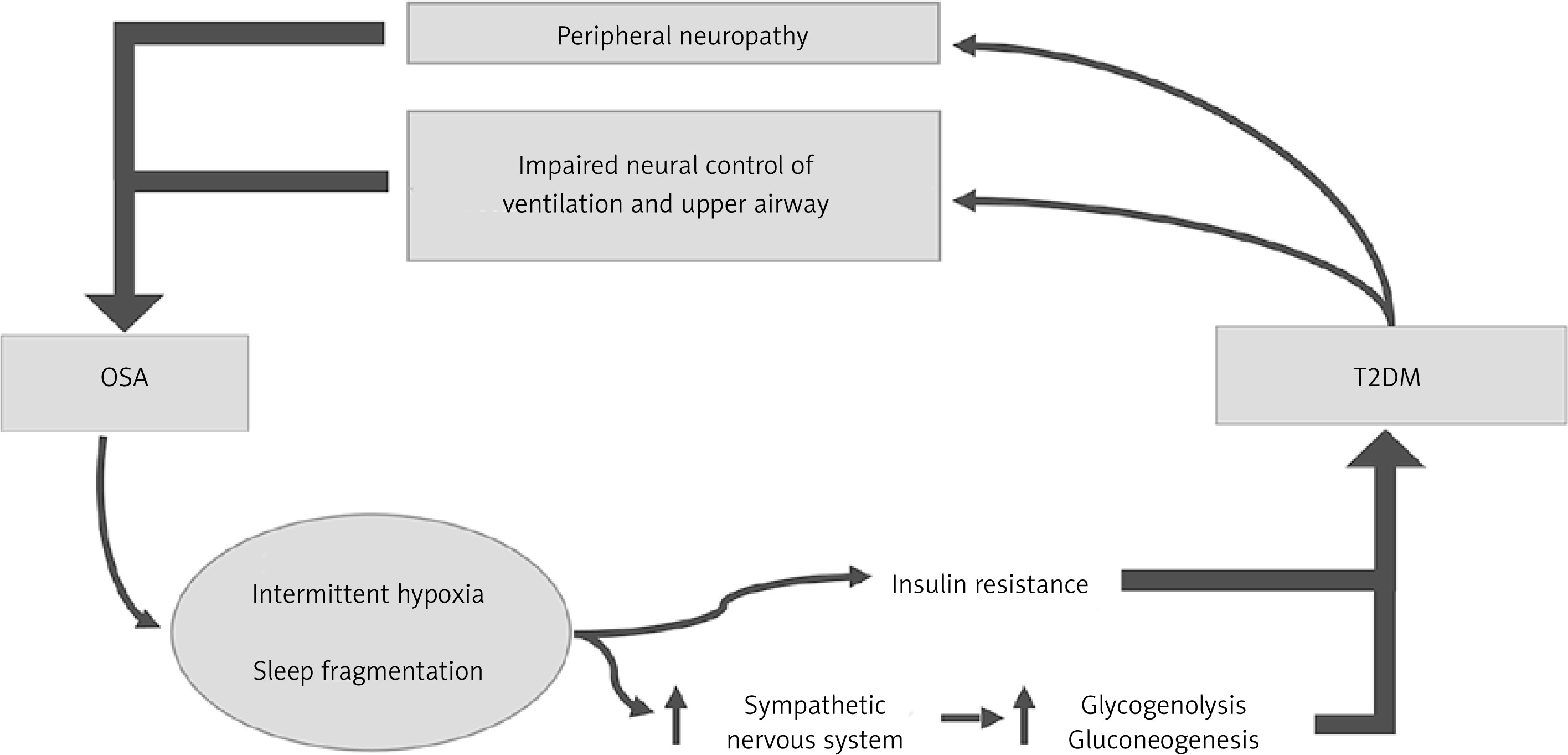
Sleep-disordered breathing is associated with glucose intolerance (GIT) and insulin resistance (IR) [29, 30]. Glucose metabolism disorders are known to be common in patients with OSA [31]. These chronic diseases, OSA and T2DM, share common risk factors including age, male gender, high BMI, and genetic predisposition [30, 31]. Both conditions synergistically increase the likelihood of cardiovascular complications [30]. The development of complications is caused by long-term hyperglycemia, systemic inflammation, and oxidative stress, which contribute to accelerated atherosclerosis and endothelial dysfunction [30, 32–34]. Key pathophysiological mechanisms linking OSA to glucose metabolism disorders are hypoxemia and sleep fragmentation [35], which result in increased levels of proinflammatory cytokines, e.g. interleukin-6 (IL-6) and tumor necrosis factor, activation of the sympathetic nervous system, and alteration of the hypothalamic-pituitary axis. Sympathetic overactivity promotes hepatic glycogenolysis and gluconeogenesis. Leptin secretion is decreased or exhibits resistance, and inflammatory adipocytokines are released. The degree of nocturnal hypoxia has been shown to correlate with the severity of GIT and IR. Changes in glucose homeostasis during intermittent hypoxia have been demonstrated in animal models and human studies [30, 31, 36, 37]. Type 2 diabetes mellitus, by promoting peripheral neuropathy and impaired neural control of ventilation and the upper respiratory tract, potentially contributes to the occurrence of OSA or to its aggravation [33]. Conversely, sleep structure disturbances in OSA may predispose to IR (Figure 1). It has been shown that inhibition of slow-wave sleep leads to reduced IR [31].
Obesity may occur in both OSA and diabetes [32]. OSA risk factors such as neck fat accumulation and high CRP and IL-6 levels are associated with visceral obesity, which is strongly linked to IR [31]. Although obesity is a common factor in both OSA and T2DM, IR or GIT may also develop in non-obese OSA patients [31, 34]. Metrics such as weight, BMI, hip circumference, and waist circumference have been shown to increase with increasing AHI [30]. It has been suggested that WHR may more accurately represent the impact of obesity on SDB than BMI [37]. Studies indicate that overweight and obese women over 70 years with mild OSA and T2DM are at significantly increased risk of major adverse cardiovascular events [33].
A study by Bruyneel et al. found that 66% of overweight and obese patients with moderate to severe OSA had diabetes or GIT, with 28% being newly diagnosed. The authors concluded that IR is positively correlated with the severity of OSA; however, this relationship was not confirmed for overt diabetes or GIT. To determine IR, the homeostatic model assessment index was used, with higher values observed in patients with more severe OSA [31]. More frequent IR with AHI > 30 was confirmed in the PROOF study. It showed an association between triglyceride concentrations and fasting glucose levels, and OSA severity. Patients with severe OSA exhibited both higher IR and greater metabolic derangements than those without apnea. After 7 years of follow-up, a low incidence of T2DM was found in patients with severe, asymptomatic, and untreated OSA. Studies have further shown that newly diagnosed asymptomatic OSA constitutes a risk factor for IR, which increased by 36% in moderate OSA, and by 2.2-fold in severe OSA after 7 years [30].
An analysis of the Determining Risk of Vascular Events by Apnea Monitoring study, which attempted to identify polysomnographic predictors associated with diabetes and prediabetes, did not reveal a significant correlation between these conditions and AHI. However, it was suggested that hypoxia may better reflect the state of carbohydrate metabolism in patients with OSA than AHI [37]. Based on the SantOSA cohort study, hypoxemia was considered a superior prognostic marker for mortality in OSA compared to AHI [38]. In the Determining Risk of Vascular Events by Apnea Monitoring study, a 9% increase in the risk of diabetes was observed for each 10% increase in total sleep time spent with oxygen saturation < 90%. The same risk was noted for every 10 additional respiratory arousals per hour. Conversely, higher mean nocturnal oxygen saturation resulted in a lower incidence of diabetes and prediabetes [37]. Polysomnographic phenotypes characterized by periodic limb movements, hypopnea, and hypoxia have been linked to an elevated risk of T2DM relative to non-OSA individuals [35].
Ethnic variations in OSA phenotypes have also been described. For example, Chinese patients are more likely to experience snoring, while African and Hispanic patients are more likely to experience excessive daytime sleepiness. In a comparison of Caucasians and Africans with OSA, it was found that diabetes is more common in the African race. At the same time, African patients were characterized by a healthier lifestyle, lower BMI, fewer comorbidities, and less dyslipidemia. Sleep studies showed a higher AHI in rapid eye movement sleep and a lower periodic leg movements index compared to Caucasians. In the clinical picture of the African population, nighttime choking, which may be related to the features of facial anatomy and cognitive impairment, were more common [29].
The quality of life of diabetic patients is reduced mainly due to microvascular complications and CVD. Patients with diabetes who develop OSA constitute a high-risk group. A population-based cohort study showed that patients with T2DM who developed OSA had a more than a 50% increase in the risk of combined CVD, ischemic heart disease, heart failure (HF), and stroke/TIA and a 53% higher risk of developing atrial fibrillation compared to T2DM without OSA. Additionally, increased risks were noted for peripheral neuropathy (32%), diabetes-related foot disease (42%), and chronic kidney disease in stages 3–5 (18%). All-cause mortality was 24% higher among participants with both T2DM and OSA compared to those with diabetes alone [34]. A study by Zhang et al. confirmed that, depending on the presence of diabetes, the association between OSA and mortality differed [32]. In the study by Labarca et al., after 5 years of follow-up, an independent risk of cardiovascular mortality was found in the co-occurrence of OSA and DM compared to the presence of both diseases alone [38].
To improve the diagnosis of OSA in diabetic patients, a nomogram was developed incorporating WHR, smoking status, BMI, serum uric acid, homeostatic model assessment insulin resistance index, and history of fatty liver. It allows the early identification of OSA high-risk patients before deciding which ones should be referred for PSG testing, which remains resource-limited [36]. According to a small-scale study on patients with moderate to severe OSA, only short-term CPAP treatment improved insulin sensitivity in patients without obesity [32].
Cancer
Cancer is the second leading cause of death in the United States [39]. Global statistics for 2022 documented 20 million new cancer cases and 9.7 million cancer-related deaths. The most frequently diagnosed cancer was lung cancer (12.4% of all cases), followed by breast cancer in women (11.6%), colon cancer (9.6%), prostate cancer (7.3%), and stomach cancer (4.9%). The leading cause of death was also lung cancer (18.7% of all cancer deaths), followed by colon cancer (9.3%), liver cancer (7.8%), breast cancer in women (6.9%), and stomach cancer (6.8%) [40]. Overall, global cancer mortality was decreasing until 2021 due to a reduction in smoking, improved early diagnostics capabilities, and advancements in therapeutic modalities [39, 41]. Nevertheless, an increase in the incidence of 6 out of the 10 most commonly diagnosed cancers was reported [39]. Additionally, the COVID-19 pandemic exacerbated difficulties in access to health care facilities, which resulted in the delay of diagnosis and treatment of cancer patients [39].
Tissue-level hypoxia in OSA patients creates conditions of susceptibility to the development of malignancies [42]. Studies on melanoma in mice have provided information that intermittent hypoxia can influence cancer growth in vitro and promote metastasis [43, 44]. Oncogenic processes in OSA are associated with oxidative stress, inflammatory reactions, angiogenesis, as well as increased sympathetic activity and impaired immune responses [44–50]. Among the key molecular mediators of these processes, hypoxia-inducible factor-1 plays a central role in orchestrating cellular responses to hypoxic stress [42–44]. Exposure to intermittent hypoxia and/or sleep fragmentation may differentially affect cancer cells, depending on the type of malignancy [45]. Therefore, OSA may have a prognostic impact or cause an increased risk of developing only certain types of cancer [42].
Marriott et al. were the first to report an independent association between nocturnal hypoxemia and cancer prevalence. In this large-sample study (> 241,439 patient-years) using PSG data, nocturnal hypoxemia rather than AHI was independently positively correlated with cancer prevalence. The observed associations between OSA severity (based on AHI and nocturnal hypoxemia) and cancer incidence were explained by the influence of cancer risk factors such as older age, gender, smoking, and BMI. However, after a 11.2-year follow-up period, there was no independent association between OSA severity and cancer incidence [43]. In contrast, Kendzerska et al. found that both OSA severity and nocturnal hypoxemia were independently associated with cancer incidence. Patients with severe OSA had a 15% higher risk of cancer incidence compared to those without OSA, while severe hypoxemia – defined as > 30% of sleep spent with oxygen saturation < 90% (T90) – was associated with a 30% increased risk [45]. Similar findings were reported by Xiong et al., who observed a positive correlation between higher AHI values and cancer risk, particularly among patients with OSA under 65 years old [44]. In the study by Justeau et al., nocturnal hypoxemia measured by T90 was associated with the occurrence of lung and breast cancer [46]. Kendzerska et al. reported the association of periodic limb movements during sleep with cancer. Furthermore, reduced sleep quality – measured by, among other factors, reduced rapid eye movement sleep and increased wakefulness after sleep onset – was associated with an increased risk of malignant tumors [51].
A multicenter retrospective cohort study identified nocturnal hypoxemia and sleep fragmentation as markers of OSA severity significantly associated with cancer-related mortality. To determine hypoxemia and sleep fragmentation, the percentage of T90, mean oxygen saturation, and percentage of stage 1 sleep were measured. However, AHI was not associated with cancer mortality, which is consistent with other studies (Xiong et al.) [44, 47]. According to this study, T90 was also not significantly associated with cancer mortality, while OSA increased all-cause mortality [44].
Not all cohort studies have confirmed that OSA increases cancer incidence or mortality [48]. Nevertheless, mounting evidence supports an OSA-related risk in specific malignancies, particularly lung and colorectal cancer (CRC) – both characterized by high mortality rates [45]. A study on the Korean population identified OSA as an independent risk factor for lung cancer across both sexes and age groups, with the association being most pronounced in women and older adults [49]. Similarly, a retrospective cohort study found an increased risk of CRC associated with OSA [42].
Regarding CPAP adherence in patients with OSA, studies found no clear evidence linking good adherence (defined as ≥ 4 h per night) to reduced incidence of cancer. For lung cancer, reduced risk was observed, but it was not statistically significant [50].
Hypertension
The physiological changes induced by OSA predispose individuals to the development of CVD, including hypertension, stroke, arrhythmia, coronary artery disease (CAD), and HF [52]. OSA is considered to be a cause of secondary hypertension in 30% to 50% of patients with hypertension [53, 54]. Additionally, OSA is prevalent in a significant proportion of patients with resistant hypertension [55, 56]. In OSA-related hypertension, masked hypertension and elevated nocturnal blood pressure are frequently observed [56]. The major risk factors for OSA, such as age, male gender, and higher BMI, are also strongly associated with hypertension [55]. When OSA and hypertension coexist, the risk of cardiovascular events increases [53]. Moreover, short sleep duration (< 6 h) alone has been shown to increase the risk of developing hypertension and CVD [56].
The UROSAH study demonstrated that in patients with hypertension and OSA, a higher BMI is a risk factor for cardiovascular events. A stronger positive association between obesity and cardiovascular events was observed in younger individuals [53]. An additional publication based on the UROSAH cohort established a significant relationship between the cardiometabolic index and the risk of CVD. The cardiometabolic index, developed in 2015, is a marker used to assess the risk of metabolic diseases such as diabetes, hypertension, left ventricular hypertrophy, or stroke. It is calculated using the waist-to-height ratio and triglyceride/high-density lipoprotein cholesterol ratio. The “obesity paradox” proposed in the literature suggests that BMI alone may inadequately reflect metabolic risk, as visceral adipose tissue (VAT) is a more pathophysiologically relevant indicator. VAT is a metabolically active tissue that exhibits a strong lipolytic effect, contributing to endothelial dysfunction, local inflammation, and prothrombotic states. It is responsible for atherosclerotic complications, contributes to thrombosis, and increases the risk of IR and hyperglycemia. VAT-related disorders create conditions favorable for the development of T2DM, metabolic syndrome, dyslipidemia, and hypertension. It is suggested that the cardiometabolic index reflects the distribution of VAT, the measurement of which requires the use of diagnostic imaging techniques. Thus, the cardiometabolic index may become a screening tool as a predictor of CVD [57].
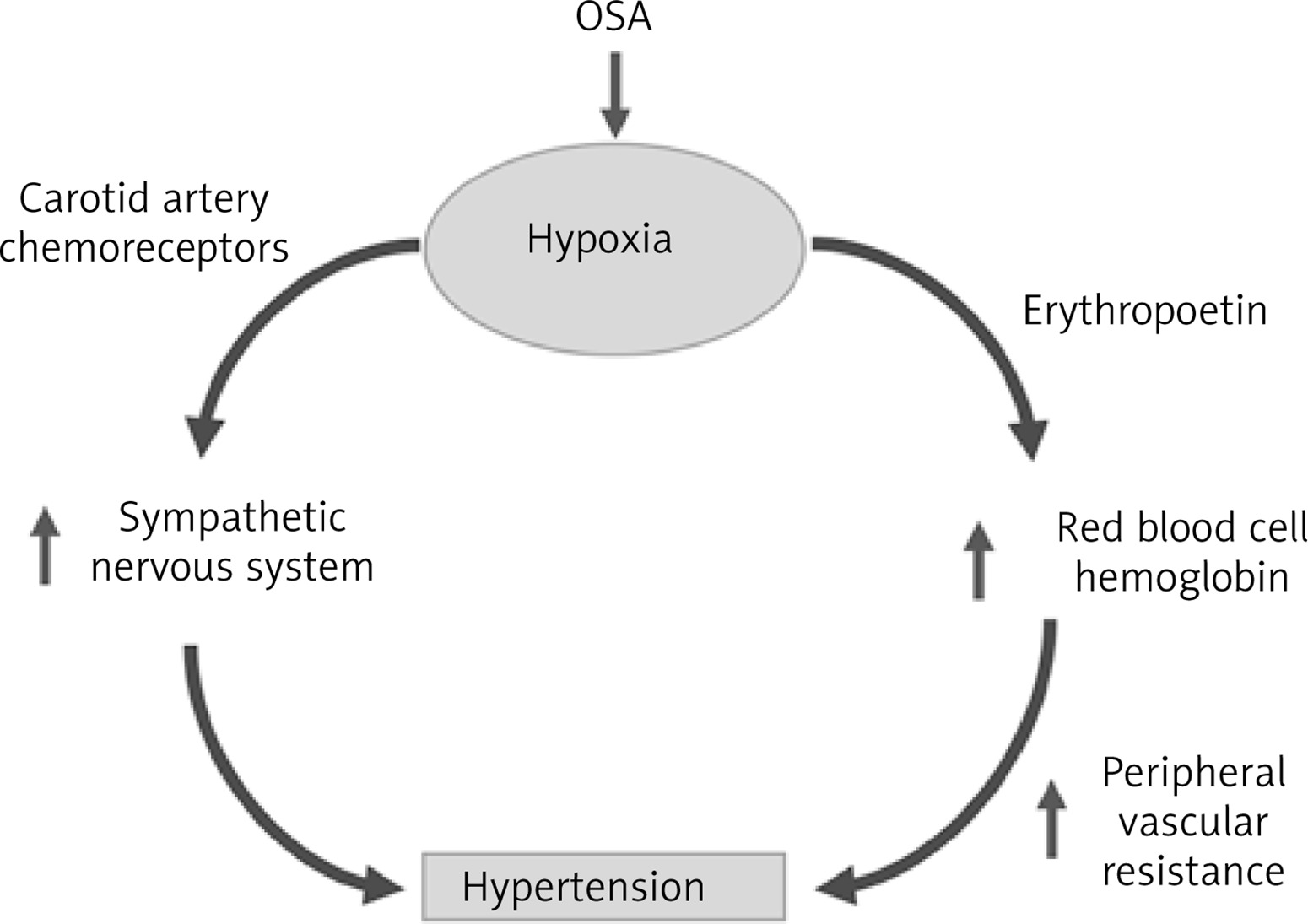
A multicenter study in China identified age, AHI, and hemoglobin (Hb) as independent risk factors for hypertension in the elderly. Higher AHI or Hb levels correlated with higher hypertension severity. Intermittent nocturnal hypoxemia, detected by carotid artery chemoreceptors, triggers sympathetic nervous system activation during wakefulness, leading to sustained elevations in blood pressure. Another potential mechanism contributing to hypertension in OSA might be an elevated circulating red blood cell count and hemoglobin level, as a result of erythropoietin stimulation by hypoxia, which contributes to increased peripheral vascular resistance (Figure 2) [54].
Depending on the polysomnographic phenotype of OSA, hypertension occurs with different frequency. The Park et al. study distinguished three subtypes: predominant apnea, predominant hypopnea, and predominant respiratory effort-related arousal. A higher prevalence of hypertension was noted in the groups with predominant apnea and predominant hypopnea. Those with predominant hypopnea also had significantly higher rates of hyperlipidemia, CAD, and HF compared to the other groups [58]. Additionally, respiratory events during rapid eye movement sleep are positively correlated with morning hypertension. In this phase of sleep, increased severity of OSA can be explained by the reduced activity of the genioglossus muscle, promoting increased collapsibility of the upper respiratory tract. Respiratory events in the rapid eye movement phase predispose to a higher risk of CVD than those occurring in the non-rapid eye movement phase. A study conducted by Falla et al. revealed a significant association between respiratory events during rapid eye movement sleep and morning hypertensive blood pressure values [52].
Positive airway pressure therapy, the gold standard treatment for OSA, has demonstrated efficacy in normalizing blood pressure, particularly in patients with resistant hypertension [59]. In this group of patients, the blood pressure-lowering effect of CPAP therapy was observed to be twice as strong at night as during the day [56]. The beneficial impact of PAP treatment is associated with reductions in inflammatory mediators such as CRP and IL-6 and oxidative stress markers including nicotinamide adenine dinucleotide phosphate oxidase and malonaldehyde [60].
Positive airway pressure therapy appears to have a stronger effect on reducing diastolic blood pressure. A prospective 5-year follow-up study demonstrated that long-term PAP therapy in patients with OSA improved blood pressure control. The rate of adherence to PAP therapy was 39.58%. The main barriers to adherence included economic burden and technical difficulties related to device usage, such as mask leakage [59]. According to the study by Lin et al., in the case of poor CPAP adherence in OSA patients, uvulopalatopharyngoplasty (UPPP) may serve a beneficial alternative; however, surgical intervention was less effective in preventing hypertension onset. Nevertheless, UPPP has been shown to reduce hypertension occurrence in OSA-affected individuals [55].
Conclusions
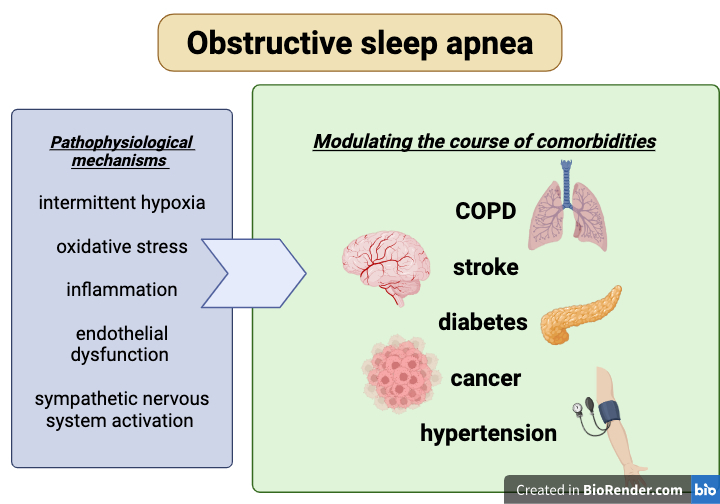
The described associations between OSA and selected comorbidities indicate that OSA should not be regarded as an isolated disorder but rather, due to its shared pathophysiological mechanisms, it coexists with and modulates the course of diseases such as COPD, stroke, diabetes, cancer, and hypertension. This underscores the importance of an interdisciplinary approach to managing OSA, which clinicians should prioritize. In many clinical contexts, the effective treatment of OSA may complement the management of underlying chronic conditions, thereby mitigating their progression and reducing the associated social and economic burden.